Quick Summary / Key Takeaways
- Decentralized moderation puts the burden on group admins, not the platform.
- Group-based moderation teams are significantly more accurate and less stressed than solo mods.
- Clear, enforceable community guidelines prevent "moderation bias" accusations.
- Leveraging Telegram's built-in reporting tools helps flag illegal content quickly.
- Slow-mode and permission restrictions are essential for managing high-traffic breaking news.
The Reality of Decentralized Moderation
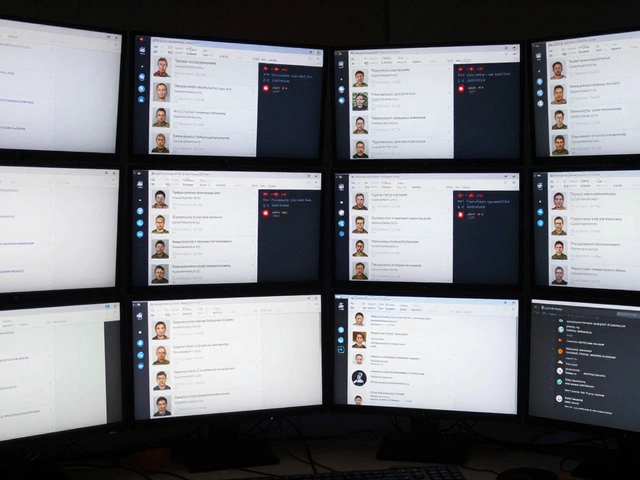
Unlike platforms with massive corporate oversight, Telegram operates on a decentralized model. This means the platform provides the plumbing, but you are the one responsible for the cleaning. For those in citizen journalism, this is both a blessing and a curse. You have total control over your narrative and community, but you also carry the full weight of policing content that can be morally complex or emotionally charged. Research from Ruhr University highlights a stark gap in how this is handled: some news channels successfully scrub nearly 95% of propaganda, while others barely hit 20%. The difference isn't usually the tools, but the manual effort and the structure of the moderation team. If you are a solo admin, you are fighting a losing battle against a 24/7 news cycle. You cannot be everywhere at once, and your personal biases will inevitably leak into your decisions, which often fuels more heat in the chat.Why You Need a Moderation Team, Not a Dictator
One of the biggest mistakes admins make is trying to be the sole arbiter of truth. It leads to burnout and accusations of censorship. A better approach is building a networked team of moderators. When people from different political or social perspectives work together to classify content, the results are startlingly different. Studies from the Annenberg School for Communication and Stanford University show that moderators working in groups reach near-perfect agreement on what should stay online. In contrast, solo moderators only agree about 38% of the time. Even more interesting? Networked teams can reduce partisan gaps by 23 percentage points. When a Democrat and a Republican agree that a specific post is "hate speech" or "spam," the community accepts the removal far more readily than if a single admin with a known bias makes the call. Beyond the accuracy, there is a mental health component. Moderating violent images or hateful rhetoric is draining. Those working in teams report lower emotional stress and more positive feelings about the task. You aren't just protecting the group; you're protecting your own sanity.
Setting the Ground Rules for Citizen News
If you don't define what "heated" means, you'll be arguing about the definition of the word while the chat burns down. You need a set of community guidelines that are specific and concrete. Avoid vague terms like "be respectful," which can be interpreted in a thousand ways. Instead, use specific triggers for action.| Behavior | Attribute / Value | Action Taken | Reasoning |
|---|---|---|---|
| Fact-based Disagreement | High Tension / No Insults | Monitor / Warn | Healthy debate encourages engagement. |
| Ad Hominem Attacks | Personal Insults / Name Calling | Message Delete / Warning | Shifts focus from news to personality. |
| Hate Speech | Targeted Slurs / Incitement | Immediate Ban / Report | Violates platform terms and safety. |
| Spam/Propaganda | Repetitive Links / Bot Behavior | Silent Delete / Bot Ban | Degrades the quality of information. |
Technical Tools to Cool Down the Chat
When a discussion gets too hot, you need to change the physics of the conversation. Telegram offers several technical levers to slow things down before they spiral.- Slow Mode: This is your best friend during a crisis. By limiting how often a user can send a message (e.g., one message every 30 seconds), you force people to think about what they are saying rather than reacting impulsively. It kills the "rapid-fire" nature of flame wars.
- Permission Restrictions: If a specific topic is causing a meltdown, temporarily disable the ability to send media or stickers. Often, the most inflammatory parts of a heated debate are the memes and videos, not the text.
- Reporting Mechanisms: While you handle the community, let the platform handle the illegal stuff. Use the built-in "Report" buttons. On Android, tap the message; on iOS, press and hold; on Desktop, right-click. For serious legal violations, the [email protected] email is the direct line for takedowns.
- Admin Bots: Use bots to automate the boring stuff. Setting up keyword filters that automatically delete certain slurs or block known spam links allows your human moderators to focus on the nuanced, "gray area" discussions.

Handling the "Gray Areas" of News
The hardest part of content moderation is that even trained professionals disagree on what constitutes hate speech or offensive content. In citizen journalism, where the line between "hard truth" and "offensive opinion" is thin, you will be questioned. To handle this, implement a "Transparency Log." When you ban a prominent member or delete a large thread, post a brief, neutral explanation in a pinned message. "Removed 15 messages for violating the 'no personal attacks' rule." This removes the mystery and the feeling of a "shadow ban," making the community feel that the rules are applied consistently regardless of the user's political leaning. Avoid the trap of trying to be a fact-checker for every single claim. You aren't a news agency; you are a community manager. Your goal is to maintain a space where information can be shared, not to certify every word as absolute truth. Encourage users to provide sources and let the community self-correct through citations, stepping in only when the *manner* of the correction becomes abusive.Should I ban users immediately for their first offense?
Generally, no. Unless the content is illegal or extreme hate speech, a "Warn > Temporary Mute > Ban" progression is more effective. Immediate bans often make the user feel victimized, which can lead them to create "alt" accounts to harass the group further. A temporary mute of 24 hours is usually enough to cool a user's temper.
How do I find reliable moderators for my news group?
Look for users who are consistently helpful and calm during arguments. Avoid picking the most vocal members, as they often have a personal agenda. Ideally, recruit people from different ideological backgrounds within your group to ensure the moderation team isn't an echo chamber.
What is the best way to deal with a sudden surge of propaganda?
Switch the group to "Request to Join" mode or temporarily restrict new members from posting until they have been in the group for a set amount of time. Use bots to auto-delete messages containing known propaganda URLs. Manual deletion is the most effective but requires a team of at least 3-5 active moderators to keep up during a peak event.
Does Telegram provide any automated fact-checking tools?
No. Telegram's philosophy is centered on privacy and minimal interference. There is no independent, platform-wide fact-checking authority. All verification of news and removal of misinformation must be handled by the group administrators using their own judgment and community-sourced evidence.
How can I report a group that is promoting illegal content?
You can use the built-in 'Report' function by right-clicking or long-pressing a specific message. For larger-scale issues or legal takedown requests, send a detailed email to [email protected]. If you are in the EU, you can also follow the guidelines provided under the Digital Services Act for formalized reporting.