Imagine waking up to find your home address, your children's school location, and your private phone number blasted across a channel with thousands of followers. For many reporters, this isn't a nightmare-it's a Tuesday. This practice, known as doxxing is the act of publicly posting private, sensitive information about an individual to intimidate or silence them, has become a primary weapon used to harass those who dare to cover controversial topics. While the internet is the battlefield, Telegram is a massive cloud-based instant messaging service with over 500 million users, often used by both activists and bad actors due to its lenient moderation often serves as the primary distribution hub for these leaks.
Quick Guide: Immediate Privacy Steps
- Audit Yourself: Search for your name and phone number in an incognito window to see what's public.
- Set Google Alerts: Get notified the second your private data appears online.
- Split Your Identity: Keep a strictly private personal account and a separate professional one.
- Tighten Telegram Settings: Hide your phone number and last seen status from non-contacts.
Why Telegram is a Hotspot for Doxxing
Telegram's appeal is its freedom, but that same openness makes it a playground for harassment. Because it allows massive groups and channels with minimal oversight, it has become a central node for radical organizations and disinformation networks. It's not just about leaking a phone number; there's a whole economy built on it. We've seen the rise of "protection blocks," where hackers doxx someone and then demand payment to remove the post or prevent further leaks.
The scale is staggering. By August 2025, the platform's founder, Pavel Durov, had to announce bans on numerous channels after evidence surfaced that admins were essentially running extortion rackets. They would post defamatory content and then delete it only after the victim paid a fee. In some regions, like Russia, this has escalated to the point where courts are sentencing admins to prison, and state corporations like Rostec have pushed for decade-long prison sentences for these schemes. For a journalist, this means your data isn't just a target for a random troll-it's a commodity for criminals.
The Danger of "Weaponized" Doxxing Accusations
Here is the twist: while real doxxing is a threat, governments are now using the term as a shield. There's a growing trend where officials accuse journalists of "doxxing" simply for doing their jobs. If a reporter publishes a public record about a politician's financial misconduct or reports on immigration enforcement, the official might claim they are being doxxed to shut down the story.
This is a calculated move to chill reporting. By reframing routine investigative journalism as a digital crime, authorities can pressure media outlets to pull stories. This often goes hand-in-hand with officials scrubbing actual public records-like property deeds and financial disclosures-from the web under the guise of "preventing doxxing." It creates a paradox where the tools meant to protect victims are used to hide corruption.
Practical Steps to Secure Your Digital Footprint
You can't delete yourself from the internet, but you can make yourself a much harder target. The PEN Online Harassment Field Manual provides a blueprint for this. Start with a digital audit. Don't just Google your name; try variations of your handle, old email addresses, and the names of your immediate family members. Do this while logged out of your browser so you see what a stranger sees, not what Google's algorithm thinks you want to see.
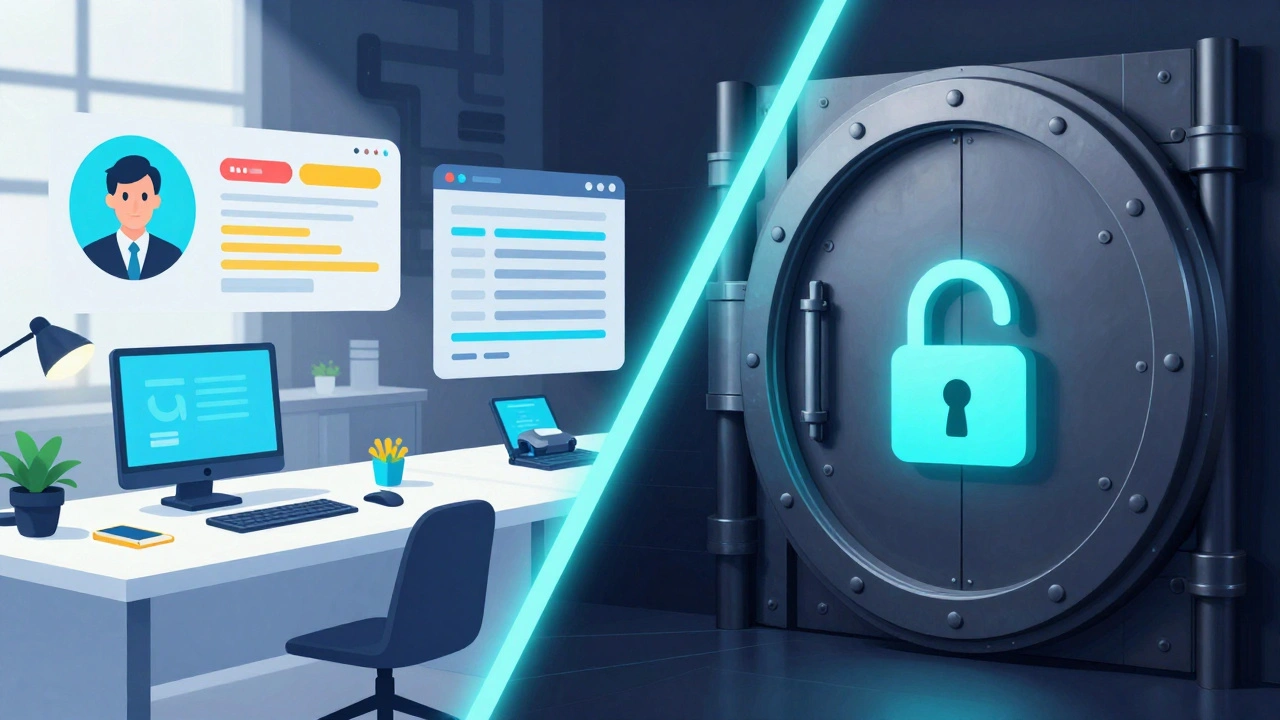
Once you find a leak-maybe an old family blog or a forgotten directory-don't just ignore it. Reach out to the site owners and request removal. If you're a journalist, the most critical move is the "Great Divide." You need two separate social media lives. Your personal account should be a fortress: private, restricted to people you actually know, and devoid of any identifying markers like your birthday or home city. Your professional account can be public for engagement, but it should never contain a cell phone number or a photo of your kids.
| Tool | Encryption Type | Primary Use Case | Risk Level |
|---|---|---|---|
| Signal | End-to-End (E2EE) | High-risk source communication | Very Low |
| Telegram | Client-to-Client (Optional) | Broadcasting and community networking | Medium |
| End-to-End (E2EE) | General secure messaging | Low/Medium | |
| Session | Onion Routing / E2EE | Maximum anonymity (No phone #) | Extremely Low |
Hardening Your Telegram Settings
If you must use Telegram for work, you have to move past the default settings. By default, Telegram can reveal your phone number to anyone who has it in their contacts, and sometimes beyond that. Go into your Privacy and Security settings immediately. Set "Phone Number" to "Nobody." Set "Last Seen & Online" to "Nobody." Even your profile photo should be restricted to "My Contacts."
For extremely sensitive work, Reporters Without Borders suggests using tools that don't require a phone number at all, such as Session. If you're communicating with a source who is at risk, never use apps monitored by governments, such as WeChat, as the risk of exposure is nearly 100%.

The Legal Battle: Privacy vs. Law Enforcement
There is an ongoing struggle between the need for privacy and the need to stop crimes. In Germany, the Network Enforcement Act (NetzDG) tries to force platforms to remove hate speech and fake news. However, Telegram often ignores these requests because its operational structure is opaque, and its leadership's location in Dubai makes legal service difficult.
Some authorities are proposing "login traps." The idea is that if a user is suspected of a serious crime, police would wait for them to log back into the app to capture their IP address and then trace it back to the telecom provider. While this doesn't break the encryption of the messages themselves, it breaks the anonymity of the user. For journalists, this highlights the importance of using a VPN to mask your IP address, ensuring that a "trap" doesn't accidentally snag an innocent reporter who happens to be in the same digital neighborhood as a criminal.
Is Telegram's "Secret Chat" enough to prevent doxxing?
No. While Secret Chats provide end-to-end encryption for the content of the message, they don't hide your account's existence or your phone number if your privacy settings are loose. Doxxing usually happens because of public metadata or leaked info, not because someone "hacked" an encrypted chat. You must secure your account settings first.
What should I do if I've already been doxxed?
First, document everything. Take screenshots of the posts and the channel IDs. Second, contact the platform (Telegram) to report the violation of privacy. Third, reach out to organizations like the Freedom of the Press Foundation for legal and digital support. Finally, if there are threats of physical violence, contact local law enforcement immediately.
Why do governments accuse journalists of doxxing?
It is often a tactic of demonization. By labeling the publication of a public official's address or financial records as "doxxing," governments can frame a journalist as a criminal rather than a reporter. This puts the journalist on the defensive and can lead to legal threats that discourage further investigation.
How does a "protection block" work on Telegram?
This is essentially a digital protection racket. A channel admin threatens to publish a victim's private data (or does so) and then offers to remove the post and "protect" the victim from future leaks in exchange for a recurring payment. It is an extortion scheme, not a security service.
Can I use a VPN to stop doxxing?
A VPN masks your IP address and your general location, which prevents someone from tracing your physical location through your internet connection. However, it won't stop someone from finding your home address if it's already listed in a public directory or leaked by a source. It's one piece of the puzzle, not the whole solution.
Next Steps for Different Scenarios
If you are starting a new investigation: Set up a "burner" identity. Use a VOIP number for Telegram registration instead of your personal SIM. Use a dedicated laptop or a virtual machine for your research to keep your personal cookies and history separate.
If you are a freelance journalist: Since you lack the institutional legal backing of a big newsroom, your digital hygiene must be perfect. Prioritize Signal for all source communications and regularly audit your social media privacy settings.
If you are managing a team: Create a clear digital safety protocol. Ensure every staff member knows how to use encrypted apps and has a plan for what to do the moment a doxxing event is detected.