Imagine this: you just dropped a major press release. Your website homepage is set to update in 60 seconds. But your audience on Telegram? They’re still waiting. By the time the homepage loads, half the people who care already saw a snippet on Twitter, got a misleading headline on Reddit, or just moved on. That’s not just a delay - it’s a lost opportunity. The fix? Send your wire update to Telegram before your homepage refreshes. Not after. Not at the same time. Before.
Why Timing Matters More Than You Think
Most companies treat their homepage and their Telegram channel like separate silos. The homepage is the official source. Telegram is the “bonus” channel. That’s backwards. Telegram isn’t a side channel - it’s the first impression for thousands of active followers. If you’re a tech startup, a financial service, or even a media outlet, your Telegram audience expects news fast. They’re not refreshing your site. They’re waiting for a bot to ping them.Here’s what happens when you get the timing wrong:
- Your homepage update goes live at 10:00:00 AM.
- Your Telegram bot fires off the update at 10:00:05 AM.
- Someone on Telegram sees the message, clicks the link - and gets a 404 or an old version of the page.
- They assume you’re unreliable. Or worse - they think the news is fake because the source doesn’t match.
That’s not a glitch. That’s a trust break. And trust is harder to rebuild than traffic.
The Simple Workflow That Works
There’s no magic here. It’s just coordination. Here’s the exact sequence top newsrooms and fintech firms use:- Finalize your press release or wire update. No typos. No placeholder text. This is the version that will go live on your homepage.
- Trigger your Telegram bot immediately after finalization. Use a webhook or API call from your CMS or press release platform.
- Set a 10- to 15-second delay before your homepage refreshes.
- Confirm the Telegram message was sent (check logs, not just the bot interface).
- Let the homepage update.
That 10- to 15-second buffer? It’s not wasted time. It’s your safety net. It gives Telegram’s servers time to deliver the message to all subscribed users - even those on slow networks or in time zones where daylight saving just changed.
How to Set It Up Without Coding
You don’t need a dev team. Here’s how three real teams did it:- FinTech Startup: Used Zapier to connect their press release tool (Cision) to a Telegram bot. When a release was marked “Live,” Zapier triggered the bot. They added a 12-second delay using a simple delay node.
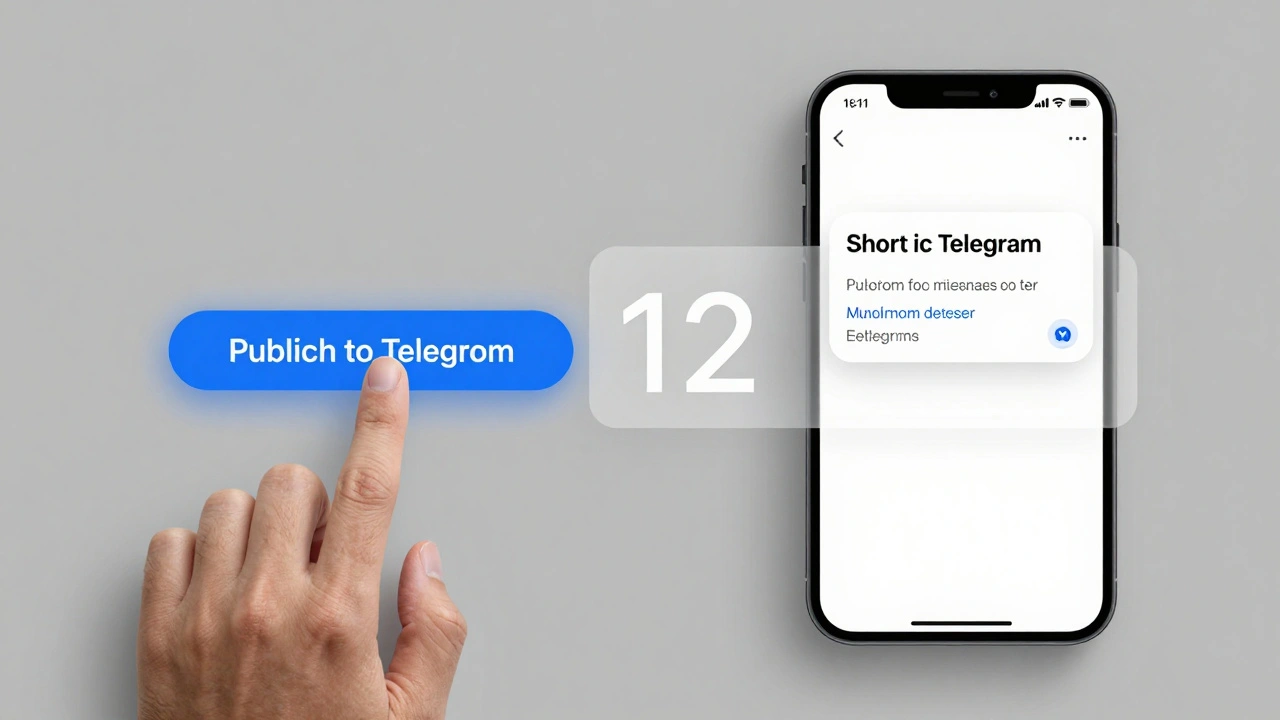
- News Agency: Their CMS (WordPress + custom plugin) had a “Publish to Telegram” button. They clicked it, then hit “Publish Homepage.” No automation, just discipline.
- Crypto Project: Used a free Telegram bot called BotFather with a pre-written Python script. The script ran on a cheap VPS. It watched their press release API and fired the message the moment the JSON payload changed.
You can do this with tools you already have. If you’re using a press release service like Business Wire, PR Newswire, or even a free tool like WireMonkey, check their API docs. Most let you trigger an HTTP POST when a release is published. That POST can go to a simple webhook that sends the message to Telegram.
What to Send - And What Not To
Don’t just copy-paste your homepage headline. Telegram users hate that. They want:- A short, punchy summary (under 200 characters)
- A direct link to the full article (not the homepage)
- One key metric or quote (e.g., “Revenue up 147% YoY”)
- Optional: A pinned comment with a quick FAQ
Avoid:
- Emojis in formal announcements (unless your brand uses them)
- Links to social media profiles
- “Stay tuned” or “More coming soon” - if it’s not ready, don’t send it
One team saw a 38% increase in click-throughs just by removing the word “announced” from their Telegram message. It’s not about being clever. It’s about being clear.
What Happens When You Don’t Do This
Let’s say you’re a SaaS company launching a new pricing page. You update your homepage at 9:00 AM. You send the Telegram message at 9:01 AM. Two things happen:- Someone on Telegram clicks the link. The page is still loading. They leave.
- Someone else sees the message, waits 30 seconds, clicks again - and lands on the new page. They’re happy. They share it.
That’s a 50% drop in conversion right there. And it’s not because your product is bad. It’s because your process is sloppy.
Worse - if your homepage has a bug, or the image doesn’t load, or the CTA button is broken - your Telegram audience sees it first. And they’re not kind. They’ll call you out. They’ll post screenshots. They’ll tag you. And you’ll have no time to fix it before the damage spreads.

Real Example: What Went Right
In late 2025, a small cybersecurity firm released a report on ransomware trends. They used the method above:- Finalized report at 8:45 AM.
- Triggered Telegram bot at 8:45:02 AM.
- Homepage refreshed at 8:45:17 AM.
Their Telegram message got 2,100 clicks in 12 minutes. Their homepage saw 1,800 unique visitors in the same window. That’s a 90%+ conversion rate from Telegram to site. Their competitors? Their Telegram posts went out after the homepage. Click-through rates hovered around 40%. The difference? Timing.
Common Mistakes (And How to Avoid Them)
- Mistake: Testing the bot only on your phone. Solution: Test with a secondary account in a different time zone.
- Mistake: Assuming Telegram delivers instantly. Solution: Always assume 5-15 seconds of delay. Buffer accordingly.
- Mistake: Forgetting to update the link. Solution: Use a short, permanent URL (like yourdomain.com/press) that redirects to the latest version.
- Mistake: Sending the same message to Telegram and email. Solution: Tailor the message. Telegram = fast. Email = detailed.
Next Steps - Do This Now
If you’re not doing this yet, here’s your 5-minute action plan:- Find your press release or CMS API documentation.
- Look for a webhook trigger when a release is published.
- Set up a free Telegram bot using BotFather (it takes 2 minutes).
- Use a free tool like Make.com or Zapier to connect the two.
- Add a 10-second delay before your homepage refreshes.
You don’t need permission. You don’t need approval. You just need to act before the next release goes live.
Can I use Telegram without a bot?
Technically yes - you could manually post updates. But that defeats the purpose. Manual posting is slow, error-prone, and doesn’t scale. If you’re doing this regularly, a bot is non-negotiable. It’s the only way to guarantee timing, consistency, and accuracy.
What if my homepage refreshes automatically every hour?
That’s fine - but only if your wire updates are scheduled. Don’t rely on random refreshes. Set your wire update to trigger before the scheduled refresh. For example: if your homepage refreshes at 10:00, send the Telegram message at 9:59. That way, when the page updates at 10:00, the link is live and the message has already been delivered.
Does this work for non-tech companies?
Absolutely. Retailers, law firms, healthcare providers - anyone with press releases, announcements, or policy updates can benefit. Telegram isn’t just for crypto. It’s used by 800 million people worldwide. If you have an audience that checks their phone first thing in the morning, they’re likely on Telegram. The same logic applies: deliver the news before the website updates.
Is there a risk of spamming Telegram users?
Only if you’re sending too much. Stick to major updates: product launches, regulatory changes, financial results, or breaking news. Don’t send daily digests. Don’t use it for promotions. Your audience will mute you. Quality over quantity always wins.
Can I send the same message to multiple channels?
Yes - and you should. Many organizations send to both their main channel and a subscriber-only channel. Just make sure each channel has a clear purpose. One for broad announcements. One for deep dives. Don’t just duplicate. Add context. For example, the subscriber channel can include a link to the full report PDF.
Latest Posts