When you’re reporting Telegram ad performance to advertisers, you’re not just sharing numbers-you’re telling a story about results. Advertisers don’t care about how many views your post got unless they can see how those views turned into clicks, sign-ups, or sales. The key is to make every metric meaningful and tied to real business outcomes.
Start with the Four Core Metrics
Every solid Telegram ad report begins with four numbers: CPM, CPC, CPS, and CTR. These aren’t just industry jargon-they’re the language advertisers understand.- CPM (Cost per 1,000 impressions): This tells you how much it cost to show your ad to 1,000 people. On Telegram, the average CPM is around $3.33. If your campaign’s CPM is higher than that, ask why. Was it targeting a premium market? Or did something go wrong?
- CPC (Cost per click): This is where Telegram shines. In Tier-1 markets like the US and Germany, CPCs hover around $0.10-$0.25. But in Tier-2 and Tier-3 markets-India, Bangladesh, Indonesia, Vietnam, Nigeria-you’re looking at $0.01 per click. That’s not a typo. It’s one of the most cost-effective ad environments out there. Always break this down by region in your report.
- CTR (Click-through rate): This is Telegram’s secret weapon. While most social platforms struggle to hit 1-2% CTR, Telegram consistently delivers 20-40%. That means one in every five to four people who see your ad actually click. That’s not luck. It’s audience intent. Highlight this in your report. It’s what makes Telegram different.
- CPS (Cost per specific action): Whether it’s a bot sign-up, a Mini App install, or a purchase, track what the advertiser actually wants. If they’re selling a crypto wallet, track wallet creations. If they’re promoting a game, track installs. CPS turns clicks into value.
Use Telegram’s Built-In Analytics
The official Telegram Ad Platform gives you everything you need to start. Go to the Statistics tab. You’ll see:- When the ad was created
- Total budget spent
- Total views (impressions)
- Graphs showing views over time-by day or even by minute
- How many users joined a channel or started a bot after seeing the ad
Layer in Third-Party Tools for Depth
Telegram’s native tools are good, but they don’t tell the whole story. That’s where third-party analytics come in. Use them-but only verified ones.- TGStat: Tracks subscriber growth, views per post, and comment activity. Great for showing long-term channel impact.
- Telemetr: Shows subscriber activity trends, publication frequency, and how often a channel is mentioned in ads (Citation Index).
- Crosser Bot and Datafan_bot: Free tools that give quick snapshots of reach and engagement.
Break It Down by Vertical
Not all ads are created equal. What works for a crypto app won’t work for a skincare brand. Advertisers need to know how their niche performs.According to 2025 data from PropellerAds:
- iGaming: 22.37% of all Mini App impressions
- Finance: 19.67%
- E-commerce: 13.20%
- Media: 12.02%
If your advertiser is in iGaming, say so. Their campaign likely outperformed others because Telegram’s audience is naturally drawn to fast, interactive experiences. If they’re in e-commerce, point out that while CTR might be lower, the conversion quality is higher-users are there to buy, not just scroll.
Separate Mini App Ads from Channel Ads
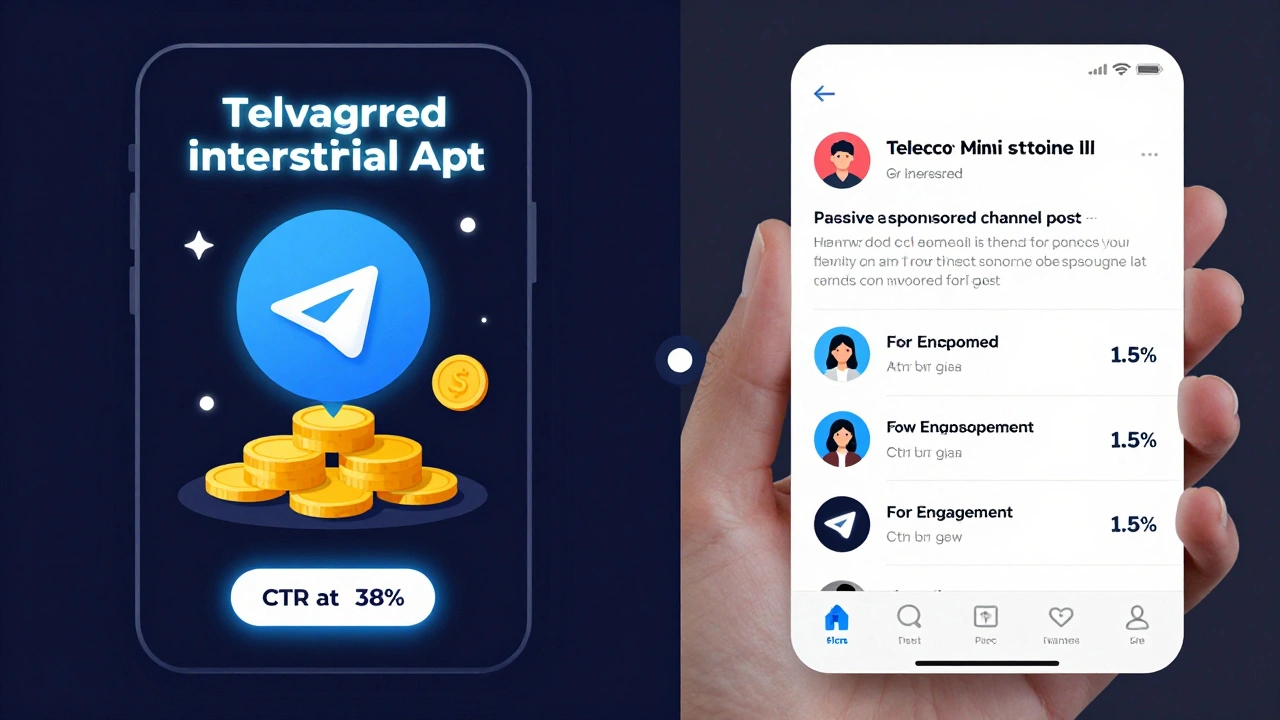
Telegram has two main ad formats: sponsored messages in channels and Mini App ads. They behave differently.Mini App ads (like rewarded interstitials) dominate the market. They make up 60-70% of all advertising volume. Why? Because users expect to earn something-coins, points, access-in exchange for clicking. These ads have higher engagement and lower fraud.
Compare them:
| Feature | Mini App Ads | Channel Sponsored Messages |
|---|---|---|
| Average CTR | 25-40% | 0.9-2.4% |
| Fraud Rate | Low | Higher |
| User Intent | High (reward-driven) | Low (passive scrolling) |
| Primary Format | Rewarded Interstitials (60-70%) | Sponsored Text/Image Posts |
Use this table in your report. It shows why Mini App ads are becoming the go-to for performance marketers.
Track Real Conversions, Not Just Clicks
A click doesn’t mean a sale. A bot sign-up doesn’t mean a paying user. The best reports track what happens after the click.For example:
- If the ad promotes a betting app, track how many users made their first deposit.
- If it’s a productivity tool, track how many users completed onboarding.
- If it’s a newsletter, track how many users stayed subscribed past 7 days.
These are the numbers that matter. Advertisers will pay more for a campaign with a 1% conversion rate than one with a 10% CTR that leads to zero action. Always tie your metrics to the advertiser’s goal.
Contextualize With Market Size
Don’t just report numbers. Show where they fit in the bigger picture.- Telegram hit 1 billion monthly active users in March 2025.
- 50% of users now interact with Mini Apps regularly.
- The Telegram ad market is worth $10 billion.
- Telegram earned $120 million in ad revenue during a single measured period.
This tells advertisers: You’re not running ads on a small platform. You’re reaching a global audience with real buying power.
Watch for Trends, Not Just Snapshots
Telegram’s ad ecosystem has changed. In 2024, Mini Apps were exploding-peaks of 1.44 billion monthly users. By mid-2025, that dropped to 150-190 million. Why? Because fake “tap-to-earn” apps got cleaned up.Now, the apps that remain are real: AI tools, finance trackers, utility bots. Users are more intentional. Fraud is down. Engagement is higher. That’s the new normal.
Your report should say: “Your campaign ran during a maturing phase. The numbers are stable, not flashy-but they’re real.”
Final Tip: Be Transparent
If a campaign underperformed, say why. Maybe the ad creative was weak. Maybe the timing missed a news cycle. Maybe the audience was too broad. Advertisers respect honesty more than fluff.And if it performed well? Explain why. Was it the targeting? The offer? The format? Show them the pattern so they can repeat it.
What’s the best way to track Telegram ad performance?
Start with Telegram’s official Ad Platform dashboard for core metrics like views, CPM, and clicks. Then layer in trusted third-party tools like TGStat or Telemetr for deeper insights into subscriber growth, engagement trends, and citation frequency. Always cross-check data between sources to avoid misleading numbers.
Why are CTRs on Telegram so much higher than other platforms?
Telegram users are there for direct, private communication-not passive scrolling. When they see an ad, they’re more likely to click because it’s often tied to a real need: a tool, a deal, or a service. Plus, Telegram doesn’t flood feeds with ads. The scarcity of ads makes each one more noticeable and intentional.
Should I report on CPC or CPS for my advertiser?
Report both, but lead with CPS. CPC tells you how many clicked. CPS tells you how many mattered. If your advertiser wants sales, sign-ups, or app installs, CPS is the number that determines if the campaign was worth it. Use CPC to explain traffic volume, but CPS to prove value.
Is Telegram advertising still growing?
Growth has stabilized. The wild, hype-driven phase ended in late 2024. Now, the platform is focused on quality. Fraud is down, user intent is up, and advertisers are staying longer because results are predictable. This isn’t decline-it’s maturity. It’s now a reliable channel, not a gamble.
How do I know if a third-party analytics bot is safe?
Check three things: 1) Does it have a public website with contact info? 2) Is it mentioned in trusted industry reports (like PropellerAds or TGStat)? 3) Does it ever ask for your channel password? If it asks for login credentials, it’s fake. Legit tools only read public data. Stick to tools with long track records and user reviews.