Telegram is one of the most popular platforms for breaking news, but it’s also one of the easiest places to get fooled. You open a channel, see a headline like "Military Base Bombed in Kyiv" or "Stock Market Crash Imminent", and suddenly your feed is flooded with shares, panic, and screenshots. But is it real? Or just another rumor dressed up as a report? The truth is, Telegram doesn’t fact-check anything. It doesn’t flag, remove, or warn you. That’s your job.
Why Telegram Is a Rumor Factory
Unlike Twitter or Facebook, Telegram doesn’t have an algorithm pushing content to you. Instead, you subscribe to channels - sometimes hundreds of them. Some are run by journalists. Others by bots. Some by people with no training at all, just strong opinions and a keyboard. And because there’s no moderation, false claims spread faster than real ones. A 2025 study of 13.7 million comments across 13 political Telegram channels found that nearly 2% of all messages were deliberate propaganda. Not mistakes. Not misunderstandings. Designed to mislead. The most dangerous part? These messages don’t look different. They use the same formatting, same emojis, same urgency. The difference isn’t in the words - it’s in the pattern.Look for Repetition, Not Just Content
One of the clearest signs of a rumor or propaganda campaign isn’t what’s being said - it’s how often it’s being repeated. Real reporters don’t post the same sentence across 20 different channels. They write unique stories. They cite sources. They adjust their language based on context. But propaganda accounts? They copy-paste. They use identical wording, sometimes even the same typos, across dozens of channels. Researchers from the Max Planck Institute found that automated systems can spot these patterns with 97.6% accuracy just by tracking repeated phrases. If you see the exact same headline - down to the punctuation - on three different Telegram channels within 10 minutes, it’s not a coincidence. It’s a campaign.Check Who’s Responding, Not Just Who’s Posting
Another red flag: propaganda doesn’t start conversations. It reacts. Look at the comments under a post. If the channel’s own account is replying to random users with the same scripted response - like "This is proof Putin is planning an attack" every time someone says "Zelensky" - that’s not journalism. That’s manipulation. Real news channels encourage discussion. They answer questions. They correct errors. Propaganda channels use comments as fuel. They wait for someone to say something emotional, then drop a pre-written response designed to amplify fear or anger. If you notice a pattern where replies are robotic, repetitive, and always match a political agenda, you’re looking at a bot network.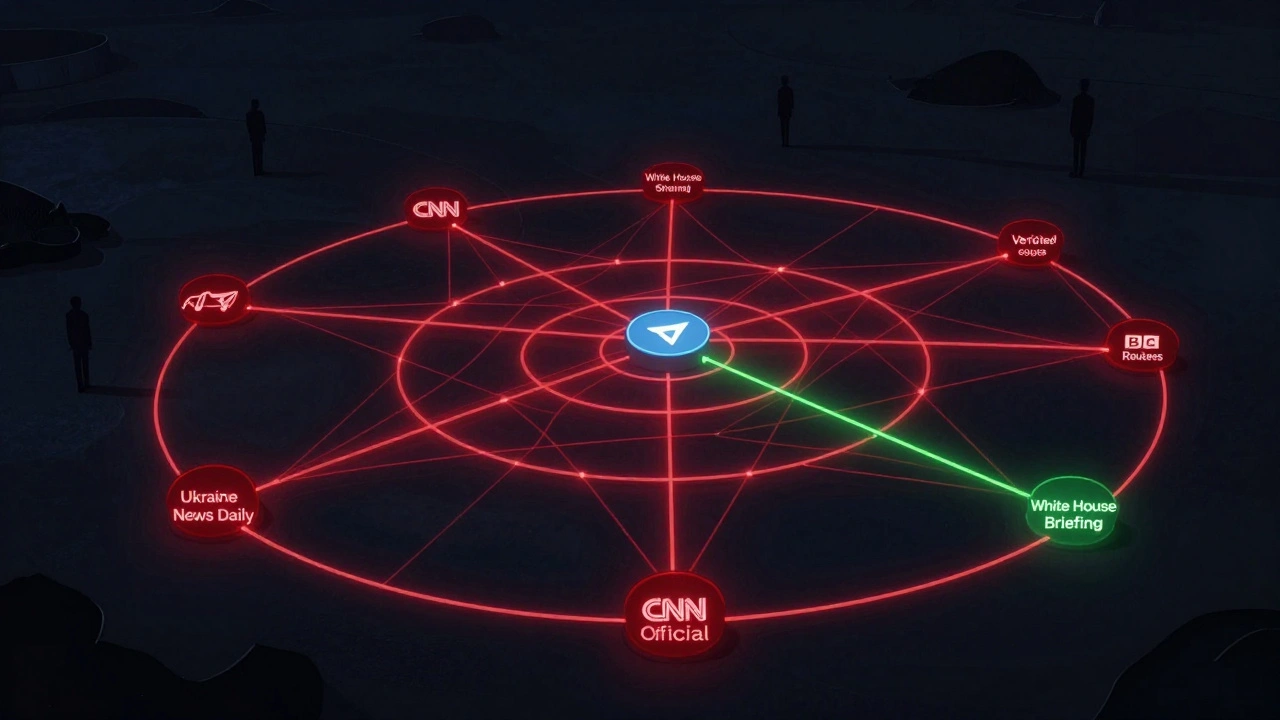
Use the Spread Power Score - Even Without Tech
A 2025 study on rumor classification introduced a concept called the Spread Power of Rumors (SPR). It’s not a tool you download. It’s a simple idea: false rumors rarely spread faster than true ones. That sounds backwards, right? But think about it. A real report comes from a verified source, gets picked up by multiple outlets, and spreads gradually. A rumor? It explodes overnight - because it’s designed to trigger emotion, not inform. Try this: when you see a shocking claim, ask yourself - Has this been reported anywhere else? Not on Telegram. Not on a random blog. On real news sites: BBC, Reuters, AP, local government sites. If it’s only on Telegram and a handful of unverified channels, it’s likely not true. True reports don’t live in echo chambers. They cross platforms.Don’t Trust the Channel Name
You might think, "This channel is called 'Ukraine News Daily' - it must be legit." But names are free. Anyone can create a channel named "CNN Official" or "White House Briefing." A 2024 study on German-language Telegram found that over 60% of misinformation came from channels with names that sounded official. Instead of trusting the name, check the history. How long has this channel been active? How many subscribers does it have? Does it post consistently, or only when something explosive happens? Look at the first 10 posts. Are they detailed? Do they include timestamps, locations, or sources? Or are they just screenshots with bold text and a call to share?Network Matters More Than Words
Here’s the secret most people miss: it’s not about what’s written - it’s about who connects to whom. Researchers built a graph of German Telegram channels and found that the most dangerous misinformation didn’t come from the biggest channels. It came from channels that were tightly connected to other channels, forming a web of mutual sharing. Think of it like this: if Channel A shares a rumor, and Channel B shares it too - and Channel C shares it from B - and Channel D shares it from C - you’re not seeing organic spread. You’re seeing a network. And networks like this are almost always coordinated. You don’t need to map the whole network. Just ask: Do these channels only talk to each other? If you see the same three channels sharing the same claims over and over, with no outside sources, that’s a closed loop. Real news breaks out. Fake news stays in.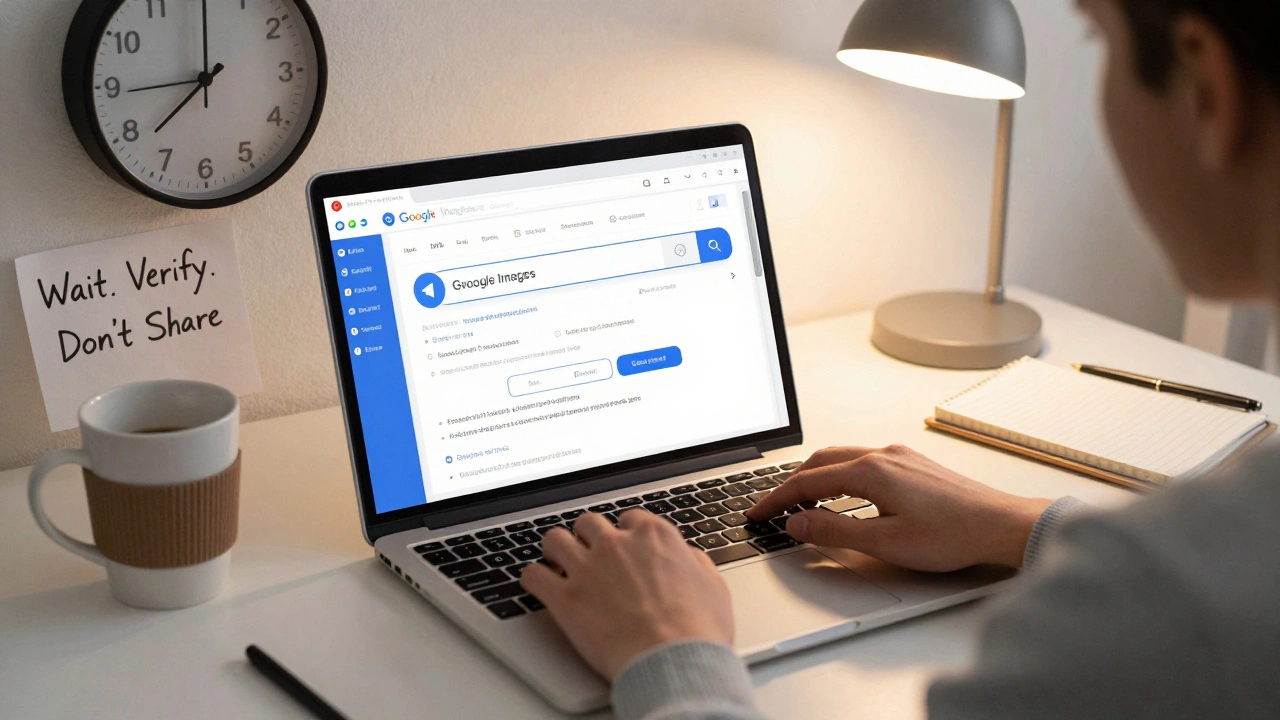
What to Do When You Spot a Rumor
Don’t just ignore it. Don’t just share it. Do this:- Wait 30 minutes. Real news spreads across platforms. If it’s true, it’ll show up on Reuters, BBC, or a government Twitter account.
- Search the claim. Copy a key phrase from the post - not the whole thing - and paste it into Google with quotes. If you get zero results from trusted sources, it’s likely false.
- Check the source. Is the image or video original? Use Google Images or InVID to reverse-search it. Fake videos often have mismatched shadows, wrong timestamps, or reused footage from old events.
- Don’t reply. Propaganda accounts thrive on engagement. Even saying "Is this true?" tells them you’re paying attention.
- Report it. Telegram allows you to report channels. Use it. Not because it’ll get taken down - it won’t - but because it helps Telegram’s own systems flag patterns over time.
The Human Edge
Automated tools can catch 90% of propaganda. But the other 10%? The subtle ones? The ones that twist half-truths into lies? Those still need human eyes. A 2025 study found that some Telegram channels removed 95% of propaganda - because their moderators were trained, experienced, and had clear rules. Others removed less than 20%. The difference? Context. Human moderators knew local history, cultural references, and past disinformation patterns. Machines don’t. That’s why the best defense isn’t an app. It’s habits. Learn to pause. Learn to verify. Learn to ask: Who benefits if I believe this?Final Rule: If It Feels Like a Trap, It Probably Is
Rumors on Telegram aren’t accidents. They’re engineered. They use urgency, fear, and outrage to bypass your brain’s filters. The more emotional the message - the more it makes you want to share - the more likely it’s false. Your brain is wired to react to danger. Rumors exploit that. Real news doesn’t need to scare you. It just needs to inform you. Stop sharing before you verify. Stop believing before you check. And remember - silence is not complicity. It’s strategy.How can I tell if a Telegram channel is spreading propaganda instead of real news?
Look for repetition. Propaganda accounts often post the same message across multiple channels with identical wording, even the same typos. Real news sources write unique content and cite sources. Also, check if the channel only responds to comments with scripted replies - especially when users mention names like Putin or Zelensky. That’s a classic sign of a coordinated disinformation network.
Can automated tools detect rumors on Telegram better than humans?
Yes, in some cases. A 2025 study from the Max Planck Institute showed that an automated system detected propaganda with 97.6% accuracy - outperforming human moderators by 11.6%. But humans still win on context. Machines can’t understand cultural nuance or historical patterns. The best approach combines automation for volume and humans for judgment.
Why do false rumors spread faster than true reports on Telegram?
False rumors are designed to trigger emotion - fear, anger, excitement. They use shocking headlines, urgent language, and emotional triggers. True reports are usually more measured. A 2025 study found that while false rumors spread quickly, they rarely outperform true ones in long-term reach. The key is to check if the claim appears on trusted platforms like BBC or Reuters. If it’s only on Telegram, it’s likely unverified.
Is it safe to trust Telegram channels with names like "CNN Official" or "White House Updates"?
No. Anyone can create a channel with a misleading name. A 2024 study found that over 60% of misinformation on German Telegram came from channels pretending to be official sources. Always check the channel’s history, subscriber count, and posting patterns. Real news outlets don’t rely on channel names - they rely on verified accounts and public records.
What’s the best way to verify a video or image shared on Telegram?
Use reverse image search tools like Google Images or InVID. Upload the screenshot or frame from the video. Look for mismatches in lighting, shadows, or timestamps. Many fake videos reuse footage from old events - like a fire in Syria labeled as a new attack in Ukraine. Also, check the metadata if possible. If the video was recorded in 2020 but claims to be from today, it’s fake.
Should I report suspicious Telegram channels?
Yes. While Telegram doesn’t remove channels quickly, reporting helps their systems identify patterns. When thousands of users report the same behavior - like identical comments across channels - it flags the network for deeper review. Reporting also reduces the channel’s visibility in search results over time.
Are there any tools I can use to automatically detect rumors on Telegram?
There are no public tools designed for Telegram users yet. Most detection systems are research-based and only work in labs. But you can use free tools like Google Images for reverse searches, InVID for video verification, and fact-checking sites like Snopes or Reuters Fact Check to verify claims. Your own critical thinking is still the most powerful tool.
How do I avoid falling for rumors when everything feels urgent?
Pause. Breathe. Wait 30 minutes. Real news doesn’t vanish. If it’s true, it’ll appear on multiple trusted sources. Don’t share anything that makes you feel panicked, angry, or overly excited. Those emotions are signals - not facts. Train yourself to say, "I’ll check this later," instead of "I have to share this now."