Imagine you just published a critical report or shared breaking news. Ten minutes later, you spot a glaring error in the data. In traditional publishing, fixing that mistake is a nightmare involving formal retractions, permanent notices, and weeks of administrative lag. But what if you could fix it instantly, transparently, and reach your entire audience in seconds? That is exactly where Telegram is a cloud-based messaging application that offers robust tools for real-time content management and distribution changes the game.
We are not talking about deleting the old message and posting a new one-that creates confusion and clutters the feed. We are talking about using Telegram’s built-in editing features to correct errors while maintaining an audit trail. This approach bridges the gap between the speed of social media and the accountability required in professional communication. Let’s look at how this works, why it matters, and where it falls short compared to formal academic standards.
The Mechanics of Editing on Telegram
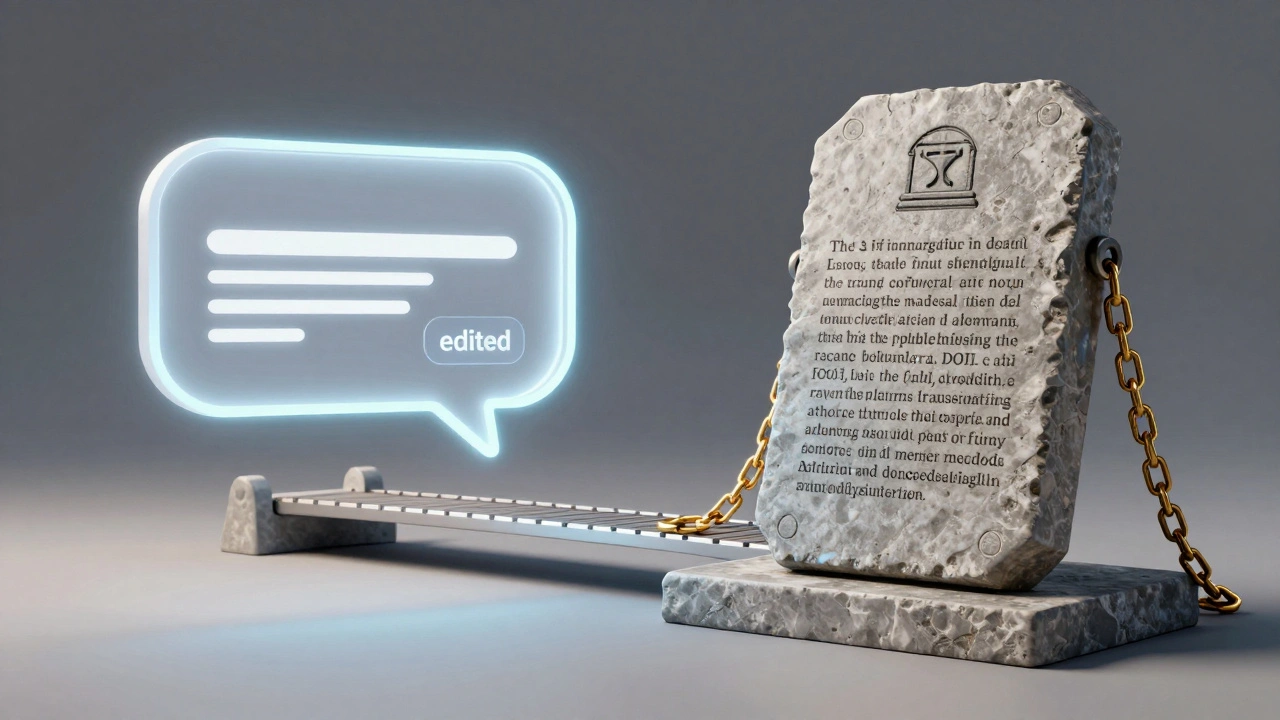
At its core, Telegram allows you to modify sent messages without reposting them. This feature is crucial for post-publication corrections because it preserves the context of the conversation or broadcast. When you edit a message, Telegram does not hide the fact that a change occurred. Instead, it automatically appends an "edited" timestamp notation to the message. This provides immediate transparency regarding when modifications took place.
To use this feature, you simply select the previously sent message and click the pencil icon. You can then directly edit the content. This addresses a fundamental problem in immediate-publication scenarios: previously, discovering an error meant sending entirely new messages to correct typos or inaccuracies. This cluttered communication threads with redundant content and often confused readers who didn’t know which version was current. With Telegram’s edit function, there is only one source of truth-the latest edited version.
However, there is a catch. The platform shows you the current edited version but does not create a detailed visual diff showing exactly what changed word-for-word unless you manually document those changes. For minor typos, this is fine. For complex data corrections, you need a strategy to ensure readers understand the nature of the update.
| Feature | Telegram | Traditional Academic Publishing |
|---|---|---|
| Speed of Update | Instant (seconds) | Slow (weeks to months) |
| Audit Trail | "Edited" timestamp only | Permanent linked correction notice |
| Version History | Current version visible; no diff | Full version history with amendments |
| Archival Guarantee | None (platform-dependent) | Permanent (DOI-linked) |
| Peer Validation | None | Required for major corrections |
Beyond Messages: The Stories Feature
If you are using Telegram for broader public-facing content, the Stories is a feature allowing users to share ephemeral content with comprehensive post-publication revision capabilities feature offers even more granular control. Telegram announced that Stories allow users to update any element-including visibility settings, captions, on-screen text, and stickers-without having to delete and repost from scratch. They characterized this as "the first time in the history of social media" such functionality existed.
This is powerful for post-publication updates. If you posted a Story with a statistic that turned out to be slightly off, you can open the story on the device from which it was originally posted, select the menu option (⋮ or ⋯), and choose "Edit Story." You can adjust the caption or text immediately. Furthermore, you can tweak privacy settings-switching from "Everyone" to "My Contacts" or "Close Friends"-if the correction needs to be limited to a specific audience before a final public release.
This flexibility makes Telegram uniquely suited for iterative content creation where accuracy evolves rapidly. However, like message editing, it lacks a built-in mechanism to explain *why* the change was made. You must rely on your own discipline to add notes within the edit itself.
The Technical Backbone: Reliability and Updates
For corrections to be effective, they must reach everyone who saw the original content. Telegram’s infrastructure supports this through a sophisticated state-tracking mechanism. According to its official API documentation, clients receive updates with serialized Update objects containing `pts` (private timestamp) or `qts` (queue timestamp) parameters.
The system automatically detects gaps in update sequences. If `local_pts + pts_count < pts`, the client initiates gap recovery protocols to ensure no updates are missed. This technical foundation enables reliable delivery and modification of published content. It addresses reliability concerns that might arise with informal correction distribution mechanisms. You don’t have to worry that half your audience missed the correction because their app was offline; the synchronization ensures they get the updated version when they reconnect.
This level of technical reliability is rare in free messaging platforms. It means Telegram can serve as a viable channel for time-sensitive corrections requiring rapid distribution, especially when combined with channels that support unlimited subscribers.
Formal vs. Informal: The Academic Divide
While Telegram excels at speed and accessibility, it cannot replace formal institutional publishing infrastructure. Traditional scholarly platforms like Taylor & Francis is a leading academic publisher employing formal post-publication correction mechanisms including Correction notices, Expressions of Concern, and Retractions require that aside from minor errors, "any necessary changes will be accompanied by a post-publication notice, which will be permanently linked to the original article." This maintains scholarly record integrity.
In contrast, platforms like F1000Research is an open-access journal employing a versioning system where authors can revise, change, and update articles by publishing new versions clearly linked to earlier ones employ a versioning system. Authors publish new versions, adding them to the original article's history. These new versions, along with their peer reviews, are easily navigable from earlier versions. Authors summarize changes in an "Amendments" section.
Telegram lacks these structures. It has no built-in peer review mechanism for validating corrections. It provides no standardized metadata structure for identifying correction types (e.g., critical error vs. minor typo). It offers no integration with citation databases or academic indexing services. Most critically, it lacks permanent archival guarantees. If Telegram were to shut down or restrict access, your corrections would vanish. A DOI-published correction remains accessible forever.
Practical Implementation Strategies
So, how do you use Telegram effectively for corrections without compromising credibility? You treat it as a complementary channel, not a replacement. Here is a practical framework:
- Dedicated Channels: Establish dedicated channels for each publication or subject area. Do not mix corrections with general chat noise.
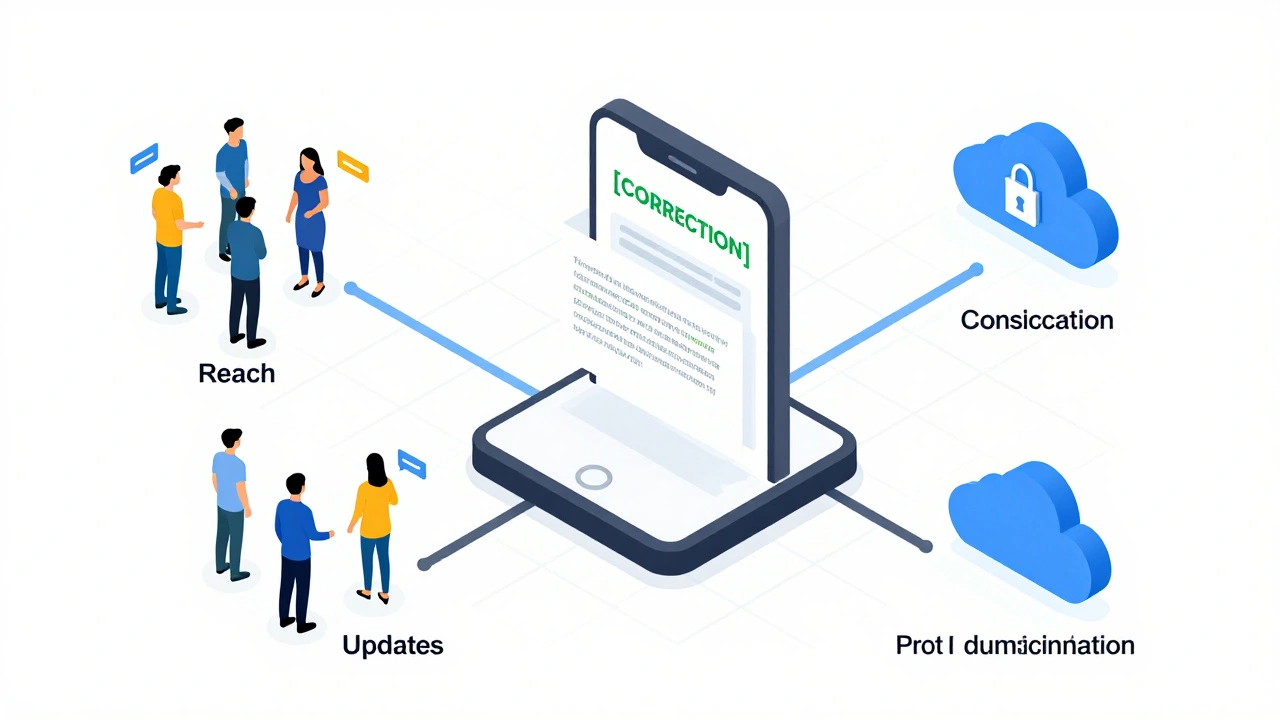
- Standardized Formatting: Create conventions to distinguish correction types. For example, start corrected messages with [CORRECTION] or [UPDATE] so readers instantly recognize the intent.
- Manual Documentation: Since Telegram doesn’t show diffs, include a brief note in the edit explaining what changed and why. Example: "[EDITED: Corrected Q3 revenue figure from $1M to $1.5M per audited statement]."
- Verification Protocols: Implement internal checks before pushing corrections to prevent misinformation. Speed should not compromise accuracy.
- Cross-Linking: If a formal correction exists elsewhere, link to it in your Telegram update. Use Telegram for speed, but direct readers to the authoritative source for permanence.
This approach leverages Telegram’s strengths-accessibility across iOS, Android, Windows, macOS, and web browsers, plus end-to-end encryption options-while mitigating its weaknesses. It is particularly useful for preprint servers, active researcher networks, and informal scholarly ecosystems where speed outweighs formal structure. Researchers actively maintain Telegram channels for field-specific discussions, and rapid correction distribution through such channels can reach engaged audiences before formal institutional mechanisms process notices.
Limitations and Risks
You must acknowledge the risks. The informality of Telegram channels contrasts sharply with the institutional authority conveyed by corrections appearing directly in academic publishing platforms. There is no DOI persistence. There is no permanent archival. And there is no guarantee that all subscribers will see the edit if they have muted notifications or haven’t opened the chat recently.
Additionally, Telegram’s edit feature, while providing modification transparency through "edited" timestamps, does not create detailed version histories. Users see only the current edited version without clear differentiation from the original text unless the sender manually documents changes. This places the burden of clarity entirely on the publisher. If you fail to explain the change, readers may assume malice or incompetence rather than simple error correction.
As of May 2026, there is no evidence that academic institutions, publishers, or professional organizations have formally adopted Telegram as a primary or official channel for publishing post-publication corrections. This remains an emerging and unconventional practice without established institutional endorsement or standardized protocols. Use it wisely, and always pair it with formal records when stakes are high.
Can I edit a message after it has been sent on Telegram?
Yes. You can select the message, click the pencil icon, and edit the content. Telegram will append an "edited" timestamp to indicate the modification, ensuring transparency without requiring you to delete and repost.
Does Telegram show what specifically changed in an edited message?
No. Telegram displays only the current edited version. It does not provide a visual diff or highlight changed words. You must manually include notes within the edit to explain what was corrected and why.
Is Telegram suitable for formal academic corrections?
Not as a standalone solution. Telegram lacks permanent archival guarantees, peer review validation, and integration with citation databases. It is best used as a supplementary channel for rapid dissemination alongside formal corrections published via DOI-linked platforms.
How do I ensure my audience sees the corrected message?
Telegram’s synchronization protocol ensures updates are delivered reliably when devices reconnect. However, to maximize visibility, consider pinning the corrected message in channels or sending a separate notification alerting subscribers to the update.
Can I edit Telegram Stories after posting them?
Yes. You can edit captions, text, stickers, and privacy settings in Stories without reposting. Access the edit function via the menu options (⋮ or ⋯) on the original story. This allows for iterative updates without losing engagement metrics.
What is the difference between a Telegram correction and a Taylor & Francis correction?
A Telegram correction is instant, informal, and lacks permanent archival or peer validation. A Taylor & Francis correction is formal, permanently linked to the original article, undergoes editorial review, and maintains scholarly record integrity through DOI persistence.
Should I use Telegram for correcting preprints?
Yes, cautiously. Telegram is excellent for rapid updates in preprint communities due to its speed and reach. However, always ensure the preprint server itself also hosts the corrected version to maintain a permanent, citable record.