Imagine reading a breaking news story on your phone, tapping a button in a chat window, and instantly seeing a 3D reconstruction of the event overlaid on your living room floor. It sounds like science fiction, but the infrastructure for this future is already being built right now inside messaging apps. By mid-2026, Mixed Reality (MR) and interactive news delivery are converging through an unexpected bridge: Telegram integrations. This isn't about replacing headsets with phones; it's about using the chat app as a command center for immersive storytelling.
We are moving past the era of passive scrolling. The combination of AI agents, low-code automation tools, and Telegram’s open API creates a powerful ecosystem where news is not just consumed but interacted with. Whether you are a journalist looking to engage readers or a tech enthusiast curious about the next wave of digital media, understanding how these pieces fit together is crucial. Here is how the landscape works today and where it is heading.
The Architecture of Immersive Chat
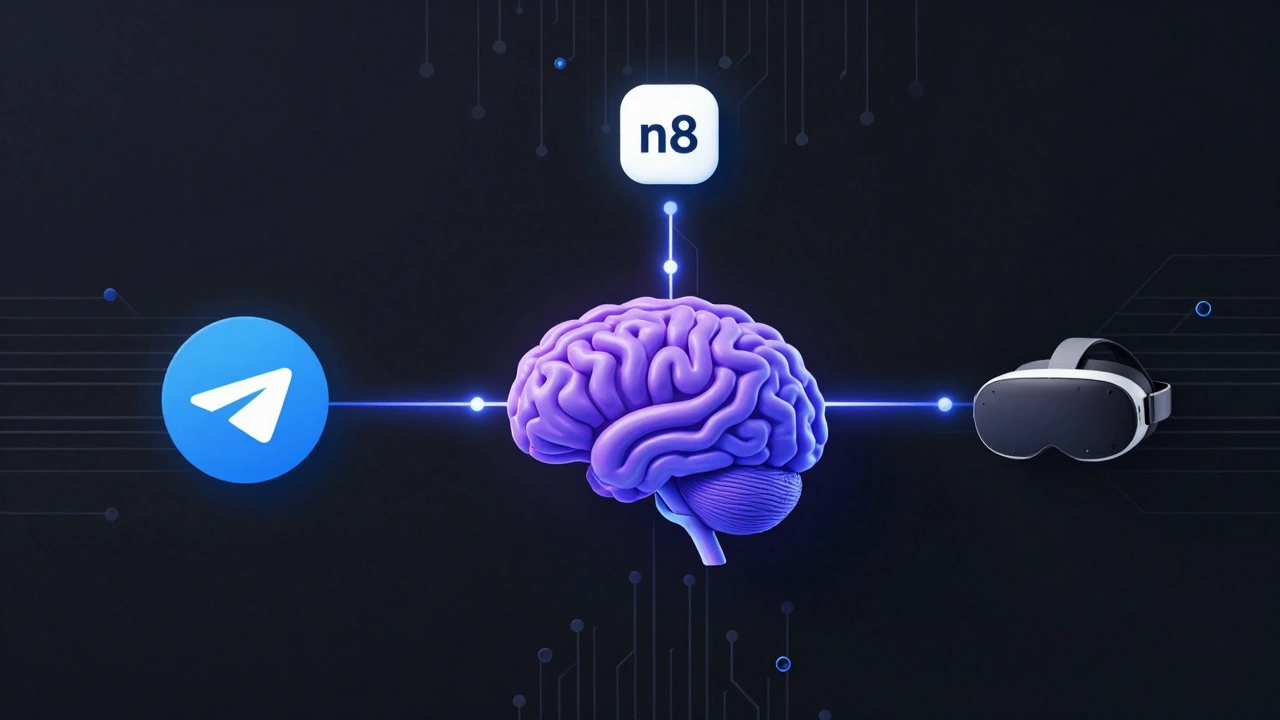
To understand how MR fits into a text-based app, we need to look at the layers. Currently, most "interactive news" on Telegram relies on a three-step pipeline: ingestion, processing, and distribution. Tools like BrowserAct or n8n pull data from the web, filter it using AI models like Google Gemini or OpenAI’s GPT-4.1 nano, and push formatted updates to a Telegram channel. This is the backbone. But the real shift happens when we add the Mixed Reality layer.
In this new model, Telegram acts as the control plane. Instead of just sending a link to an AR experience, the bot can manage the state of that experience. For example, a user could ask their AI agent in Telegram, "Show me the damage from last night’s storm," and the bot would trigger a specific scene in an external MR application, sending back a preview image or a deep link that opens the immersive view. The chat interface becomes the remote control for the virtual world.
| Approach | Complexity | Best Use Case | MR Capability |
|---|---|---|---|
| Low-Code Automation (n8n/Make) | Low | Periodic digests, simple alerts | Limited (link sharing only) |
| Custom Backend Development | High | Complex logic, real-time sync | Full control over MR scenes |
| AI Agent Frameworks (Hermes/Manus) | Medium | Conversational assistance, research | Emerging (via API connections) |
Key Players in the Ecosystem
You don’t need to be a coding wizard to build these systems anymore. Several platforms have emerged that make connecting news sources to Telegram surprisingly easy.
BrowserAct offers templates specifically for news content marketing. You can set up a workflow that automatically scrapes relevant articles, filters them for quality using an AI node, and sends high-relevance updates directly to your channel. It’s fast, visual, and requires minimal technical setup. If you want a weekly digest of tech trends without lifting a finger, this is your tool.
For more complex needs, n8n allows you to build custom bots. A common setup involves using Perplexity AI to search for recent events, passing those results to an LLM to summarize them, and then formatting the output for Telegram. This gives you granular control over tone, length, and structure. You can even configure it to send different types of media based on the topic.
Then there are the AI agents themselves. In early 2026, Meta’s Manus unit launched personal AI agents that integrate directly with Telegram. Users scan a QR code to connect their account, creating a persistent assistant that can retrieve information and perform tasks. Similarly, Hermes, an open-source project by Nose Research, lets developers create agents that interact through Telegram while connecting to external databases like Notion. These agents represent the "brain" of the operation, capable of understanding context and managing multi-step interactions.
Building Your First Interactive News Bot
If you are ready to experiment, here is how you can get started. We will focus on a hybrid approach that balances ease of use with functionality.
- Define Your Niche: Don’t try to cover everything. Pick a specific topic-like local real estate or global climate policy. Specificity increases engagement and reduces noise.
- Create Your Bot: Go to Telegram and find BotFather. Send the /newbot command, choose a name and username, and save the API token. This token is your key to programmatic access.
- Choose Your Engine: For beginners, start with Make.com or n8n. Both offer free tiers and pre-built Telegram nodes. Connect your bot token and specify the chat ID where messages should go.
- Add Intelligence: Integrate an AI model. Use OpenAI or Google Gemini to process raw news feeds. Write a prompt that instructs the AI to summarize articles in a conversational tone and include relevant keywords.
- Test and Iterate: Run a test workflow. Check if the formatting looks good on mobile. Adjust the prompt if the summaries are too long or too short. Once satisfied, schedule the workflow to run daily or hourly.
This basic setup gets you a functional news bot. To add interactivity, use Telegram’s inline keyboards. Add buttons like "Read More," "Share," or "Ask Question." When a user clicks "Ask Question," the bot can route the query to an AI agent for a personalized response.
The Role of Mixed Reality
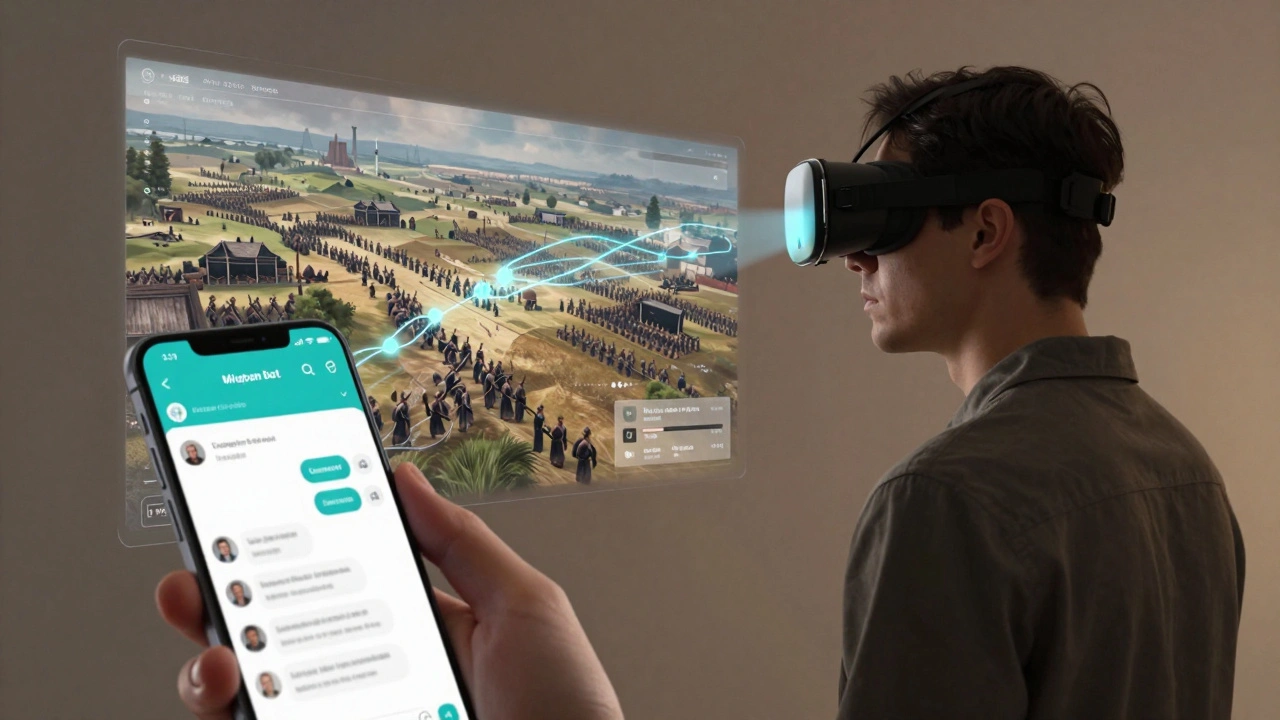
So where does Mixed Reality come in? Right now, it’s mostly in the planning phase for most creators, but the potential is huge. Imagine a news story about a historical battle. Instead of just reading text, users receive a Telegram message with a button labeled "View Battlefield." Clicking it launches a WebXR experience on their headset or phone, showing troop movements in 3D. The Telegram bot tracks which users viewed the experience and can follow up with a survey asking what they learned.
This feedback loop is critical. Traditional journalism is one-way: publisher to reader. With MR and Telegram, it becomes a dialogue. You can gather data on how people interact with 3D content, what questions they have, and which angles resonate most. This data can then refine future stories, making them more engaging and effective.
Technically, this requires connecting your Telegram bot to an MR backend. Platforms like Unity or Unreal Engine can expose APIs that allow external commands to change scenes or highlight objects. Your bot sends a command (e.g., "Highlight Building A"), and the MR app responds. While this adds complexity, frameworks like Hermes make it easier to manage these connections by acting as a middleware between the chat interface and the 3D engine.
Challenges and Considerations
It’s not all smooth sailing. There are practical hurdles to consider.
- Cost Management: AI API calls add up quickly. If your bot processes hundreds of articles daily, your bill can grow. Optimize your prompts to reduce token usage and consider caching frequently requested information.
- User Privacy: Be transparent about data collection. If your bot stores user preferences or interaction history, clearly state this in your privacy policy. Trust is essential for long-term engagement.
- Platform Dependency: Relying heavily on Telegram means you are subject to its rules and changes. Diversify your channels if possible, but remember that Telegram’s open API makes it uniquely flexible compared to closed ecosystems.
- Technical Debt: Low-code tools are great for starting, but they can become rigid as your needs grow. Plan for migration to custom code if your bot scales significantly.
Future Trends to Watch
As we move through 2026, expect to see tighter integration between AI agents and immersive devices. Companies like Meta are pushing agentic AI into messaging apps because chat is where people spend their time. The goal is to make AI invisible-it just works, helping you navigate information and experiences without friction.
We also anticipate more standardization in MR content formats. Just as HTML standardized the web, new protocols may emerge for sharing 3D news assets across platforms. Until then, creative workarounds using Telegram bots will continue to lead the way.
Finally, look out for advancements in voice and gesture controls within chat interfaces. As MR headsets improve, interacting with your news feed might involve speaking to your bot or waving your hand to dismiss a story, all while staying connected through Telegram.
What is the best tool for building a Telegram news bot?
For beginners, Make.com or BrowserAct are excellent choices due to their visual interfaces and pre-built templates. For more advanced users who need complex logic and customization, n8n or custom Python/Node.js backends are better suited.
How do I connect Mixed Reality content to Telegram?
You typically use the Telegram bot to send deep links or URLs that launch WebXR or native MR applications. For deeper integration, you can build an API endpoint that allows the bot to send commands to your MR backend, controlling scenes or highlighting objects in real-time.
Is it expensive to run an AI-powered news bot?
Costs vary based on volume. Using efficient models like GPT-4.1 nano and optimizing prompts can keep costs low. Free tiers of automation platforms like n8n and Make also help minimize initial expenses. Monitor your API usage closely to avoid surprise bills.
Can I monetize my interactive news Telegram bot?
Yes, through sponsored content, premium subscriptions for exclusive insights, or affiliate links. Ensure that any commercial activity complies with Telegram’s terms of service and provides clear value to your audience.
What is the role of AI agents like Manus or Hermes?
These agents act as intelligent intermediaries. They can process natural language queries, retrieve relevant information from various sources, and execute actions like updating databases or controlling other apps. In a news context, they provide personalized summaries and interactive assistance.