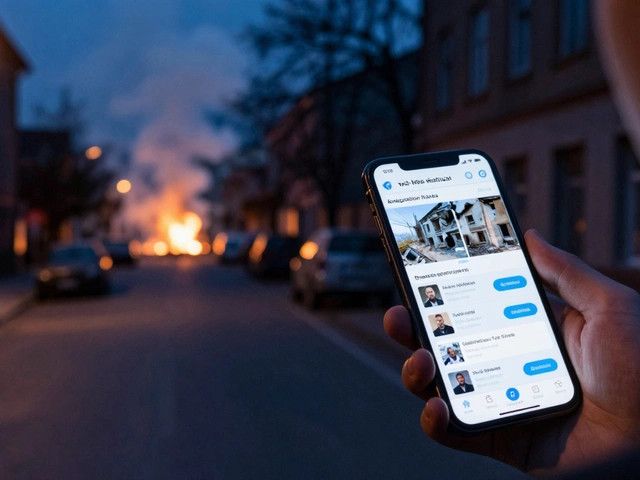
You check your phone. On one screen, a polished Reel explains a breaking election result with upbeat music. On the other, a raw text update from a war zone arrives instantly in a chat window. Both are news. Both are real. But they work completely differently.
For journalists, creators, and everyday readers, the choice between Instagram and Telegram isn't just about preference-it's about control. One platform pushes content to you based on what it thinks you'll watch. The other delivers exactly what you subscribed to, without interference. Understanding this split is critical if you want to distribute news effectively or consume it reliably in 2026.
The Core Difference: Algorithmic Discovery vs. Direct Delivery
Let’s cut through the noise. Instagram is a visual social network owned by Meta that uses complex machine-learning algorithms to rank content. Its primary goal is discovery. It wants to show you content from people you don’t follow yet because it predicts you’ll engage with it. For news, this means viral potential. A single well-made explainer video can reach millions of users who have never heard of your outlet.
Telegram, on the other hand, is a messaging app focused on direct communication via Channels and Groups, where posts appear chronologically without algorithmic filtering. There is no "Explore" feed for news here. If you subscribe to a channel, you get every message. If you don’t, you see nothing. This makes Telegram a retention tool, not a discovery engine. You have to bring the audience yourself, but once they’re there, you own their attention.
This distinction defines everything else: reach, trust, production effort, and risk.
Audience Reach and User Behavior
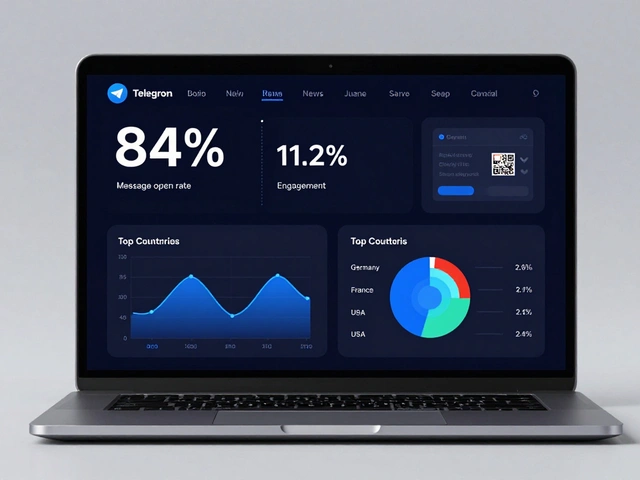
Size matters, but not always in the way you expect. Instagram has approximately 2.3 billion monthly active users as of 2024-2025 estimates. It is a mass-market platform. According to the Reuters Institute Digital News Report 2023, about 16% of global respondents use Instagram for news at least once a week. Among users aged 18-24, that number jumps to nearly 40%. It is the dominant source for "soft news"-celebrity updates, lifestyle trends, and visually driven explainers-for younger demographics.
Telegram has roughly 900 million monthly active users. While smaller, its news usage is highly concentrated. In regions like Eastern Europe, Russia, Ukraine, and Iran, Telegram is often the primary source for hard news, politics, and conflict coverage. Reuters data shows that in some post-Soviet markets, over 20% of online news users rely on Telegram weekly. These users aren't scrolling for entertainment; they are seeking specific, timely information.
| Feature | Telegram | |
|---|---|---|
| Monthly Active Users (Est. 2025) | ~2.3 Billion | ~900 Million |
| Primary News Audience | Global, Under-35s, Lifestyle | Niche, Political, Crisis Zones |
| Content Format | Video (Reels), Images, Stories | Text, Links, Long-form Posts |
| Discovery Mechanism | Algorithmic (Explore, Reels) | Opt-in (Links, Shares, Search) |
| Average Post Reach | 5-10% of Followers | 60-80% of Subscribers |
| Moderation Level | High (AI + Human Review) | Low (Legal Requests Only) |

How the Algorithms Actually Work
If you publish news on Instagram, you are fighting an algorithm. In 2026, Meta’s ranking systems prioritize "intent-driven engagement." This means watch time, DM shares, and saves matter far more than likes. The system uses AI to analyze visuals, audio, and on-screen text to determine relevance. If your caption says "Breaking News" but the video doesn’t match the topic, the algorithm suppresses it. Furthermore, early performance with non-followers determines whether your content gets pushed to a wider audience. This creates volatility. A policy change in February 2024 reduced proactive recommendations for political content unless users opted in, instantly shrinking reach for many news creators.
Telegram has no such algorithm for channels. When you post, it goes to every subscriber’s inbox. There is no shadow-banning. No reach throttling. No engagement-based distribution. This predictability is invaluable for breaking news. If a protest starts, your subscribers see the update immediately, regardless of how many people liked the previous post. The trade-off is growth. Without algorithmic suggestion, you must drive traffic from elsewhere-your website, Twitter/X, or email newsletters-to build your subscriber base.
Control, Censorship, and Editorial Freedom
Who decides what gets seen? On Instagram, Meta Platforms Inc. holds the keys. The platform enforces Community Guidelines, partners with third-party fact-checkers, and demotes content labeled as "borderline" or false. In countries like Russia and Iran, Instagram has been banned entirely, cutting off access for millions. Even in allowed markets, journalists report sudden drops in reach (sometimes 70-90%) when covering sensitive topics like war footage or health misinformation. You do not control your distribution; you rent it from a corporation that answers to advertisers and regulators.
Telegram operates on a laissez-faire model. Founded by Pavel Durov, the company removes content only in response to legitimate legal requests regarding illegal activities like terrorism or child abuse. It does not scan private chats and rarely intervenes in public channels unless legally compelled. This has made Telegram essential for opposition media and citizen journalists in Belarus, Russia, and Iran. However, this freedom comes with risks. The same lack of moderation allows propaganda and unverified claims to spread rapidly. During conflicts, Telegram channels often share graphic, unchecked footage. There are no fact-check labels. Verification is up to the reader.

Privacy and Data Usage
Your behavior on these platforms tells two different stories about privacy. Instagram collects extensive data: viewing time, location, device identifiers, and off-platform browsing via trackers like the Meta Pixel. This data fuels targeted advertising, which generated over $110 billion for Meta in 2022. Your news consumption habits become part of your ad profile. Privacy advocates and regulators under the EU’s GDPR and Digital Services Act have raised significant concerns about this surveillance.
Telegram markets itself as privacy-first. It uses client-server encryption for regular chats and end-to-end encryption for "Secret Chats." Note that public news channels are not end-to-end encrypted, meaning Telegram servers can theoretically access them if forced. However, Telegram stores minimal behavioral data for advertising. It introduced limited "Sponsored Messages" in 2021 but lacks the deep profiling of Instagram. For users in authoritarian states, this relative independence-and support for circumvention tools-makes it attractive, despite criticisms regarding phone-number registration requirements.
Practical Strategy for Creators and Newsrooms
So, which one should you choose? The answer is rarely either/or. Most successful news organizations and independent journalists use a hybrid approach.
Use Instagram for discovery and brand building. Create high-quality Reels and carousels to reach new audiences, especially younger demographics. Accept that reach will be volatile and that you must constantly adapt to format changes. Use it to humanize your brand and explain complex topics visually.
Use Telegram for retention and depth. Move your most engaged followers there. Share raw updates, long-form analysis, and exclusive insights. Because click-through rates on links in Telegram can be 3-5 times higher than on Instagram, it is a powerful driver of traffic to your main website. It serves as a reliable notification system that doesn’t depend on algorithmic favor.
Start by embedding a "Join our Telegram Channel" link in your Instagram bio and website. Promote your Instagram Reels within your Telegram community to boost cross-platform visibility. This dual strategy mitigates the risks of platform bans or algorithm shifts while maximizing both reach and control.
Is Telegram better than Instagram for breaking news?
Yes, for speed and reliability. Telegram delivers messages instantly to all subscribers without algorithmic delay or suppression. Instagram’s algorithm may deprioritize breaking news if it doesn’t generate immediate engagement or if it falls under restricted political categories.
Can I grow a news audience organically on Telegram?
Organic growth is difficult because there is no discovery feed. You must promote your channel link externally via websites, other social media, or word-of-mouth. However, once users join, retention is typically higher than on Instagram.
Does Instagram censor political news?
Instagram reduces the reach of political content unless users opt in. It also partners with fact-checkers to label or demote content deemed false. This is not censorship in the legal sense, but it significantly limits visibility compared to Telegram’s open model.
Which platform offers better click-through rates for news links?
Telegram generally offers higher click-through rates, often ranging from 10% to 30% in niche communities. Instagram link clicks (via bio or stories) typically range from 3% to 5%, as the platform prioritizes keeping users within the app rather than driving external traffic.
Is my data safer on Telegram?
Telegram collects less behavioral data for advertising purposes than Instagram. However, public channels are not end-to-end encrypted, and phone numbers are required for registration. Instagram collects extensive data for targeted ads, raising greater privacy concerns for users.