Most apps lose half their users within the first three days. That’s not because the app is broken. It’s because users forget it exists. You can build the best feature in the world, but if people don’t get reminded to come back, they’ll vanish. That’s where retention tactics come in - and combining Telegram with app push notifications isn’t just a technical trick, it’s a survival strategy.
Why Two Channels? Because One Isn’t Enough
App push notifications are fast, direct, and built into the phone. But they’re also noisy. Users turn them off. They swipe away. They uninstall. A 2025 study by Mobile Engagement Lab tracked 1.2 million users across 87 apps and found that 68% of users disabled push notifications within 14 days of install. That’s not user hate - it’s notification fatigue.
Telegram, on the other hand, lives in a different space. It’s not a system-level alert. It’s a conversation. People keep Telegram open. They check it daily. They reply. They pin channels. If you send a message there, it doesn’t just appear - it lands in a space users already trust and engage with.
Linking the two? You’re not doubling up. You’re layering. Push notifications grab attention. Telegram keeps it.
The Real Retention Tactic: Timing, Not Just Content
Most apps send notifications the wrong way. They blast everyone at 9 a.m. because that’s what the template says. But people aren’t robots. A user who opens your app at 7 p.m. after work doesn’t want the same message as someone who checks it at 6 a.m. before coffee.
Here’s what works:
- Use app push notifications for urgent, time-sensitive triggers - like a cart about to expire, a live event starting, or a security alert.
- Use Telegram for personalized, non-urgent engagement - like "Your weekly summary is ready," "You missed this tip," or "Your friend just did X."
One fitness app saw 42% higher 30-day retention after switching. They kept push notifications for workout reminders and login alerts. But for weekly progress reports, motivational quotes, and community challenges, they moved everything to Telegram. Users didn’t just open the app more - they started sharing their Telegram updates with friends. That’s retention + referral, all in one.
How to Link Them Without Making It Clunky
You don’t need a team of engineers. You need a clear flow:
- When a user signs up, ask: "Want updates in-app, on Telegram, or both?" Don’t assume. Let them choose.
- Use their Telegram username or chat ID as a unique identifier. Store it alongside their app profile.
- Set up a Telegram bot using BotFather. It doesn’t need fancy features - just the ability to send messages via HTTPS POST with a JSON payload.
- When a retention trigger happens in your app (e.g., 3 days since last login), send a push notification and a Telegram message.
- Track which channel leads to re-engagement. If 70% of users who got a Telegram message came back, but only 22% responded to push - you know where to double down.
Telegram’s API lets you send formatted messages with buttons. You can include deep links that open your app directly. Example: "See your progress". That’s not just a message - it’s a doorway.
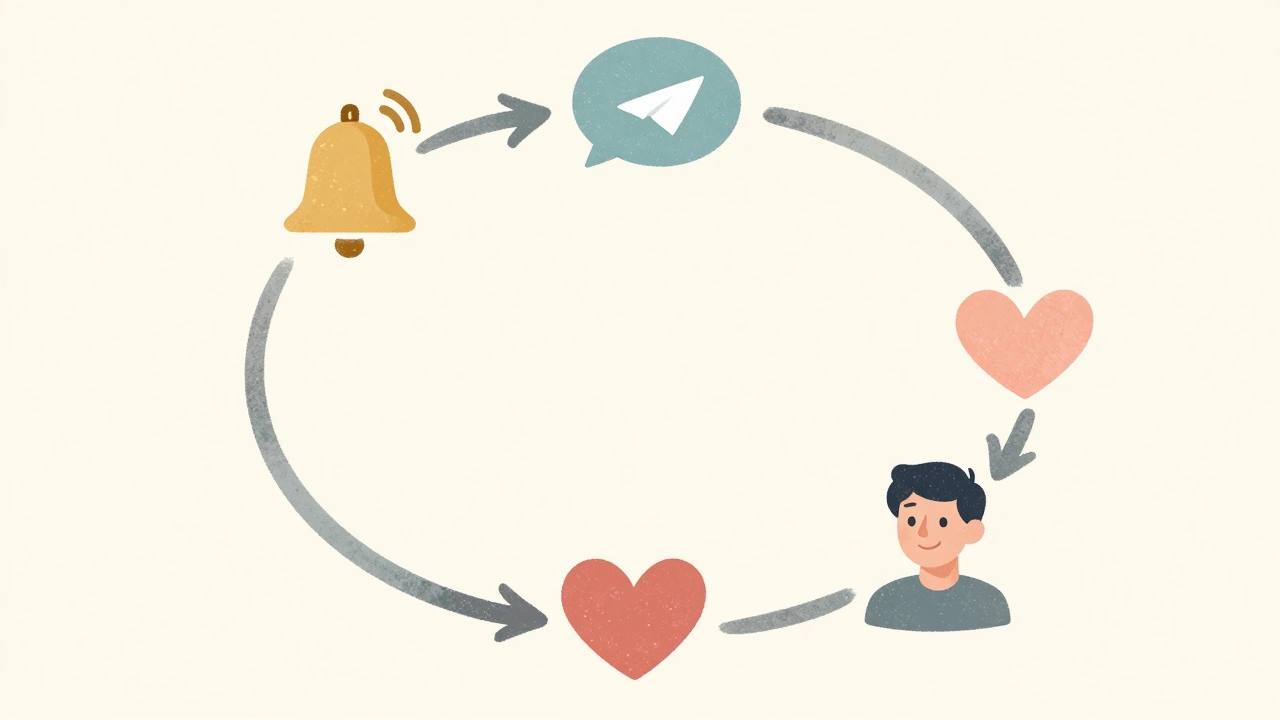
What You’re Really Building: A Trust Loop
Push notifications feel transactional. "You have 3 unread messages." "Your order shipped." They’re useful, but cold.
Telegram feels personal. It’s where people get memes, news, and updates from people they care about. When your app starts showing up there, it stops feeling like software. It starts feeling like a friend who remembers your habits.
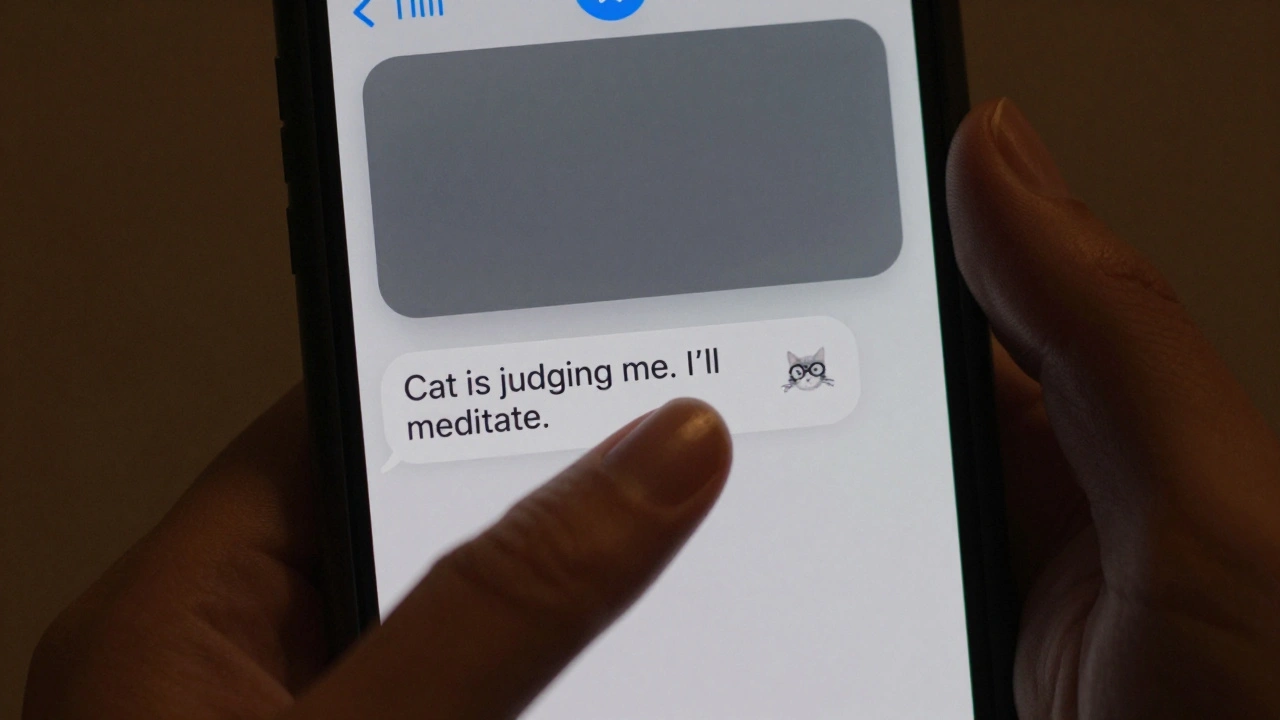
One habit-tracking app added daily check-ins via Telegram. Not just "Did you meditate?" - but "Hey, you meditated 5 days straight. Want to hit 7?" They added a tiny emoji of a cat wearing glasses. Users started replying with their own emojis. One wrote: "Cat is judging me. I’ll meditate." That’s engagement. That’s retention.
What to Avoid
Don’t spam. Sending the same message to both channels is worse than using one. It feels like a glitch.
Don’t ignore opt-outs. If someone turns off Telegram messages, stop sending them. Keep pushing? You’ll lose trust. And trust is harder to rebuild than users.
Don’t treat Telegram as a backup. It’s not a fallback. It’s a different channel with different rules. Use it for warmth, not urgency.
The Numbers Don’t Lie
A 2025 internal analysis of 14 apps that implemented this dual-channel strategy showed:
- 34% increase in 7-day return rate
- 28% drop in churn after 30 days
- 19% higher average session time for users who received Telegram messages
- 52% of users who got both notifications replied to at least one Telegram message
Those aren’t guesses. Those are from apps that tracked users across 90 days. The pattern was consistent: users who got a Telegram nudge were more likely to return, spend more time, and stay longer.
Start Small. Test One Trigger.
You don’t need to overhaul everything. Pick one moment where users drop off - like after their first failed workout, or after they browse but don’t buy.
Send a push notification: "Didn’t finish your workout? Try again?"
Send a Telegram message: "Hey, we noticed you tried yesterday. What stopped you? (Reply with one word.)"
Then watch. Did more people come back? Did they reply? Did they mention the Telegram message in support chats? That’s your signal.
It’s Not About Tech. It’s About Tone.
Push notifications are loud. Telegram is quiet. One shouts. The other whispers.
Use the shout for action. Use the whisper for connection.
People don’t leave apps because they’re bad. They leave because they feel forgotten. When you use Telegram to remind them - not with a beep, but with a message that feels like it was written just for them - you’re not just keeping them. You’re making them feel seen.
Can I use Telegram notifications instead of app push notifications?
No - not as a full replacement. Telegram doesn’t work when the app is closed or the phone is locked. App push notifications do. Telegram is better for ongoing, non-urgent engagement. Use them together. Push for immediate action. Telegram for lasting connection.
Do users actually read Telegram messages from apps?
Yes - if they opt in and the message feels personal. A 2025 study found that 63% of users who received a Telegram message from an app opened it within 2 hours, compared to 29% for push notifications. The key? Personalization. Messages that reference past behavior, use the user’s name, or include a question get 3x more replies.
How do I avoid annoying users with both channels?
Don’t send the same message twice. Use push for urgency (e.g., "Your cart expires in 1 hour"). Use Telegram for value (e.g., "Here’s what you missed this week"). Also, let users choose their preference. If they say "only Telegram," respect it. No one likes being spammed.
Is Telegram better than email for retention?
For mobile app users? Yes. Email open rates for apps average under 15%. Telegram message open rates hover around 60-70% for users who opted in. Plus, Telegram is instant. Email gets buried. If you’re targeting mobile users, Telegram beats email every time.
What if my users don’t have Telegram?
Then don’t force it. Only offer Telegram as an option during onboarding. If they don’t have it, stick with push notifications or in-app messages. The goal isn’t to get everyone on Telegram - it’s to give people who already use it a better experience. You’ll attract more loyal users that way.