Imagine a neighborhood where the most important news isn't a global political crisis, but the fact that the bakery on 4th Street is giving away free sourdough this morning, or that a specific intersection is blocked due to a burst pipe. This is the heart of hyperlocal news. While traditional newspapers are disappearing, a new breed of media is emerging in emerging markets, leveraging Telegram is a cloud-based instant messaging service that allows users to create massive public channels and groups for broadcasting information.
The challenge isn't starting a channel-anyone can do that. The real hurdle is scaling. How do you cover ten, fifty, or a hundred different neighborhoods without burning out or hiring a massive staff you can't afford? The answer lies in transitioning from a traditional "top-down" editorial model to a contributor-led ecosystem. By turning your readers into your reporters, you can create a sustainable, high-growth news network that feels human and authentic.
The Shift to Community-Sourced Intelligence
Most local news fails because it follows the "police blotter" model: focusing exclusively on crime, accidents, and political gridlock. This exhausts the reader. To scale on Telegram, you need to pivot toward a "thrive" model. Focus on what makes a neighborhood better: new restaurant openings, hidden park trails, high school sports highlights, and local hero stories. When you celebrate a community, people actually want to help you build it.
This is where Citizen Journalism comes in. Instead of one editor trying to be everywhere, you empower residents to share "intel." However, you can't just open a group chat and hope for the best-that's a recipe for spam. You need a structured contributor pipeline. Start by identifying "super-users"-the people who already know everyone in the neighborhood. Give them a formal role, a clear set of guidelines, and a sense of ownership over their specific zone.
Building the Contributor Pipeline
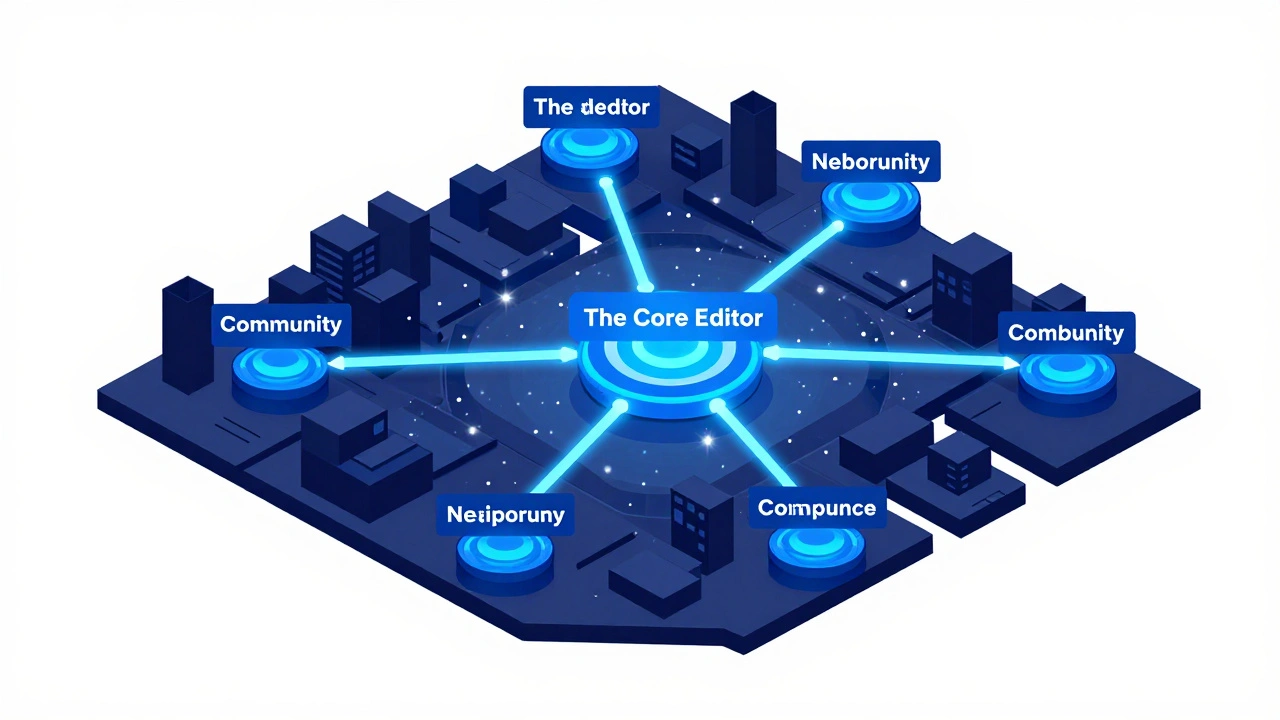
Scaling requires a repeatable system. You can't manage contributors via random DMs; you need a workflow. A successful scaling strategy usually follows a three-tier hierarchy:
- The Core Editor: Maintains the brand voice, verifies high-stakes news, and handles monetization.
- Neighborhood Leads: Trusted locals who vet submissions from their specific area and ensure consistent daily coverage.
- Community Contributors: Casual users who send in photos, tips, or event alerts.
To keep the quality high, implement "chalkboard sourcing." Encourage your contributors to look for the news that isn't on Google-the physical flyers at the local cafe or the whispered rumors about a new development project at the community center. This creates a unique value proposition: if your Telegram channel is the only place to find out about the secret jazz trio playing on Tuesday, people will never mute your notifications.
| Feature | Traditional Editorial | AI Aggregation | Community Contributor Model |
|---|---|---|---|
| Speed | Slow (Verification takes time) | Instant (API based) | Real-time (On-the-ground) |
| Authenticity | High | Low (Generic) | Very High (Personal) |
| Scalability | Low (Costly) | Infinite | High (Network effect) |
| Trust | Institutional | Low | Peer-to-Peer |
Operationalizing Growth Across Multiple Zones
Once you've nailed the model in one neighborhood, horizontal scaling becomes a game of replication. You don't reinvent the wheel; you clone the framework. This means creating a "Contributor Handbook" that defines what constitutes a story, how to take a usable photo, and the rules of engagement.
To avoid operational collapse, centralize the "back office." Use a small team of remote operators to handle the technical side-scheduling posts, managing bot filters, and cleaning up the feed-while the local leads focus on the human relationships. If you're expanding into a new city every three months, your primary job isn't writing news; it's recruiting and managing people.
Leverage Telegram Bots to automate the intake of news. Instead of a chaotic chat, use a bot that asks contributors for specific details: "What happened?", "Where is it?", and "Do you have a photo?". This structures the data, making it ten times faster for an editor to approve a post.
Monetizing Without Alienating Your Base
The biggest risk in community-led news is becoming a billboard. If you flood the channel with generic ads, your contributors will stop sending tips. The key is performance-based, hyperlocal advertising. Avoid the "pay per impression" model and move toward a "Run Until Click" approach.
For example, a local coffee shop pays a flat fee of $200 for 100 targeted clicks to their new menu. You run the ad in the channel until that threshold is met. This guarantees the advertiser a return on investment (ROI) and keeps the content relevant to the users. Because the ad is for a business they actually visit, it feels like a recommendation rather than an intrusion.
Furthermore, deepen your credibility by partnering with local non-profits. Donating a few ad slots to a neighborhood food drive or a youth sports league doesn't just help the community-it signals that your channel is a civic institution, not just a profit-seeking venture. This build-up of social capital is what protects you from competitors who might try to buy their way into the market.

The AI Trap and the Human Edge
There is a temptation to use AI to summarize local government meetings or automate event calendars. While Artificial Intelligence can help with the workflow, it cannot replace the human element of trust. AI cannot walk into a local venue and feel the energy of a crowd; it cannot understand the nuance of a long-standing neighborhood rivalry.
The most-read stories in hyperlocal media are almost always the unglamorous ones: town council zoning changes, school board decisions, and neighborhood safety updates. AI can summarize the minutes of a meeting, but a community contributor can tell you *why* that zoning change actually matters to the people living on that specific block. The value is in the context, not the information. Focus your AI tools on the "boring" tasks-transcription and scheduling-and leave the storytelling to the humans.
How do I stop spam in a community-led Telegram channel?
Avoid open group chats for news delivery. Use a broadcast channel for the news and a separate, strictly moderated group for discussion. Use a bot to funnel all news tips through a private submission form rather than allowing anyone to post directly to the main feed. This ensures every piece of content is vetted by a lead before it goes live.
How should I reward community contributors if I can't pay them?
Social currency is more powerful than a small cash payment. Give contributors a "Verified Local" badge, credit them by name in the posts, and create an exclusive "Insider" group where they get to meet the editors and influence the editorial direction. People love feeling like they are part of an elite group that helps their neighborhood.
What is the ideal size for a hyperlocal news zone?
The zone should be small enough that a single person can realistically navigate it on foot or by bike in an hour. Usually, this is a few square miles or a specific set of neighborhoods. If the area is too large, the news stops being "hyperlocal" and starts feeling like a general city newspaper, which kills the intimacy of the community bond.
Can I use Facebook ads to grow my Telegram channel?
Yes, and it's highly effective. Instead of a generic "Join my news channel" ad, use a high-value lead magnet. Try an ad like "The 5 Best Hidden Parks in [Neighborhood]-Full List in our Telegram." This targets a specific interest and provides immediate value, leading to a much lower cost per subscriber, often between $0.25 and $0.50 in mid-sized markets.
How do I handle misinformation from contributors?
Establish a "Two-Source Rule" for any news that could be damaging or controversial. If a contributor sends a tip about a fire or a crime, do not post it until you have a second independent confirmation or a photo that verifies the event. Be transparent about corrections; if you post something wrong, apologize publicly and correct it immediately. This builds more trust than pretending to be perfect.
Next Steps for Scaling
If you are currently running a single successful channel, your next move is to identify your "Beta Zone." Pick an adjacent neighborhood with similar demographics and recruit one strong Neighborhood Lead. Don't try to launch five cities at once; refine the contributor handbook in the second zone first. Once you can successfully onboard a new lead and maintain a steady stream of local intel without your constant intervention, you have a scalable asset. From there, it's simply a matter of repeating the process and expanding your network of trusted locals.
Latest Posts