When Pavel Durov was arrested in August 2024 at Le Bourget Airport near Paris, it wasn't just a headline for tech enthusiasts. It was a seismic event for anyone who relies on Telegram, the messaging app with nearly 900 million monthly active users, to get their news. For years, Telegram has operated as a gray zone-a place where independent journalists, political activists, and criminal networks all coexist under the banner of privacy. The arrest signals that this era of unchecked openness is likely over.
If you follow global news from conflict zones like Ukraine or authoritarian states like Russia, you know Telegram isn't just a chat app. It's your primary feed. But what happens when the person who built that feed faces up to 20 years in prison for allegedly allowing illegal content to flourish? The implications ripple through every public channel, every news bot, and every user who expects anonymity. Here is what the legal trouble facing Durov means for the future of news on Telegram.
The Myth of Total Privacy vs. Public Reality
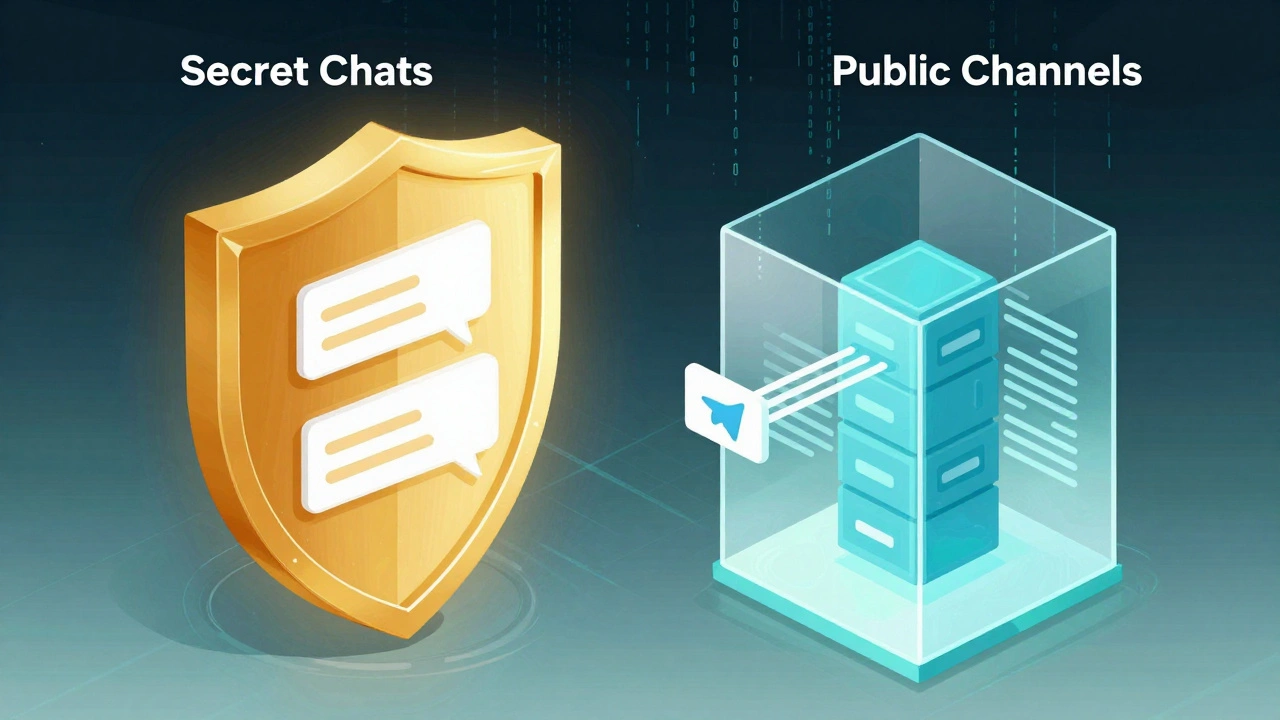
To understand why French prosecutors went after Durov, we have to look at how Telegram actually works. There is a common misconception that everything on Telegram is unbreakable. That’s only true for "secret chats," which use end-to-end encryption. However, the vast majority of the news ecosystem-public channels, large groups, and media broadcasts-does not use this protection.
These public spaces rely on Telegram’s proprietary MTProto protocol. This means the data is encrypted between your phone and Telegram’s servers, but Telegram itself holds the keys. In technical terms, they can access the content. This distinction is crucial. The French case isn't about breaking encryption; it’s about platform governance and the failure to moderate publicly accessible content.
Criminal networks, fraudsters, and distributors of illegal material were using these public channels because they are easy to find and share. Because these channels are visible to anyone with a link, law enforcement could monitor them without needing special warrants to break codes. Prosecutors argue that by ignoring requests to remove this content and failing to set up proper compliance structures in France, Durov was complicit in the crimes hosted on his platform.
From Messenger to Global News Infrastructure
Telegram’s role in journalism has evolved dramatically since its launch in 2013. Initially created by Pavel and his brother Nikolai Durov after conflicts with Russian authorities over data control, the app became a refuge for free speech. Today, it functions more like a social media network than a simple messenger.
In regions where traditional media is restricted or state-controlled, Telegram channels serve as the de facto newspaper. In Russia, Ukraine, Belarus, and Iran, millions of people turn to independent Telegram channels for real-time updates on war, politics, and local events. These channels often have hundreds of thousands of subscribers. They operate with a broadcast model: one source, many readers, with features like view counters and forwarding that mimic viral social media mechanics.
This structure makes Telegram incredibly powerful for information dissemination. But it also makes it vulnerable. When there are no clear rules or moderators, misinformation spreads as fast as facts. The arrest highlights the tension between Telegram’s identity as a defender of digital rights and its reality as a host for unregulated information flows.
| Feature | Secret Chats | Public Channels & Groups |
|---|---|---|
| Encryption Type | End-to-End (Client-side) | Server-Side (MTProto) |
| Access by Telegram | No (Keys held by users) | Yes (Technically accessible) |
| Primary Use Case | Private conversations | News broadcasting, communities |
| Moderation Difficulty | High (Cannot scan content) | Low (Content is server-stored) |
| Legal Risk Focus | Low (Privacy protected) | High (Target of prosecution) |
The Shift in European Regulatory Pressure
The Durov arrest doesn't exist in a vacuum. It reflects a broader shift in how Europe handles online platforms. Under laws like the EU Digital Services Act (DSA), large platforms are now required to take responsibility for illegal content. They must have points of contact, respond to takedown notices, and mitigate risks.
Unlike in the United States, where Section 230 provides broad immunity for platform operators regarding user content, European law is moving toward strict liability. If a company fails to act against known criminal activity, executives can face personal consequences. French prosecutors used this framework to argue that Durov’s refusal to cooperate and lack of local representation constituted negligence.
This sets a dangerous precedent for other non-EU companies. It suggests that if you want to operate in Europe, you cannot hide behind a flag of convenience in Dubai or elsewhere. You must comply with local laws, even if it contradicts your core philosophy of absolute privacy. For Telegram, this means the days of operating as a "semi-stateless" entity are numbered.
Impact on Journalists and Activists
For the people who rely on Telegram most-journalists in hostile environments and pro-democracy activists-the stakes are high. The fear is not that Telegram will disappear, but that it will change. If Durov is convicted or pressured into settlement, Telegram may be forced to implement stricter content moderation.
This could lead to:
- Aggressive Takedowns: Channels flagged for hate speech, extremism, or misinformation might be removed quickly to avoid legal trouble.
- Geographic Restrictions: Certain news channels might be blocked in specific countries to comply with local regulations.
- Chilling Effects: Independent reporters might self-censor, fearing that their channels could be shut down if they touch sensitive topics.
Digital rights advocates worry that governments could use these new powers to suppress legitimate dissent under the guise of fighting crime. If Telegram becomes too cautious, it loses its edge as a tool for free expression. However, if it remains too loose, it risks being banned entirely in key markets like the EU, cutting off access for millions of users.
Business Risks and Leadership Uncertainty
Beyond the legal and ethical questions, the arrest poses a serious business risk. Telegram has been working toward monetization, including an initial public offering (IPO) and expansion of its Telegram Premium subscription service. Investors see Durov as central to the company’s vision. His detention creates uncertainty about leadership continuity and strategic direction.
Advertisers and partners prefer stability. A platform facing criminal charges against its CEO is risky. If Telegram is forced to overhaul its trust and safety systems, it will cost money and time. This could delay growth plans and push some users toward competitors like WhatsApp or Signal, which have different regulatory profiles.
Moreover, the TON (The Open Network) cryptocurrency ecosystem, closely tied to Telegram, saw volatility during the crisis. This shows how interconnected Durov’s personal legal status is with the platform’s financial health. Any prolonged restriction on his movements or decision-making power could destabilize the entire organization.
What Comes Next for Telegram?
As of mid-2026, the situation remains fluid. Durov is under judicial supervision in France, and Telegram continues to operate globally. However, the writing is on the wall. To survive in Western markets, Telegram will likely need to build a formal global trust and safety team. This means hiring moderators, implementing AI-driven detection for illegal content, and establishing clear lines of communication with regulators.
We may see a bifurcation of the platform. One version for regulated markets like Europe and North America, with stricter rules and more transparency. Another version for less regulated regions, maintaining the old wild-west feel. This fragmentation could harm the seamless experience Telegram is known for.
For news consumers, expect more friction. You might see fewer anonymous sources, more verified accounts, and potentially slower spread of viral content as filters kick in. The golden age of unrestricted, instant news broadcasting on Telegram is ending. The new era will be defined by compliance, accountability, and a delicate balance between safety and freedom.
Will Telegram be banned in Europe after the Durov arrest?
It is unlikely that Telegram will be completely banned if it complies with regulations. The goal of European authorities, particularly under the Digital Services Act, is to force platforms to moderate illegal content and cooperate with law enforcement. If Telegram establishes proper compliance mechanisms, it can continue operating. However, failure to do so could result in heavy fines or restrictions.
Is my private chat on Telegram still secure?
Yes, if you use "Secret Chats." These use end-to-end encryption, meaning only you and the recipient can read the messages. Telegram cannot access them. However, standard chats, groups, and public channels are stored on Telegram's servers and are technically accessible to the company, though they are encrypted in transit.
How does the Durov case affect independent journalists?
Journalists may face increased scrutiny. If Telegram tightens moderation to avoid legal trouble, channels sharing controversial or unverified news might be removed. This could hinder reporting in conflict zones where speed is essential. However, it may also reduce the spread of disinformation and propaganda.
Why was Pavel Durov arrested in France?
Durov was arrested on charges of complicity in the operation of an online platform used for criminal activities, such as drug trafficking and fraud. Prosecutors argued he failed to moderate public channels and did not cooperate with French law enforcement, violating duties of care expected of platform operators.
Will Telegram become like X (formerly Twitter)?
Telegram may adopt some similar features, such as better verification and moderation tools, to meet regulatory standards. However, its core architecture as a messenger-first platform differs from traditional social media. It is unlikely to fully transform into a public square like X, but it will become more structured and regulated.