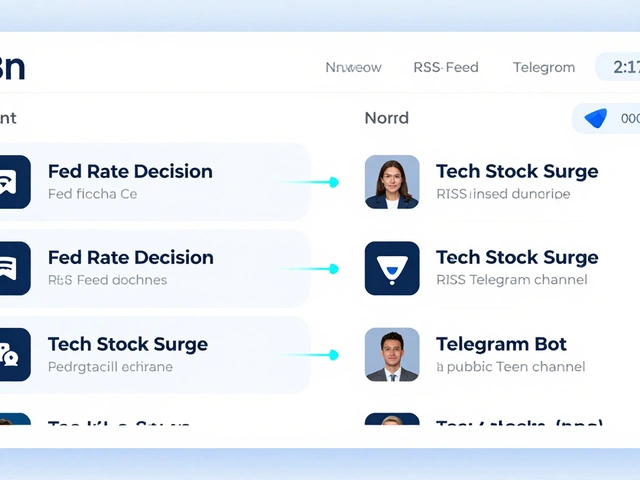
Information overload isn't just a buzzword; it's a daily crisis for anyone who needs to stay informed. You wake up, check your phone, and are immediately hit by hundreds of notifications, emails, and headlines. Most of them are noise. The few that matter get buried under the clutter. If you rely on Telegram is a cloud-based instant messaging service known for its security features, large group capacities, and powerful bot API capabilities for updates, this problem is even worse. Channels flood your feed with every single story, regardless of whether it impacts your work or life.
The solution isn't to read less; it's to filter smarter. By combining workflow automation platforms with artificial intelligence, you can build a system that watches the internet for you. This system scrapes news, analyzes relevance using AI models like Large Language Models (LLMs) are advanced neural networks trained on vast datasets to understand, generate, and process human language with high accuracy, and sends only the critical alerts directly to your chat. This guide breaks down how to build this pipeline, why it works, and which tools you need to set it up today.
Why Manual Tracking Fails in 2026
In the past, checking five trusted news sites took ten minutes. Today, the volume of content produced globally exceeds what any human team can process. For marketers, journalists, and developers, missing a breaking trend or a competitor move can cost money or reputation. Yet, spending hours scrolling through feeds is inefficient and mentally draining.
Traditional RSS readers help, but they lack context. They deliver every article tagged with "tech" without understanding if it's a minor patch update or a paradigm-shifting announcement. Human curation is accurate but slow. You can't hire an editor to watch 50 sources 24/7. That’s where automated systems bridge the gap. They provide the speed of machines with the contextual understanding of AI, delivering a curated digest that respects your time.
The Core Architecture of Automated News Pipelines
Building an effective news alert system requires three distinct components working together: data collection, intelligent processing, and delivery. Let’s look at how these pieces fit together in a modern stack.
- Data Collection: This is the input layer. It involves web scraping tools or RSS aggregators that pull raw HTML or metadata from news websites. Tools like BrowserAct is a web automation platform that allows users to create headless browser workflows for scraping, testing, and automating repetitive web tasks excel here because they can handle dynamic content that standard scrapers miss.
- Intelligent Processing: This is the brain. Raw data is messy. An AI agent reviews headlines and summaries against a list of user-defined keywords or semantic criteria. It assigns a priority score based on relevance.
- Delivery: This is the output. The filtered, high-priority stories are formatted into rich media messages-complete with images and links-and sent via the Telegram Bot API is an application programming interface provided by Telegram that enables developers to create bots capable of sending messages, receiving commands, and interacting with users within the Telegram ecosystem.
This architecture ensures that you never see low-value content. If a story doesn’t match your criteria, it dies in the pipeline. You only interact with what matters.
Setting Up the Workflow with n8n and BrowserAct
To implement this, you need an orchestration engine. n8n is a fair-code workflow automation tool that allows users to connect various applications and services through a visual node-based interface, enabling complex automations without extensive coding is currently one of the most popular choices for this task due to its flexibility and self-hostable nature. Here is how you construct the flow:
- Trigger the Scraping: Set up a schedule node in n8n to run at specific intervals (e.g., every hour). This node triggers an HTTP request to BrowserAct’s API, initiating a web scraping job configured to target your chosen news sources.
- Monitor Execution: Use conditional logic nodes (If/Wait) to poll BrowserAct until the scraping task completes. This prevents errors from trying to process incomplete data.
- AI Filtering: Once the data is ready, pass the headlines to an AI Agent node. You can use Google Gemini is a family of large multimodal models developed by Google DeepMind, designed to handle text, code, audio, images, and video with advanced reasoning and generation capabilities or OpenAI. Configure the prompt to filter stories based on your specific keywords (e.g., "AI regulation," "market crash," "new product launch").
- Format and Send: A Code node cleans the JSON output from the AI. Finally, a Telegram node sends the approved stories as rich media messages to your channel or private chat.
This setup runs entirely in the background. No manual intervention is required once the initial configuration is complete.

Implementing AI-Driven Prioritization Levels
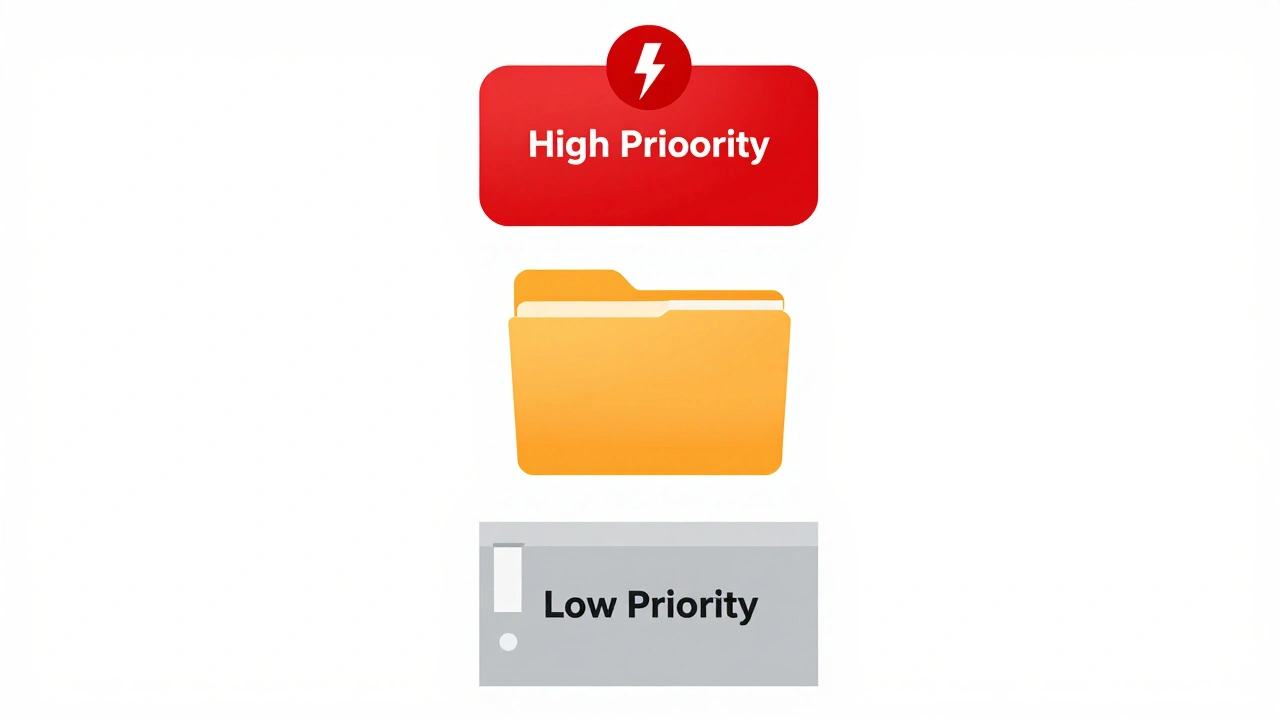
Not all relevant news is equally urgent. A sophisticated system goes beyond simple keyword matching; it categorizes alerts by priority. This approach mirrors how sales teams manage leads, but applied to information consumption.
| Priority Level | Criteria | Delivery Method | Example Scenario |
|---|---|---|---|
| High | Critical keywords, breaking news, direct impact on current projects | Instant push notification + sound alert | A major competitor announces a price cut affecting your Q3 strategy. |
| Medium | Industry trends, general market shifts, secondary keywords | Daily digest batch (morning/evening) | New regulatory guidelines released for next year’s compliance. |
| Low | Peripheral interests, long-tail topics, background research | Weekly summary or archive only | An academic paper discussing theoretical AI advancements. |
You can configure the AI agent to assign these labels automatically. High-priority items trigger immediate notifications, ensuring you react in real-time. Medium and low-priority items are aggregated, reducing notification fatigue while keeping you informed about broader trends.
Advanced Features: Vector Search and Semantic Context
Keyword filtering has limitations. It misses synonyms and fails to capture nuance. For example, a search for "Apple stock" might miss an article titled "Cupertino giant faces supply chain issues." Advanced workflows integrate vector databases to solve this.
By converting articles into embeddings (numerical representations of meaning), the system can perform semantic search. When you ask the bot for "recent supply chain problems in tech," it retrieves relevant articles even if they don't contain your exact keywords. Some setups also use Vision-Language Models (VLMs) to analyze images within articles, extracting context from charts or photos that text-only scrapers would ignore. This creates a searchable archive of news that you can query with natural language questions later.
Use Cases Across Industries
This technology isn't just for personal curiosity. Different professions leverage these pipelines for specific advantages:
- Journalists and Content Curators: Systems like OpenClaw Newsroom allow editors to receive AI-prepared shortlists of seven stories per day. Humans make the final editorial selection, balancing speed with quality control.
- Marketing Teams: Monitor brand mentions and competitor activities instantly. Integrate alerts with CRM tools to trigger follow-up tasks when high-priority signals appear.
- Developers and DevOps: Automate error alerts and deployment logs alongside news feeds. Receive structured reports on GitHub repositories or tech blogs directly in your team’s Slack or Discord channels.
- Financial Analysts: Track earnings reports, regulatory filings, and market sentiment indicators in real-time, prioritizing alerts that affect specific portfolios.
Common Pitfalls and How to Avoid Them
Even with robust tools, mistakes happen. Here are the most common issues users face when setting up these systems:
- Over-filtering: Setting keywords too narrowly results in missing important context. Start broad and refine based on false negatives.
- API Rate Limits: Frequent scraping requests can trigger blocks from news websites. Implement random delays and rotate user agents to mimic human behavior.
- Poor Prompt Engineering: Vague instructions to the AI lead to inconsistent filtering. Be explicit: define what constitutes "high priority" with concrete examples in your system prompt.
- Ignoring Error Handling: If a scraper fails, the pipeline stops. Ensure your workflow includes retry mechanisms and fallback notifications so you know when the system is down.
Future Trends in News Automation
The landscape is evolving rapidly. We are moving from simple keyword matching to full multimodal understanding. Future iterations will likely include deeper integration with personal knowledge bases, where the AI learns your specific interests over time and adjusts priority thresholds automatically. Additionally, expect more seamless connections between Telegram alerts and action-oriented platforms like Notion or Asana, turning news insights into immediate tasks.
Is it free to automate news alerts on Telegram?
The core infrastructure can be free if you self-host n8n and use open-source models. However, reliable web scraping services like BrowserAct and advanced AI APIs like Google Gemini usually require paid subscriptions based on usage volume. Basic setups may cost $10-$30 per month depending on traffic.
Can I customize the priority levels?
Yes, you have full control. You define the keywords, the semantic criteria, and the mapping of those criteria to priority levels (High, Medium, Low) within the AI agent’s configuration in n8n.
Do I need coding skills to set this up?
Basic familiarity with no-code/low-code tools helps. n8n provides visual workflows, but configuring AI prompts and handling JSON data formats requires some logical thinking. Pre-built templates from BrowserAct reduce the technical barrier significantly.
How does AI prioritize news better than keywords?
AI understands context and semantics. While keywords only match exact strings, AI can identify that "tech giant layoffs" is related to "job market instability" even if the words don't overlap. It can also weigh the source credibility and urgency based on training data.
Can I send these alerts to other platforms besides Telegram?
Absolutely. n8n supports integrations with Slack, Discord, Email, Google Sheets, and many others. You can duplicate the final node in your workflow to broadcast alerts to multiple channels simultaneously.