Imagine running a global news network where your only shield is a promise of encryption, only to find out that the shield has holes in it. For years, Telegram is a cloud-based instant messaging service that prioritized user privacy and resisted government surveillance. Launched in 2013 by Pavel Durov, it became the go-to sanctuary for journalists and political activists. But by 2026, the reality of doing business globally has forced a reckoning. The platform is no longer just a tool for free speech; it's a battleground where state laws clash with digital anonymity.
The Privacy Pivot: From Fortress to Compliance
For a long time, Telegram's brand was built on the idea that the company didn't have your data, so they couldn't give it to anyone. That changed abruptly in late 2024. Under mounting legal heat, the platform shifted its core stance. A major turning point happened on September 24, 2024, when the company announced it would start handing over IP addresses and phone numbers to authorities in response to valid legal requests.
This wasn't just a minor tweak; it was a fundamental shift in government pressure. For news channels, this means the anonymity of the administrator is no longer guaranteed. To try and keep users from jumping ship, Telegram introduced quarterly transparency reports to show how often they bend to these requests. It's a classic trade-off: the platform gives up some privacy to avoid being banned entirely in key markets.
European Influence and the Content War
Europe has taken a particularly aggressive approach toward how news is distributed on the app. The Digital Services Act (or DSA) is a European Union regulation that forces online platforms to remove illegal content and disinformation or face massive fines. This law has turned Telegram's news channels into a regulatory minefield.
We've seen this play out in real-time during election cycles. Pavel Durov claimed that French intelligence services tried to pressure him into scrubbing Moldovan political content during the 2024 elections. According to Durov, the French government even offered "judicial favors" to help his own legal troubles if he complied with the censorship. While Telegram removed posts that clearly broke their rules, they pushed back when asked to delete channels simply for holding opposing political views. It shows that for European regulators, "combating disinformation" often looks like controlling the narrative.
| Region/Country | Primary Tactic | Main Objective | Current Status |
|---|---|---|---|
| European Union | DSA Compliance/Legal Threats | Removing "harmful" content/disinfo | High pressure for moderation |
| Russia | Functional Restrictions/Migration | State-controlled info ecosystem | Shift toward domestic app "Max" |
| Brazil/India | Account Deletion/Bans | Removing threats to democracy/state | Direct compliance with court orders |

The Russian Strategy: Forced Migration and "Max"
While the West uses laws to force moderation, Russia has tried a different tactic: building its own wall. By August 2025, the Kremlin stopped just asking for deletions and started moving its official voice elsewhere. The government ordered officials and lawmakers to move their channels to a domestic app called Max, which is a Russian state-backed messaging application designed to serve as a priority information system.
This is a strategic move. By making Max mandatory for regional governors and the State Duma, the Russian state ensures it has total control over the data and the reach. They didn't block Telegram entirely-that would have caused too much public backlash-but they did put a squeeze on it by restricting voice calls, claiming the app had become a hub for scams and sabotage. For news channels, this means the "official" narrative has moved to a controlled environment, while Telegram is left as a place for the unregulated and the risky.
The Conflict Between Privacy and Human Rights
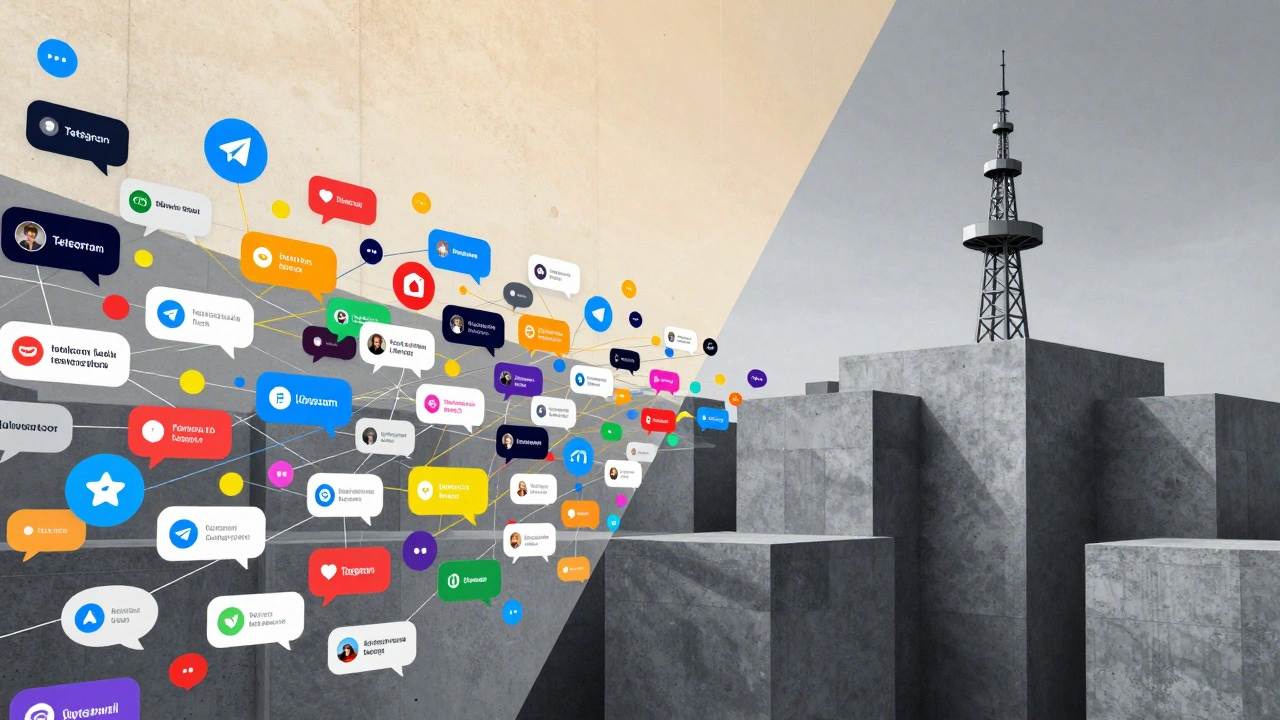
It's easy to view this as a simple fight between "evil governments" and a "brave platform," but it's more complicated. Civil society groups, like Access Now, have pointed out a glaring gap in Telegram's approach. While they support the platform's resistance to authoritarian regimes, they also criticize Telegram's lack of a real human rights policy.
The problem is that Telegram often operates in a gray area. It lacks the transparency that a democratic society expects from a company that controls the flow of news for millions. When a channel is suddenly deleted or a user's data is handed over, there is rarely a clear path for appeal. This leaves journalists and activists in a precarious spot: they are hiding from governments, but they are also trusting a platform that doesn't have a formal system for protecting them.

What This Means for the Future of Digital News
The era of the "lawless" messaging app is ending. Whether it's the DSA in Europe or the push for domestic apps in Russia, the trend is toward state-aligned moderation. Telegram's shift toward transparency reports and data sharing is a sign that no platform is too big to be coerced.
For anyone running a news channel, the lesson is clear: encryption is a great tool, but it's not a legal shield. As governments get better at applying pressure-through arrests of executives or the threat of national bans-platform policies will continue to lean toward compliance. The struggle between the right to private communication and the state's desire for "security" is far from over, but for now, the states are winning.
Does Telegram still offer end-to-end encryption for news channels?
While Telegram uses encryption, it's important to know that not all chats are end-to-end encrypted by default. Channels, which are used for broadcasting news, are cloud-based. This means the platform has the technical ability to access content and, as seen in recent policy shifts, can share user data like IP addresses with governments if legally required.
What is the Digital Services Act (DSA) and how does it affect Telegram?
The DSA is a set of EU rules that force big tech platforms to be more transparent about how they moderate content and to remove illegal material, such as hate speech or terrorism-related content, more quickly. For Telegram, this means they must balance their privacy-first ethos with strict European laws or face heavy financial penalties.
Why did Russia create the Max app?
The Russian government created Max to have a "priority information system" that they fully control. By moving official government communications and pro-Kremlin commentators to a domestic app, they reduce their reliance on a foreign-owned platform like Telegram and can ensure that official messages are delivered without interference or moderation by an external entity.
Will Telegram start sharing all user data with governments?
Telegram states they only share information (like phone numbers and IP addresses) in response to "valid legal requests." They have implemented quarterly transparency reports to document these instances, aiming to provide a level of public accountability while complying with the law to avoid being blocked.
How can news channel admins protect themselves?
While no tool is foolproof, admins often use VPNs to mask their IP addresses and use virtual numbers for registration to add a layer of separation between their real identity and the channel. However, as platform policies shift toward compliance, the effectiveness of these methods depends heavily on the specific laws of the countries they are operating in.