Imagine waking up to a notification that isn't an ad or a clickbait headline, but a direct message from the reporter who covered your local city council meeting last night. They aren't asking you to buy a subscription to a website you rarely visit. They are inviting you into a private chat where they answer questions in real-time and share context that didn't make the final article. This is the core of Community-Supported Journalism, which relies on direct financial support from readers rather than advertising or institutional grants. On platforms like Facebook or Twitter, this feels distant. On Telegram, which is a cloud-based messaging app known for its channels, groups, and bot infrastructure, it feels personal.
For independent journalists and small newsrooms, especially those operating in high-risk environments like Ukraine, Russia, Belarus, and Iran, Telegram has become more than just a distribution tool. It is the engine for survival. By leveraging Telegram’s unique features-specifically its ability to link public broadcast channels with private discussion groups-publishers can create membership models that fund their work while building deep trust with their audience. If you are a journalist or editor looking to move beyond traditional paywalls, here is how you build a sustainable membership model on Telegram.
The Shift from Readers to Members
Traditional digital news relies on traffic. You get clicks, you sell ads, you survive. But as ad revenues collapse and algorithmic reach becomes unpredictable, this model is failing. The alternative is membership. According to research by the Membership Puzzle Project, which studied audience-funded media models globally between 2016 and 2021, membership is not about selling access; it is about selling participation. Readers don’t just pay to see content; they pay to support a cause and to have a voice.
In many Western markets, this happens via email newsletters or Substack. But in regions where internet censorship is heavy or trust in mainstream media is low, Telegram dominates. In Ukraine, over 40% of online news users consume news via Telegram weekly. In Russia, that number is around 22-24%. For these audiences, Telegram is not an "alternative" social network; it is the primary internet. Building a membership model here means meeting people where they already are, rather than trying to drag them to a new platform.
Why Telegram Works for Newsroom Communities
You might wonder why a messaging app is better than a dedicated community platform like Discord or Patreon. The answer lies in friction and accessibility. Telegram requires only a phone number to join. There is no complex registration form, no password to remember, and no need to download a separate app if you are already using it for chats. This low barrier to entry is crucial for converting casual readers into paying members.
Furthermore, Telegram offers specific technical affordances that other platforms lack:
- Channels vs. Groups: Channels allow one-to-many broadcasting (up to millions of subscribers), while Groups allow many-to-many discussion (up to 200,000 members). You can link them so every channel post has a comment section in the group.
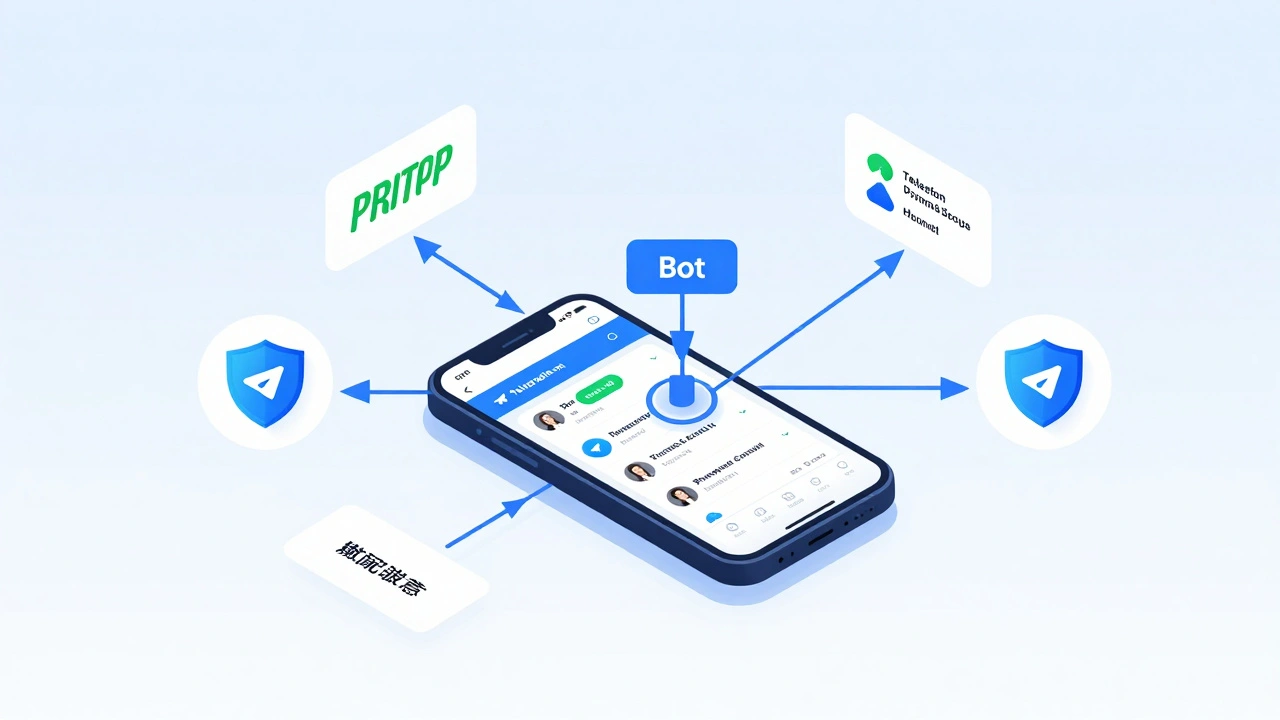
- Bots: Telegram’s Bot API allows for automation. You can use bots to manage memberships, verify payments, and automatically add or remove users from private groups based on their payment status.
- Anonymity and Safety: Users can join with a username instead of a real name. This is vital for supporters in authoritarian regimes who want to support independent journalism without risking their safety or employment.
Unlike WhatsApp, which limits groups to 1,024 members, Telegram scales with your audience. Unlike email, which suffers from low open rates (often 30-40%), Telegram notifications appear directly on the lock screen, leading to view rates of 60-90% in active member channels.
Designing Your Membership Tiers
A successful membership model needs clear value propositions. You cannot simply ask for money; you must offer something in return that justifies the cost. Based on case studies from Ukrainian newsrooms and outlets like Meduza, effective Telegram membership tiers usually follow this structure:
- The Supporter Tier ($2-$5/month): Access to a private Telegram channel with early updates, behind-the-scenes notes, and exclusive audio messages from reporters. This is the "thank you" tier.
- The Insider Tier ($7-$15/month): Access to the private group chat. Here, members can ask questions directly to journalists, participate in polls about future investigations, and discuss news with other trusted readers. This creates a sense of belonging.
- The Patron Tier ($20+/month): Direct access. This might include monthly Zoom calls, the ability to suggest story ideas that get editorial consideration, or recognition on the website. These super-funders often provide the bulk of stable revenue.
The key insight here is that the product is not just the news; it is the relationship. In Ukraine, during the full-scale invasion starting in February 2022, many regional newsrooms saw their membership revenue grow by 50-150% because people wanted to feel connected to their local truth-tellers during chaos. Telegram was the conduit for that connection.
Technical Setup: Automating Access
Managing hundreds or thousands of members manually is impossible. You need automation. Most newsrooms do not process payments directly inside Telegram due to tax and accounting complexities. Instead, they use a hybrid approach:
| Tool | Role in Model | Pros | Cons |
|---|---|---|---|
| Patreon | Payment Processor | Global reach, recurring billing, easy setup | Fees (5-12%), less control over data |
| Stripe | Payment Processor | Low fees, professional invoicing, integrates with CRMs | Requires more technical setup |
| InviteMember / Custom Bots | Access Control | Automatically adds/removes users from Telegram groups based on payment | Requires initial development or third-party service fee |
| Telegram Premium | User Benefit | Allows users to follow more channels, faster downloads | Revenue goes to Telegram, not the publisher |
Here is how the workflow typically looks: A user signs up for a $5/month plan on Patreon or via Stripe. The payment system sends a webhook signal to a custom Telegram bot. The bot then generates a temporary invite link for the private member-only group and sends it to the user. If the user cancels their subscription, the bot removes them from the group after a grace period. This seamless experience reduces churn because the benefit (access) is immediate and tangible.
Content Strategy: What to Post Where
Having the technology is only half the battle. You need a content strategy that differentiates between your public channel and your private member space. If you post the same thing in both, members will feel cheated.
Public Channel: This is your funnel. Post breaking news, verified facts, and links to your main articles. Keep it professional and concise. Use this space to tease deeper analysis available to members. For example: "We received documents showing X. Full breakdown and interview with the source is now live in the Member Group."
Private Member Group: This is where you build loyalty. Post raw footage, unedited audio clips, or drafts of stories before publication. Host "Ask Me Anything" sessions with reporters. Share personal reflections on the difficulty of reporting from conflict zones. This transparency humanizes your newsroom. In interviews with Ukrainian editors, many noted that over 50% of member interactions happen in these Telegram groups, far exceeding engagement on email or websites.

Navigating Risks: Misinformation and Moderation
Telegram is a double-edged sword. While it enables free speech, it also hosts extremist groups, illegal markets, and disinformation campaigns. A study published in the Journal of Information Technology & Politics found that misleading sources on Telegram often grow faster than professional news sources because they trigger higher emotional engagement.
As a newsroom, you must actively differentiate yourself. Clearly state your editorial guidelines in the group description. Ban anonymous trolls who spread conspiracy theories. Consider hiring a dedicated community manager whose sole job is to moderate the private group. Yes, this costs money, but it protects your brand’s integrity. If your member group becomes a place for harassment or fake news, your supporters will leave, and your reputation will suffer.
Also, be aware of regulatory changes. The European Union’s Digital Services Act (DSA) may pressure Telegram to increase moderation in EU jurisdictions. Stay informed about these shifts, as they could affect how you operate your channels.
Measuring Success Beyond Revenue
Don’t just track how much money you make. Track engagement. Key metrics for Telegram membership models include:
- Churn Rate: Are members staying? High-engagement Telegram communities often see 5-10 percentage points lower churn than non-interactive models.
- Active Users: How many members post or react in the group daily? Aim for at least 10-20% of total members being active.
- Conversion Rate: What percentage of public channel subscribers upgrade to paid members? A healthy benchmark is 1-3%.
If engagement drops, revisit your content strategy. Are you providing enough value in the private group? Are you responding to questions? Remember, membership is a two-way street. Your supporters are investing in you; you must invest time in them.
Conclusion: Building Resilience Through Community
Building a membership model on Telegram is not a quick fix. It requires consistent effort, technical setup, and genuine interaction. However, for independent journalists, it offers a path to financial independence and editorial freedom. By turning passive readers into active participants, you create a resilient community that can withstand political pressure and economic downturns. In an era where trust in media is fragile, Telegram provides the tools to rebuild that trust, one message at a time.
Is Telegram safe for receiving donations?
Telegram itself does not handle donations securely for most publishers. It is best to use established payment processors like Stripe, Patreon, or local banking systems for transactions. Use Telegram only for delivering the membership perk (access to groups/channels) via automated bots. This ensures proper tax handling and fraud protection.
How do I prevent trolls in my private member group?
Set clear rules in the group description. Use Telegram's admin tools to restrict posting rights initially (e.g., only admins can post, members can react). Gradually allow posting as trust builds. Assign a community manager to monitor chats and ban users who violate guidelines. Anonymity helps safety but also enables bad actors, so proactive moderation is essential.
What is the ideal price for a Telegram journalism membership?
Prices vary by region. In Eastern Europe and CIS countries, tiers often start at $2-$5 per month for basic access and go up to $15-$25 for premium support. In Western markets, $5-$10 is common. Research your specific audience's willingness to pay through surveys before launching. Offer annual discounts to improve cash flow.
Can I use Telegram Ads to promote my membership?
Yes, Telegram launched a native advertising platform that allows businesses to promote their channels. However, for membership models, organic growth through quality content and word-of-mouth is often more effective and cost-efficient. Use ads sparingly to boost visibility for major investigative releases or fundraising campaigns.
How does Telegram compare to WhatsApp for news communities?
Telegram supports much larger groups (up to 200,000 members) compared to WhatsApp's limit of 1,024. Telegram also offers public channels with usernames, making discovery easier. WhatsApp is more private and personal, suitable for very small, tight-knit circles, but Telegram is better for scaling a public-facing journalism community.