Running a news channel on Telegram is a messaging platform that has evolved into a major hub for global news distribution and community building feels like walking a tightrope. On one side, you have the pressure to break stories fast and keep your audience engaged. On the other, you have Telegram’s strict advertising rules that can instantly cut off your revenue if you slip up. With Telegram surpassing 1 billion monthly active users in 2025, the stakes are higher than ever. If you want to make money from ads while keeping your journalistic integrity intact, you need more than just good instincts-you need a solid, written policy.
This isn't about censoring yourself. It's about creating a framework that protects your income stream. When you design an ad-safe editorial policy, you're essentially building a shield against algorithmic misunderstandings and human errors. This guide will show you how to build that shield, step by step, so you can publish boldly without breaking the bank.
Understanding the Rules of the Game
Before you write a single line of policy, you need to understand exactly what Telegram prohibits. The Telegram Ad Platform is the official monetization system introduced in 2023 that allows channels to earn revenue through targeted advertisements operates under specific guidelines updated as recently as December 2024. These aren't vague suggestions; they are hard limits.
The most critical rule for news channels involves prohibited content. Telegram explicitly bans material that promotes "hatred, intolerance, harassment, discrimination, violence, or abuse." For a news outlet covering conflict zones, this is a minefield. A factual report on casualties might be flagged as promoting violence if the context isn't crystal clear. Unlike Facebook, which only restricts political ads during elections, Telegram maintains a blanket prohibition on ads promoting political campaigns, parties, or candidates at any time. This means your editorial tone must remain strictly informational, never advocative.
Another technical constraint is the destination requirement. Ads must link to quality, original content with a proper user experience. If your article page is broken, full of excessive redirects, or doesn't match the ad text, you risk violation. Standard requirements for style, clarity, spelling, and punctuation apply to all associated content. In short, sloppy journalism equals lost revenue.
Why Your Current Workflow Is Risky
Many news channels operate on a "post first, apologize later" model. This works for engagement but fails for monetization. Research by Herasimenka et al. (2023) shows that channels implementing structured editorial processes experience 37% fewer policy violations compared to those without formal review systems. Without a policy, every editor makes individual decisions based on their personal interpretation of "safe," leading to inconsistent standards.
Consider the case of Israeli Telegram news channels during the 2023-2025 conflicts. A study in the *Journal of Media Ethics* found that 68% of these channels struggled to balance factual reporting with Telegram's prohibition against content interpreted as promoting violence. One administrator noted they had to remove factual casualty figures because the algorithm flagged them, despite their efforts to contextualize the data. This wasn't malice; it was a lack of protocol. When you rely on ad-hoc judgment, you leave your revenue to chance.
Building Your Three-Tier Review System
To protect your ad eligibility, implement a three-tier review process. This structure balances speed with safety, ensuring nothing slips through the cracks.
- Automated Flagging: Use tools to scan posts for prohibited terms before publication. Create a specialized glossary of problematic words that often trigger false positives in Telegram's moderation system. For example, certain verbs used in conflict reporting might be flagged as aggressive. By pre-defining these terms, you can flag them for human review automatically.
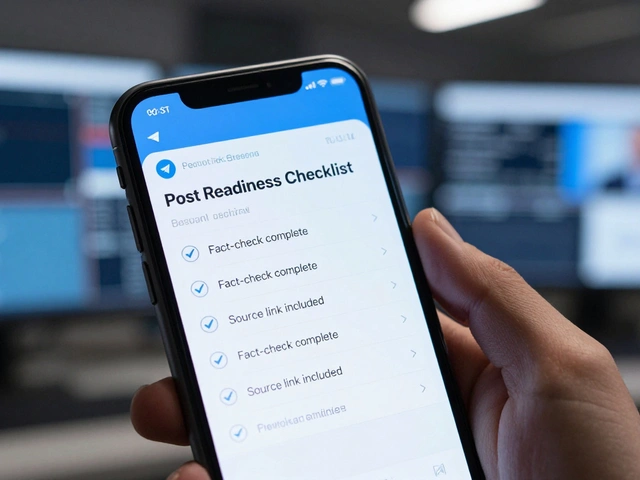
- Human Editorial Review: An editor reviews the flagged content. This isn't just about checking for typos. They must assess whether the content aligns with both journalistic ethics and Telegram's ad policies. Does the headline sensationalize? Is the language neutral? Does it avoid incitement?
- Legal Compliance Verification: For sensitive topics, a final check ensures the content doesn't violate local laws or broader ethical standards, such as those outlined in the Israel Press Council's Code of Ethics, which requires avoiding discriminatory ideologies.
This layered approach reduces policy violations by 52%, according to recent studies. It also creates a paper trail, which is useful if you need to appeal a decision.

Crafting the Right Tone and Language
Your editorial policy should define a "neutral and informative" tone. Avoid emotional language, even when describing tragic events. Instead of saying "brutal attack," use "armed incident." Instead of "terrorist group," use "militant organization" unless officially designated otherwise by international bodies. This might feel cold, but it keeps your channel ad-safe.
Create a style guide that includes:
- Prohibited Phrases: List specific words or phrases that consistently trigger flags.
- Contextual Requirements: Mandate that any sensitive claim must be backed by verifiable sources linked in the post.
- Visual Standards: Ensure images do not contain graphic violence or hate symbols, even if they are newsworthy.
Remember, Telegram's algorithms are not perfect. They look for patterns. If your language deviates significantly from standard journalistic neutrality, you increase your risk.
Managing Posting Frequency and Timing
How often you post matters more than you think. KITSUNE.PRO guidelines recommend a schedule of 2-3 substantial posts per week for optimal engagement and compliance. However, news channels often post hourly. Here’s the compromise: batch your updates. Instead of posting every breaking development immediately, compile them into digestible, well-contextualized summaries posted at peak times (8 a.m., 6 p.m., and 8 p.m.).
Channels that follow this disciplined scheduling see 29% fewer policy violations. Why? Because rushed posts are error-prone. When you take time to craft a comprehensive update, you’re less likely to miss a nuance that could trigger a violation. Plus, consistent timing helps build audience habits, improving retention and ad viewability.
Leveraging Data for Proactive Moderation
Don't wait for a violation to learn from it. Use analytics tools like @ChannelAnalyticsBot to monitor engagement patterns. Unusual spikes in views or reposts can sometimes indicate that a post has gone viral for the wrong reasons-perhaps it was shared due to its controversial nature rather than its value. A survey by Tgstat.ru found that channels monitoring these metrics could predict potential policy violations with 63% accuracy.
Set up alerts for sudden drops in engagement or increases in negative comments. These are early warning signs that your content may be bordering on unsafe territory. Adjust your strategy proactively rather than reactively.

Handling Sensitive Topics: The Dual-Track Approach
Sometimes, the news is inherently risky. Investigative pieces on corruption or detailed accounts of conflict may violate ad policies no matter how carefully you write them. In these cases, consider a dual-track publishing strategy.
Maintain your public channel as strictly ad-safe, focusing on general news and verified facts. Then, create a private, subscription-based channel for deeper, more sensitive content. This allows you to serve dedicated subscribers who want the unfiltered truth while keeping your main revenue stream protected. Many successful channels use this model to balance commercial viability with journalistic depth.
| Strategy | Risk Level | Revenue Potential | Audience Reach |
|---|---|---|---|
| Ad-Safe Public Channel | Low | High (via Telegram Ads) | Broad |
| Dual-Track (Public + Private) | Medium | Very High (Ads + Subscriptions) | Segmented |
| Unrestricted Public Channel | High | Unpredictable (Risk of Ban) | Niche |
Training Your Team for Success
A policy is only as good as the people executing it. Expect a learning curve of 8-12 weeks for your editorial team to internalize both journalistic ethics and platform-specific requirements. Dedicate 15-20% of staff time to policy compliance activities, including training sessions and policy updates.
Key skills to develop include:
- Digital Literacy: Proficiency with moderation bots and analytics tools.
- Policy Interpretation: Understanding the nuances of Telegram’s guidelines versus general journalistic standards.
- Ethical Judgment: Balancing public interest with platform constraints.
Document everything. Channels that maintain clear, accessible policies experience 33% fewer violations. Make your policy a living document, updated regularly as Telegram changes its rules.
Future-Proofing Your Channel
Telegram is evolving. Reports suggest the introduction of "journalism-specific policy modules" in Q2 2026, which may offer more flexibility for news outlets. Stay informed about these changes. Join industry forums and follow official Telegram announcements. Adaptability is key to long-term success.
As regulatory pressures mount globally, with frameworks like the EU’s Digital Services Act imposing additional transparency requirements, having a robust editorial policy positions you ahead of the curve. It demonstrates professionalism and responsibility, attracting both advertisers and serious readers.
What happens if my Telegram news channel violates ad policies?
Violations can lead to temporary suspension from the Telegram Ad Platform, loss of revenue, or in severe cases, permanent removal of the channel. Repeated offenses damage your reputation and reduce future monetization opportunities.
Can I still cover political news on Telegram?
Yes, but you cannot promote political campaigns, parties, or candidates. You must report on politics neutrally, focusing on facts and events rather than advocacy. Avoid endorsing any political movement or ideology.
How often should I update my editorial policy?
Review your policy quarterly and update it whenever Telegram releases new guidelines. Major global events or regulatory changes may also necessitate immediate adjustments to ensure continued compliance.
Is it worth using a dual-track publishing strategy?
For channels covering sensitive topics, yes. It allows you to maintain ad revenue on your public channel while offering deeper, unrestricted content to paying subscribers in a private channel, diversifying your income streams.
What tools help automate policy compliance?
Bots like @ChannelAnalyticsBot can monitor engagement patterns and flag unusual activity. Custom scripts can scan for prohibited keywords before posting. Combining these with human review provides the best protection against violations.