Running ads on Telegram isn't as simple as just paying a channel owner and posting a link. If you're operating in strictly regulated markets-particularly Russia-you're walking a tightrope between platform rules and government laws. Getting your paperwork wrong isn't just a minor mistake; it can lead to heavy fines or your ads being flagged. The good news is that we're currently in a grace period. As of early 2026, the Federal Antimonopoly Service (FAS) has provided a transition window until the end of the year, meaning liability for some Telegram ads is paused. But don't let that fool you. When the clock hits midnight on December 31, 2026, the exemptions vanish. If you haven't built a bulletproof documentation trail by then, you're in trouble.
Quick Wins for Compliance
- Mark your ads: Every single post must be clearly labeled as advertising.
- Register with ERIR: Ensure all campaigns are reported to the Unified Register of Internet Advertising via an Advertising Data Operator (ADO).
- Log your dates: Keep a precise record of when an ad went live and exactly when it was removed.
- Verify destinations: Document that your landing pages or bots are active and working.
- Archive chats: If you're in finance or law, keep a searchable audit trail of your Telegram business communications.
The Core of Ad Marking and Registration
When you place a news ad on Telegram, you aren't just dealing with the app; you're dealing with a legal framework. In many jurisdictions, the law requires a specific chain of custody for advertising data. ERIR is the Unified Register of Internet Advertising, a centralized database used by authorities to track all digital ad placements and their funding.
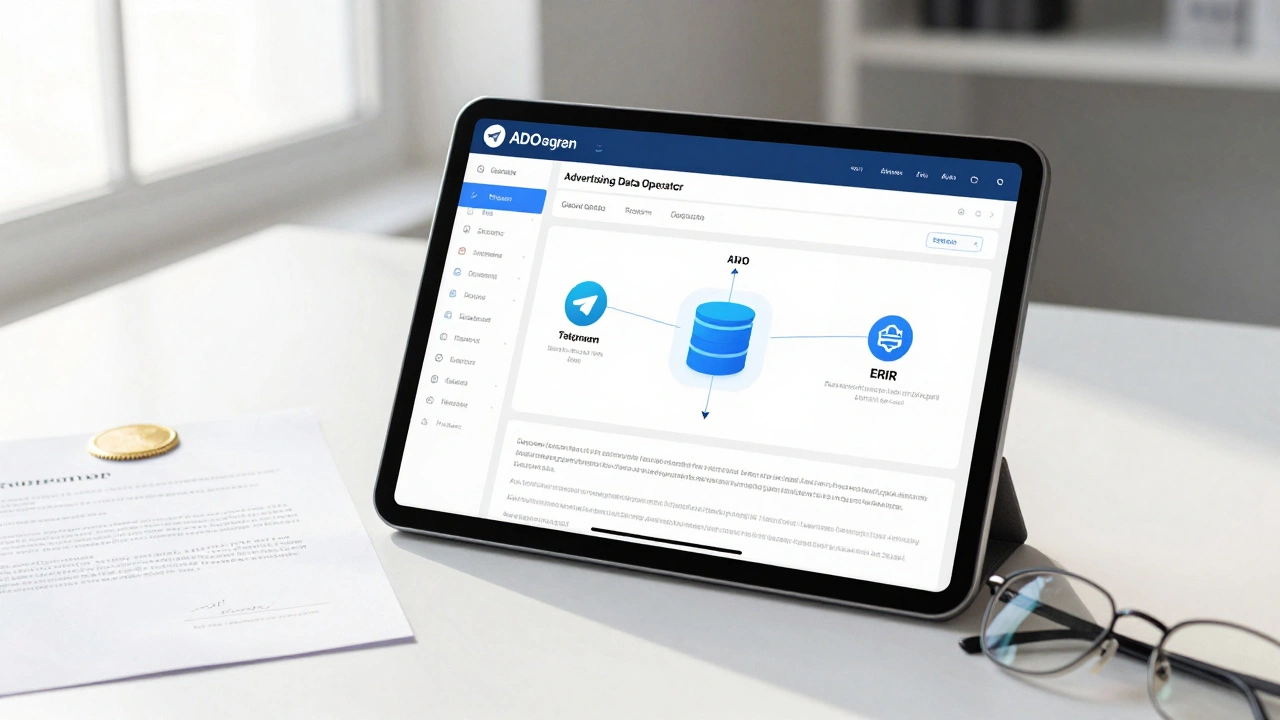
To stay compliant, you need to work with an Advertising Data Operator (or ADO), which acts as the bridge between your campaign and the government register. Whether you're running graphic banners, video ads, or simple text posts in a news channel, the process is the same: the ad must be marked, and the data must be transferred to ERIR. This isn't optional. If you are the advertiser, you bear the primary responsibility for the accuracy of these reports. If you're an intermediary or the channel owner, you're still on the hook for providing complete information.
Managing the 2026 Transition Period
The Federal Antimonopoly Service (or FAS) has clarified that they are giving advertisers some breathing room. However, this "grace period" is a trap if you don't use it to clean up your records. FAS looks at five specific things when they audit a campaign: the content, the contract date, the platform restriction date, the publication date, and the payment orders.
If you have long-term integrations-like a "sponsored by" mention that stays in a channel's pinned message for months-you need to change how you document them. You can't just have one contract from 2024 and assume it covers you forever. You need to document explicit renewal dates. If a post is meant to be deleted after a month, you need a timestamped screenshot or a log proving it actually disappeared. If your payment schedule stretches into 2027, your documentation must explicitly state how these payments align with the new rules coming into effect after the transition.
| Feature | During Transition (Until Dec 2026) | Post-Transition (2027 onwards) |
|---|---|---|
| FAS Liability | Reduced/Paused for Telegram/YouTube | Full enforcement of penalties |
| ERIR Reporting | Required (but audits are lenient) | Strictly mandatory for all ads |
| Contract Terms | Updating old agreements | Must have fully updated standard forms |
| VPN-based Ads | No grace period (Full liability) | Full liability |
Proving Your Ad Destinations Work
Telegram doesn't just care about the ad; they care about where the ad leads. If your ad points to a dead link or a bot that doesn't respond, you're violating the Telegram Ad Platform Terms of Service. To document compliance here, you need more than just a link. You need a validation log.
If your destination is a Telegram channel, you must be able to prove the channel was active at least once every two weeks before the review. If it's a bot, you need to document that it responds correctly on both mobile and desktop. For external websites, your documentation should show that the site is accessible from the targeted region, doesn't return a 404 or 500 error, and isn't hidden behind a login wall or paywall that prevents a reviewer from seeing the content. Essentially, you need to prove that the user experience is functional and honest.

Extra Layers for Regulated Industries
If you're in finance, insurance, or healthcare, standard ad marking isn't enough. You're likely subject to strict auditing laws that require you to keep a history of all business communications. Because Telegram is an encrypted platform, you can't just "trust" the app to save your history. You need a documented archive policy.
This means you should either have a manual export policy (where employees export chat logs weekly) or use a third-party archiving tool that automatically captures business-related chats. Your compliance folder should include a clear communication policy that tells employees exactly what they can and cannot share over Telegram. Don't forget to keep a record of the training your staff received. If a regulator asks, "How did your team know not to promise guaranteed returns in a Telegram chat?", a signed training log is your only defense.
The Ultimate Compliance Checklist
To ensure you're ready for the end of the 2026 transition, your documentation repository should contain these eleven items for every campaign:
- Proof of Marking: Screenshots showing the "Advertising" label on the post.
- ERIR Confirmation: A copy of the registration or token from the ADO.
- Timestamped Contracts: Signed agreements with clear start and end dates.
- Platform Status: Records of any restrictions imposed on the platform during the run.
- Publication & Removal Logs: Exact dates the ad went live and when it was taken down.
- Payment Proof: Full copies of payment orders and invoices.
- Completion Reports: Monthly reports submitted within 30 days of campaign end.
- Destination Validation: Evidence that links/bots were active and functional.
- Communication Archives: (For finance/law) Audit trails of business chats.
- Training Records: Proof that staff were trained on these specific rules.
- Legal Sign-off: A document from counsel confirming the ad aligns with current law.
Does the 2026 transition period apply to Facebook or Instagram?
No. The Federal Antimonopoly Service (FAS) explicitly stated that the transition period only applies to platforms like Telegram and YouTube. Restricted platforms like Instagram and Facebook, as well as ads served via VPN services, do not have this grace period and are subject to full liability.
What happens if I forget to report a campaign to ERIR within a month?
Legally, reports must be filed within one month after the campaign ends. While the transition period might shield you from some immediate penalties, failing to report creates a gap in your audit trail. Once the transition ends in December 2026, missing reports will likely trigger fines for both the advertiser and the distributor.
How do I document a "permanent" ad that is never removed?
You shouldn't treat any ad as "permanent." To stay compliant, you must implement specific timelines in your contracts for when content will be removed. You need to document these cutoff dates and periodically update the contract to show that both parties agree to keep the ad live for another specific term.
What is an ADO and why do I need one?
An Advertising Data Operator (ADO) is a certified entity that collects data about an ad campaign and transmits it to the government's ERIR register. You need one because individual advertisers often cannot upload data directly to the state register; the ADO ensures the data is formatted correctly and legally compliant.
Is a screenshot enough to prove an ad was removed?
A screenshot is a good start, but for high-stakes compliance, you should pair it with a timestamped log or a confirmation email from the channel owner. The goal is to show a clear timeline that matches your contract's removal date.