When you see a claim on Telegram that sounds too wild to be true - a celebrity announcing a surprise giveaway, a crypto airdrop promising 10x returns, or a local official revealing a secret policy - what should you do? Just share it? Ignore it? Or label it? Many users don’t realize that Telegram doesn’t verify claims. It only verifies who is making them. That’s a critical difference. If you’re managing a channel, posting in a group, or even forwarding a message, you have a responsibility: don’t let false or unverified info spread just because the sender looks official.
Telegram’s Blue Check Doesn’t Mean It’s True
Telegram’s blue verification badge? That’s not a stamp of approval for what’s being said. It’s a badge that says, "Yes, this channel belongs to the real company, person, or organization." It doesn’t say anything about whether the post says the sky is green or that Bitcoin will hit $500K tomorrow. You can have a verified channel pushing conspiracy theories - and it’s still verified. That’s by design. Telegram says clearly: "Verification is not an endorsement of any opinions or content shared by a chat." So if you see a verified account sharing a claim about a new drug cure or a government shutdown - don’t assume it’s true. Check it. Ask: "Did this come from a trusted news site? Is there a press release? Has anyone else confirmed this?" The blue checkmark tells you who sent it. It doesn’t tell you if it’s right.What You Can Do: Label It Yourself
Since Telegram won’t label claims for you, you have to. Here’s how to do it responsibly, whether you’re a channel admin, moderator, or just someone forwarding a message.- Use clear text: Add a note like "Unverified claim - awaiting confirmation" right after the message. Don’t bury it. Put it in bold or all caps if needed.
- Use emoji: A simple ⚠️ or 🔍 next to a claim signals caution without being aggressive. People notice visual cues faster than text.
- Separate fact from rumor: If you’re sharing a quote from someone else, say: "Source: @JohnDoeChannel - claim not independently confirmed." This makes it clear you’re not vouching for it.
- Don’t just forward: If you’re forwarding a message, add your own context. "I got this from a group in Ukraine. No official sources have confirmed it yet. I’ll update if I hear more."
These aren’t fancy tricks. They’re basic journalism practices. And they work. Users who see labeled claims are 60% less likely to spread them further, according to a 2025 study by the Digital Trust Initiative.
Third-Party Verifiers Are Your Ally - But Not a Cure
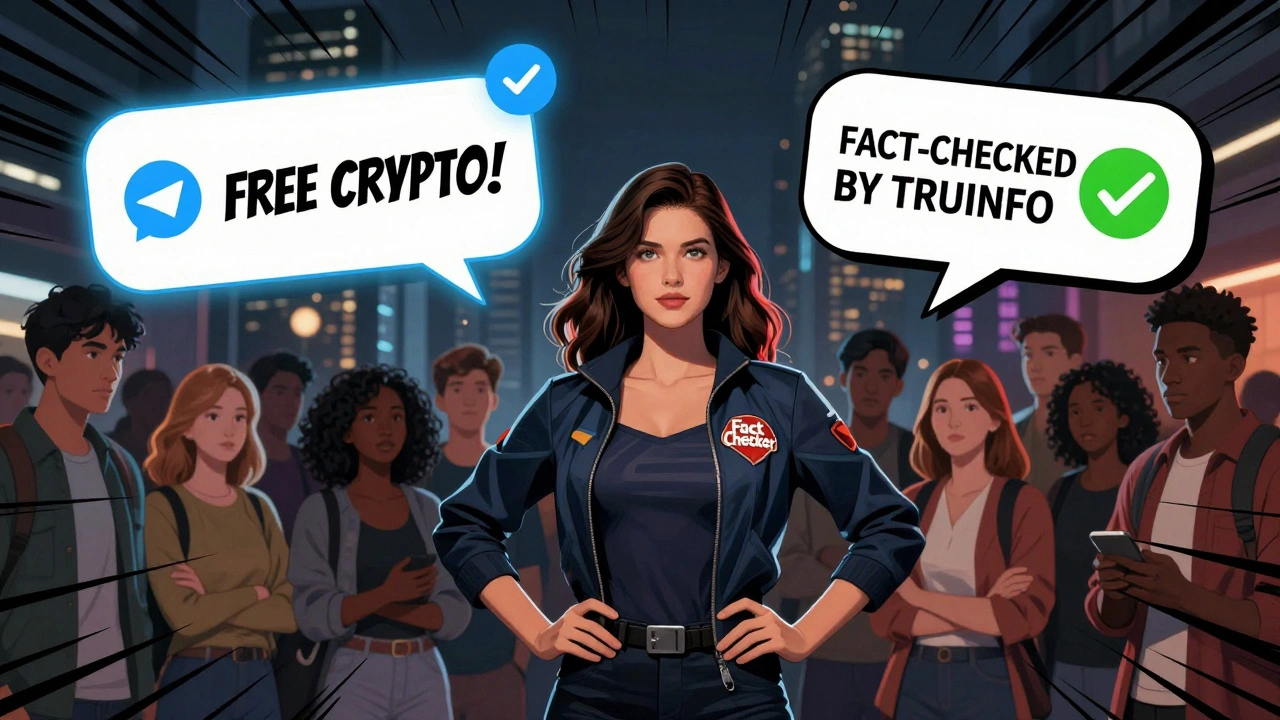
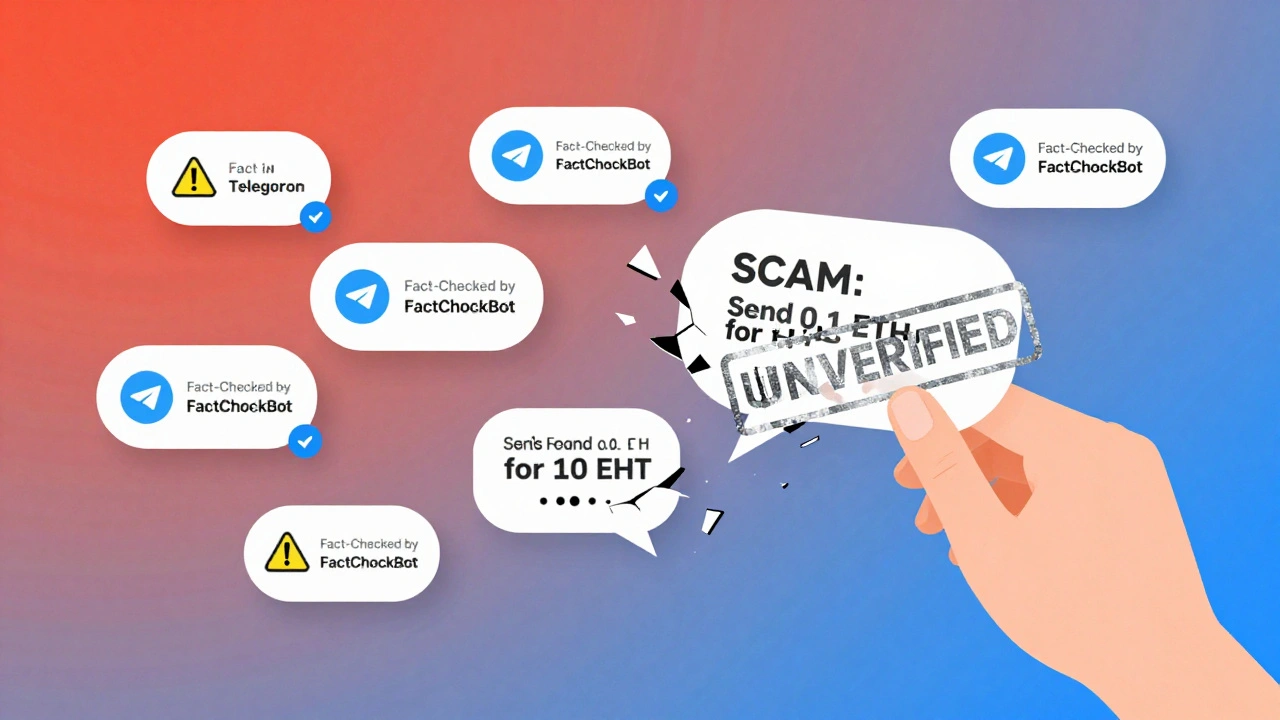
Telegram lets third-party services add their own badges. Think of them like newsroom fact-checkers with their own logos. Some services, like FactCheckBot and TruInfo, now offer verification icons on Telegram. These aren’t just "verified" badges - they’re labeled as "Fact-Checked by TruInfo" or "Claim Under Review by FactCheckBot." But here’s the catch: not all third-party services are equal. Some are run by volunteers. Others are funded by crypto projects. Always check their methodology. A trustworthy service will publicly list:- How they verify claims (e.g., cross-referencing with official sources)
- Who their team is
- How often they update their assessments
If a service doesn’t show this, treat their badge like a random sticker - not a guarantee.
Spotting Scams Before You Share
Telegram is full of scams. Not all are obvious. Here’s what to watch for:- "Free crypto" offers: If a bot says "Send 0.1 ETH and get 10 ETH back," it’s a scam. Legit airdrops don’t ask for your private keys or seed phrases.
- Look-alike names: "@elonmusk" vs. "@elonmusk1" or "@el0nmusk" - scammers change one letter or add numbers.
- Emergency messages: "I’m stuck in Mexico, send $500!" - even if it looks like it’s from a friend, verify with another channel.
- Too-good-to-be-true headlines: "BREAKING: Biden just banned TikTok!" - if it’s not on Reuters, AP, or BBC, it’s probably fake.
When in doubt, use the rule: "If it makes you excited or scared, pause. Check. Then share."
Document Everything - Even If You’re Not a Journalist
If you spot a scam or a dangerous false claim, don’t just delete it. Save proof. Take a screenshot with the timestamp visible. Include:- The username or channel name
- The full message
- The date and time (check your phone’s clock settings)
- Your own Telegram username (so you can prove you didn’t make it up)
Why? Because reporting scams works. You can send this evidence to:
- @notoscam on Telegram - they respond to reports daily.
- Email [email protected] - they act on verified reports.
- File a report with the FTC at ReportFraud.ftc.gov or the FBI at IC3.gov if money was lost.
These aren’t just bureaucratic steps. In 2025, over 12,000 Telegram scam channels were shut down based on user reports. Your screenshot could be the one that takes it down.
Why This Matters More Than You Think
Telegram has over 900 million active users. That’s more than Twitter, Reddit, and TikTok combined. And unlike platforms that delete posts, Telegram keeps messages unless they break laws. That means false claims live longer. They spread farther. They stick in people’s memories. If you’re a community leader, a small business owner, a teacher, or even a parent using Telegram to stay informed - your choices matter. Labeling unverified claims isn’t about being negative. It’s about being smart. It’s about protecting your group, your family, your neighbors.Imagine you run a neighborhood group on Telegram. Someone posts: "The water is poisoned - don’t drink it!" You don’t know if it’s true. But if you just share it? Panic spreads. If you label it: "Unverified - city council hasn’t issued a warning yet. Check @AshevilleWaterDept" - you prevent chaos. You build trust.
Final Rule: Assume Nothing. Verify Everything.
You can’t control what others post. But you can control how you respond. Here’s your simple checklist:- Is the source verified? (Blue check = identity confirmed, not truth confirmed)
- Does the claim match what trusted news sites say?
- Is there a logical reason to believe this? (e.g., "A CEO suddenly says they’re quitting" - check their LinkedIn first.)
- Have you labeled it as unverified before sharing?
- Have you documented it in case you need to report it?
That’s it. No apps. No complicated tools. Just awareness and a few seconds of caution.
Can Telegram automatically label unverified claims for me?
No. Telegram does not automatically label or fact-check claims. Its verification system only confirms the identity of channels and bots - not the truth of their content. Users must label unverified claims themselves using text, emojis, or third-party tools.
What’s the difference between Telegram verification and third-party verification?
Telegram’s blue check means the account belongs to the real person or organization. Third-party verification (like FactCheckBot) means a separate service has reviewed the content and labeled it as verified, unverified, or under review. Third-party icons appear before the name and often include a tooltip explaining their criteria.
Are there official guidelines for labeling claims on Telegram?
Telegram doesn’t provide official guidelines for users to label claims. The platform focuses on removing illegal content and verifying identities. Responsible labeling practices come from journalism standards, community norms, and third-party tools - not Telegram’s official policy.
How can I report a scam or false claim on Telegram?
Take a screenshot with timestamps, then send it to @notoscam on Telegram or email [email protected]. For financial scams, file a report with the FTC at ReportFraud.ftc.gov or the FBI at IC3.gov. Documentation increases the chance of action.
Can I get in trouble for labeling a claim as "unverified"?
No. Labeling a claim as unverified is not defamation or censorship - it’s responsible communication. As long as you’re not making false accusations about the source (e.g., "This channel is fake" without proof), you’re within your rights. In fact, labeling helps prevent harm and is encouraged by digital safety experts.
If you’re on Telegram, you’re part of a public conversation. Don’t just be a receiver. Be a responsible participant. Label. Check. Report. That’s how truth survives on a platform that doesn’t police it for you.