You're probably drowning in unread channels right now. It happens to everyone. You see a breaking update on Telegram is a cloud-based instant messaging platform that functions as a secure channel for real-time updates and community interaction, read the headline, feel inspired, and then move on because you didn't capture it. By next week, that golden nugget of news is lost forever in your chat history. But here's the thing: those fleeting messages are actually raw material for your entire audio strategy.
The gap between receiving a quick news alert and recording a polished podcast intro is usually hours of editing work. With the current state of automation tools available in 2026, you can collapse that timeline to mere seconds. Instead of treating your Telegram notifications as noise, we can treat them as a structured input stream. When you connect the right systems, you stop chasing inspiration and start harvesting it automatically.
The Anatomy of a Perfect Telegram-to-Podcast Flow
Most people try to do this manually. They copy-paste text from a phone into a laptop editor. That friction kills momentum. A true repurposing engine doesn't rely on your manual effort; it relies on a pipeline. Think of your content creation not as making art from scratch, but as refining raw ore into jewelry. The ore is the Telegram message. The refining process is the software stack you build around it.
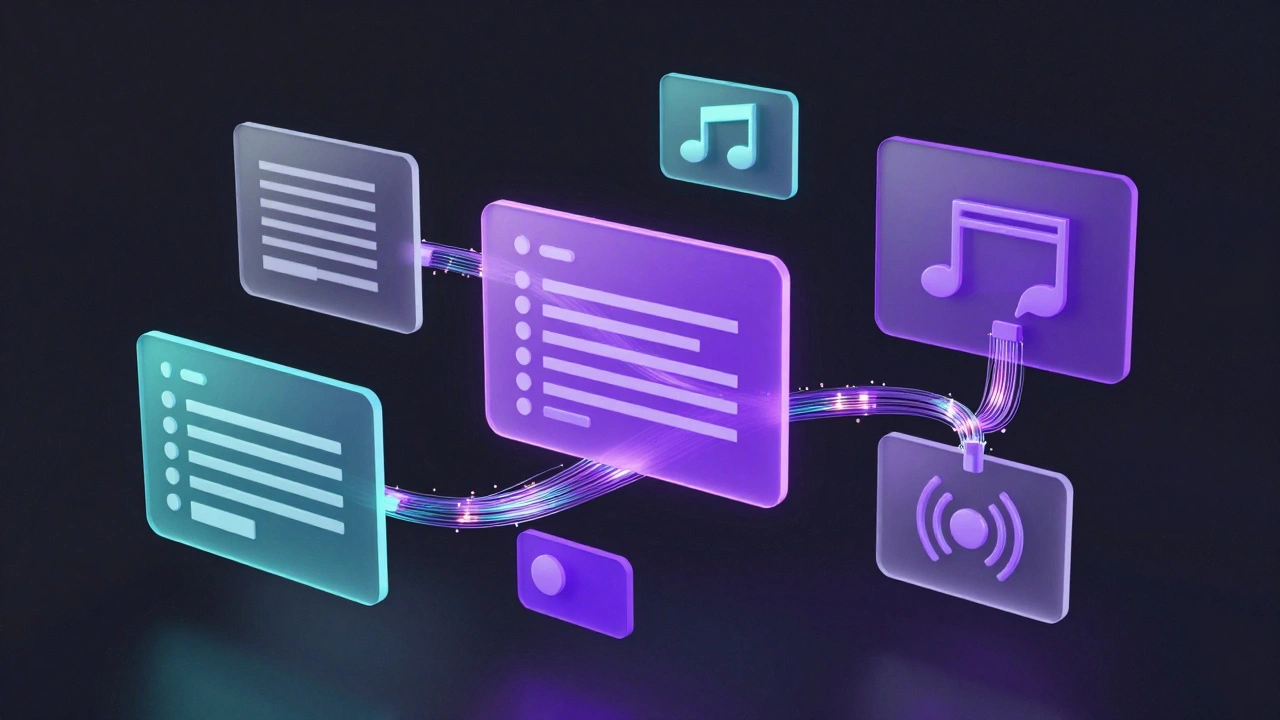
To get this working, you need three distinct layers functioning together:
- Ingestion Layer: This is where the information lives. For us, that is the Telegram Chat API or a bot endpoint listening for keywords like "News" or "Update." When a message hits, the system wakes up.
- Processing Layer: This is the brain. We aren't just saving the file; we are asking an AI model to reformat that text into a script. We need specific constraints-intro length, hook style, tone-to fit the medium.
- Distribution Layer: Once the audio is generated or the script is ready, where does it go? Usually to a podcast host for intros or directly to social queues for Shorts.
This separation is crucial. If you mix processing with distribution, you create fragility. One broken link stops the whole factory. Keeping them separate lets you upgrade your AI engine without breaking your posting schedule.
Essential Tools for 2026 Workflows
You cannot rely on magic alone. You need robust infrastructure. While there are standalone apps promising "easy conversion," the most reliable setups currently combine specialized automation platforms with powerful language models. This gives you control over quality and cost.
| Component | Role in Pipeline | Recommended Solution |
|---|---|---|
| n8n is a workflow automation tool that orchestrates complex data exchanges between applications | Data Glue | Triggers Telegram events and routes them to AI APIs |
| OpenAI Whisper is an automatic speech recognition system capable of transcribing audio with high accuracy across languages | Voice Transcription | Converts Telegram voice notes to editable text |
| NotebookLM is a Google-developed generative AI tool designed to summarize information into podcast-style audio | Audio Synthesis | Turns summarized text back into natural-sounding audio segments |
| Notion is a productivity application often used as a database to manage content outlines and scripts | Storage | Holds approved drafts before final publishing |
Notice how OpenAI Whisper handles the messy part: human speech is unstructured and full of pauses. Your automation needs to clean that up before sending it to the writing model. Without a dedicated transcription step, your AI scriptwriter will include all the "ums" and filler words, which ruins a professional podcast intro.
Similarly, while traditional Text-to-Speech (TTS) exists, it often sounds robotic for modern audiences. Platforms like NotebookLM excel here because they generate "conversational" audio rather than flat reading. This distinction matters when you are aiming for a Short-form clip that needs to retain attention within the first three seconds.
Configuring the Transformation Logic
Here is where most guides skip the critical part: the prompt engineering. If you just tell your system to "summarize this," you'll get a bland article, not a gripping podcast intro. You need to force the AI to adopt the role of a showrunner.
Your prompt template should look something like this:
"Act as a senior podcast producer. Take the following news snippet. Extract the single most shocking statistic or fact. Write a 15-second spoken-word intro that starts with a question, mentions [Brand Name], and ends with a call to listen to the full episode. Keep the character count under 180."
This constraint (under 180 characters) ensures the output fits comfortably within a 90-second podcast bumper. When you aim for Shorts (vertical video), adjust the instruction to request visual cues in parentheses. Example: "(Show graph of rising rates)." Your AI tool might not generate the video, but it prepares the brief for your editor.
Another vital adjustment is filtering. Not every Telegram message deserves to become a podcast intro. Set up your workflow to ignore low-value chatter. Use keyword triggers-if a message contains "breaking" or "urgent," send it through the premium generation queue. If it's just general banter, archive it. This saves computational costs and keeps your output feed relevant.
Managing Voice Notes and Audio Quality
A significant portion of Telegram traffic comes in via voice messages. Many users prefer tapping-and-holding the microphone over typing. If you ignore this channel, you lose half your potential content.
The challenge is audio quality. A background-noisy recording from a subway station isn't ready for a polished podcast slot. Before running the transcription, insert a noise reduction step in your audio chain. Tools like Adobe Podcast Enhance or similar integration within your n8n workflow can strip out the ambient hum.
Once the audio is clean, the flow moves to text representation. You want to convert this voice note into two outputs simultaneously:
- A transcript for accessibility captions.
- A condensed "hook" script for the intro.
By doing this in parallel, you maximize the utility of a single piece of raw input. Do not let the transcript wait for the intro script; process them concurrently.
Optimization for Social Shorts
Repurposing into Shorts requires different formatting than audio-only podcasts. Visual rhythm is everything. Your workflow should detect if the content suits visual media.
If you are generating Shorts, the AI should identify keywords that imply movement or visuals. For example, if the news snippet talks about a "stock market crash," the AI should tag it as "High Visual Interest." This metadata helps your automated posting tool decide whether to add stock footage overlays or text-on-screen animations.
Captioning is non-negotiable for Shorts. Your final export must include `.srt` subtitle files synchronized to the audio. Most automation platforms today can attach these directly to the video container during the upload phase, ensuring compliance with platform algorithms that favor engaged watching.
Maintenance and Quality Control
Automation isn't set-and-forget. The biggest risk is hallucination. In 2026, AI models are smarter, but they still invent facts. Your pipeline must include a verification step.
Set up a "Human in the Loop" checkpoint in Notion. Before the final script goes live to the hosting provider, it sits in a draft folder waiting for a click-approve. This takes five seconds per day but prevents disaster. If the AI misinterprets a nuance in a political news story, catching it here is easy. Catching it after millions of views is expensive.
Also, monitor your API usage limits. Sending every single Telegram whisper to an LLM adds up quickly. Batch your processing. Instead of triggering a script generation for every notification, accumulate 10 messages and run a batch generation once per hour. This stabilizes your server load and keeps costs predictable.
Frequently Asked Questions
Is it free to set up a Telegram to Podcast automation?
You can start with free tiers for many components, such as limited API calls on n8n or standard LLM models. However, consistent production at scale usually requires paid subscriptions for reliable uptime and higher character limits on transcription services.
Can this handle multiple languages?
Yes, modern models support multilingual capabilities. If your Telegram news is mixed language, the system can detect the source language and translate or generate the script in your target language automatically.
What is the ideal length for an automated intro?
A standard broadcast intro should be 15 to 30 seconds. For social media shorts, keep it under 15 seconds to maintain retention. Anything longer risks losing the viewer before the main content begins.
Do I need coding skills to build this?
Basic logic understanding helps, but tools like n8n use visual nodes. You are essentially connecting blocks together, which mimics coding without requiring you to write syntax line-by-line.
How do I prevent copyright issues with news snippets?
Always paraphrase the content using the AI. Do not use direct quotes unless you attribute the source explicitly in the script. Transforming the original meaning into a summary or commentary creates fair usage protection.