When your content shows up on Telegram without permission-full articles, ebooks, investigative reports-it’s not just a nuisance. It’s a direct hit to your revenue, your audience trust, and your ability to keep publishing. And if you’re a publisher, you need to know exactly how to respond. The good news? Telegram has proven it can act fast. The bad news? You can’t just email them and expect results. You need a legal strategy, and it starts with understanding how enforcement really works.
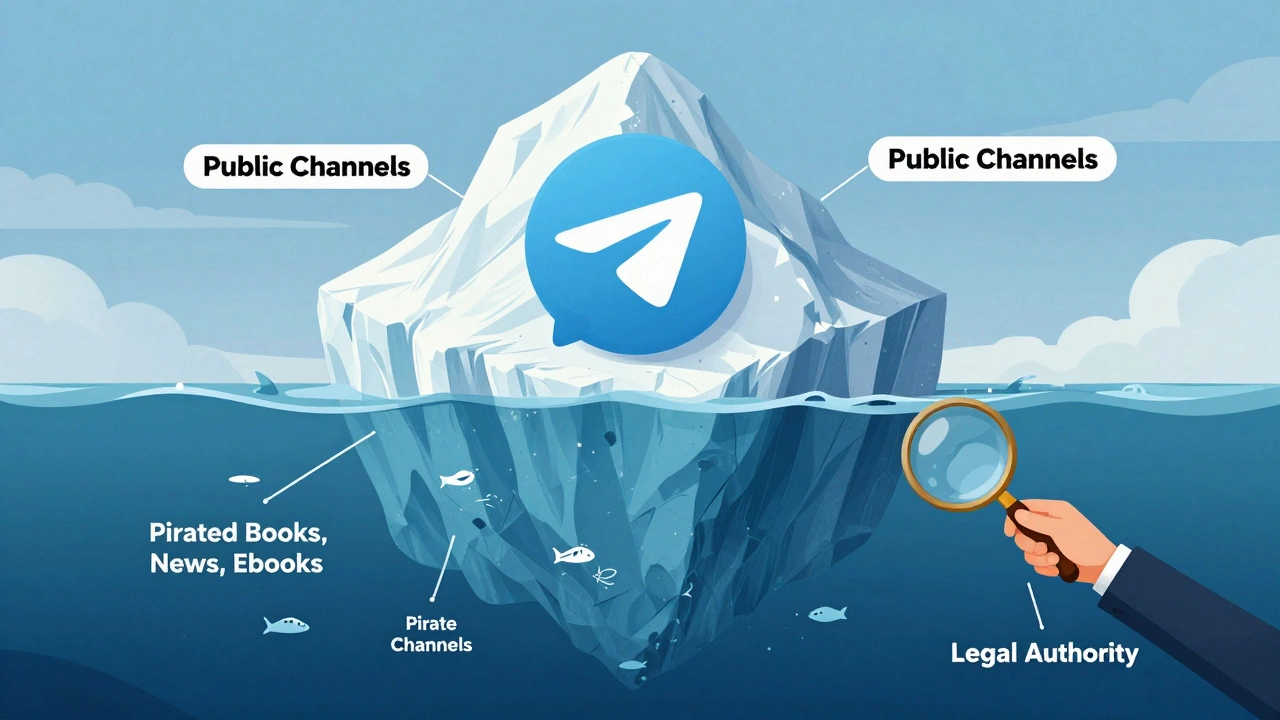
Telegram isn’t like YouTube or Facebook. It doesn’t have a public copyright reporting tool. You can’t click a button and file a claim. That’s because Telegram’s architecture is built differently: public channels can be created by anyone, share files up to 1.5GB, and operate anonymously. This made it a magnet for piracy. In 2020, Italian publishers found over 350,000 subscribers across 26 Telegram channels offering complete, downloadable editions of newspapers and books. That’s not a glitch. That’s a business model built on stealing your work.
Why Direct Requests to Telegram Usually Fail
You might think: "I’ll just message Telegram and ask them to take it down." But here’s the truth: unless you’re a government agency with legal authority, your request will likely disappear into a black hole. Telegram’s team doesn’t have a public copyright team. They don’t monitor channels. They don’t scan content. They only respond when a recognized authority steps in.
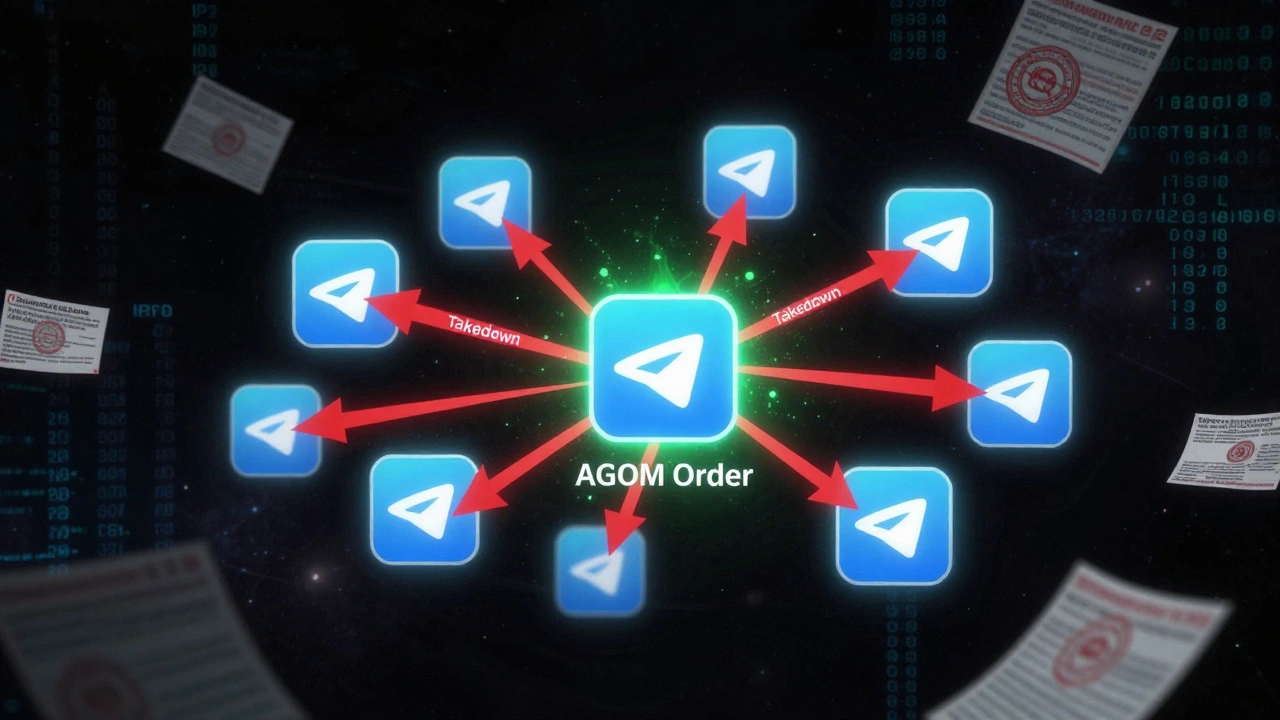
That’s why Italian publishers shifted tactics. Instead of reaching out to Telegram directly, they filed formal applications with AGCOM-the Italian Communications Authority. AGCOM didn’t just ask nicely. They issued legally binding notices under Italy’s E-Commerce Decree and Regulation for the Online Protection of Copyright. Within 24 hours of the second filing, Telegram responded: "We’ll block the channels." And they did. Seven out of eight channels reported by FIEG were removed. Twenty-six channels identified by AIE vanished. The subscriber counts dropped overnight.
The Legal Leverage You Need
Here’s the key insight: Telegram responds to legal authority, not to publishers. If you’re in the EU, your best move is to work through your national regulatory body. In Italy, that’s AGCOM. In Germany, it’s the Federal Network Agency. In France, it’s ARCOM. These agencies have the legal power to compel platforms to act-even if the platform is based outside the country.
Why? Because of a loophole in international law. Telegram’s servers aren’t in Italy. So under normal rules, AGCOM can’t order them to remove specific content. Instead, they can only order internet providers to block the whole app. But that’s too extreme. Blocking Telegram for everyone just to take down a few piracy channels? That’s disproportionate. So AGCOM didn’t block Telegram. Instead, they pushed for a legal change: they asked lawmakers to treat Telegram as if it were operating within Italy-because it’s serving Italian users with Italian phone numbers and Italian content. That’s the shift that unlocked enforcement.
Today, if you’re a publisher in the EU, your path to action is clear:
- Document the infringement: Take screenshots of the channel, save links, note subscriber counts, and collect samples of your content being shared.
- Identify your national authority: Find the agency with digital copyright enforcement powers in your country.
- File a formal complaint: Submit your evidence with a request for intervention under the Digital Services Act or national equivalents.
- Wait for the authority to act: Once they issue a notice, Telegram typically responds within 24 to 72 hours.
This isn’t theoretical. It’s happened twice in Italy, and it’s been replicated across Europe. The result? Channels gone. Subscribers gone. Revenue protected.
What About Outside the EU?
If you’re not in the EU, the path is harder-but not impossible. Telegram’s September 2024 policy update changed the game. They now say they’ll provide user IP addresses and phone numbers to law enforcement agencies with valid legal requests. That means if you’re in the U.S., Canada, or Australia, you can work with your national copyright office or law enforcement to build a case. You’ll need:
- Proof of ownership (copyright registration or publishing records)
- Proof of infringement (timestamps, channel links, file hashes)
- A legal request from an official body (police, copyright agency, court order)
Don’t try to do this alone. Contact your publisher association. They’ve likely already started building relationships with regulators. In many countries, collective action is the only way to get traction.
Why This Matters Economically
The numbers don’t lie. According to research commissioned by the Italian Publishers Association, Telegram is responsible for 22% of all unauthorized content consumption in Italy. That translates to €528 million in annual losses for the publishing industry. That’s not a drop in the bucket. That’s salaries cut. Staff laid off. Projects canceled. When you ignore piracy, you’re not just losing readers-you’re losing your future.
And it’s not just books. News sites, magazines, research papers-all of it gets copied and republished on Telegram channels. Some even use bots to auto-post new content the moment it’s published. This isn’t random. It’s organized. And it’s profitable-for the pirates, not you.
What Telegram Won’t Tell You
Telegram’s design makes enforcement harder than it looks. When one channel gets taken down, the pirates don’t disappear. They just create a new one. Often, they leave a link in the old channel’s description pointing to the new one. Or they use cross-references-channels that auto-forward content to other channels. This creates a network effect: take down one, and ten pop up.
That’s why single takedowns don’t solve the problem. You need ongoing monitoring and repeated legal pressure. Publishers who succeed don’t just file one complaint. They set up systems to track new channels, log patterns, and file new reports every time they spot a resurgence.
What You Should Do Right Now
If you’re a publisher and you’ve found your content on Telegram:
- Don’t panic. Don’t tweet. Don’t post on Reddit. Don’t call Telegram support. It won’t help.
- Document everything. Save the channel URL, screenshots of the content, timestamps, and subscriber numbers.
- Find your authority. Google: "[your country] copyright enforcement agency" or contact your national publishers’ association.
- Submit a formal complaint. Include all evidence. Ask them to invoke the Digital Services Act or equivalent local law.
- Follow up. Ask for a case number. Track progress. If they don’t respond in 10 days, escalate.
This isn’t about being aggressive. It’s about being smart. Telegram isn’t your enemy. It’s a tool. And like any tool, it responds to how you use it. Use it legally, and you can shut down piracy. Use it emotionally, and you’ll just waste time.
The Bigger Picture
Telegram’s shift toward cooperating with law enforcement-giving up IP addresses and phone numbers-is a turning point. It means the era of total anonymity for pirates is ending. Publishers who act now will lead the way. Those who wait will keep losing money.
The future of publishing doesn’t depend on fighting every pirate. It depends on making piracy too risky to sustain. And that’s exactly what’s happening. With legal backing, coordinated action, and platform cooperation, the tide is turning. You just need to be on the right side of it.
Can I email Telegram directly to request content removal?
No. Telegram does not have a public system for handling copyright claims from individual publishers. Direct emails or messages are unlikely to be reviewed or acted upon. The only reliable path is through formal legal channels, such as national regulatory authorities like AGCOM in Italy or equivalent bodies in other countries.
What evidence do I need to file a takedown request?
You need: (1) Proof of ownership-copyright registration or publishing records showing you control the content; (2) Proof of infringement-screenshots of the Telegram channel, links to the content, timestamps, and file samples; and (3) Documentation of harm-subscriber counts, frequency of posts, and how it impacts your sales or traffic. The more specific and organized the evidence, the faster authorities can act.
Why does Telegram remove content so quickly when authorities act?
Telegram has the technical ability to remove content selectively. When a recognized authority like AGCOM issues a formal notice under national law, Telegram complies because it avoids legal risk. The platform’s 2024 policy shift-agreeing to share user data with authorities-shows they’re now more invested in staying compliant with legal systems than in resisting them.
Is this only a problem in Italy?
No. While Italy’s case is the most documented, Telegram piracy is a global issue. Publishers in Germany, France, Spain, and the U.S. have reported similar problems. The EU’s Digital Services Act now requires platforms like Telegram to cooperate with authorities across member states. Similar legal frameworks are being adopted in other regions, making coordinated enforcement more possible than ever.
How long does it take to get content removed after filing a complaint?
Once a regulatory authority issues a formal notice, Telegram typically removes the content within 24 to 72 hours. In Italy, responses were recorded as fast as 24 hours after the second filing. The delay is usually in the time it takes for the publisher to gather evidence and for the authority to process the request-not in Telegram’s response time.
Can I sue Telegram for hosting my content?
Suing Telegram directly is extremely difficult and rarely successful. The platform claims immunity under laws like the EU’s E-Commerce Directive, which protects intermediaries from liability for user-generated content. Your best legal path is to work with authorities to force removal, not to pursue damages. Focus on stopping the infringement, not on litigation.
What happens if the same content reappears on a new channel?
Pirates often recreate channels quickly, especially if they’re using automated tools. That’s why ongoing monitoring is critical. Set up alerts for keywords from your content. Report each new channel immediately. Each new filing strengthens your case and signals to authorities that this is a persistent issue-not a one-time event.
Do I need a lawyer to file a takedown request?
Not necessarily. Many national copyright agencies accept complaints from publishers without legal representation. However, if your content is high-value or the infringement is widespread, working with a lawyer who specializes in digital copyright can help you structure your evidence and navigate complex legal procedures more effectively.
How do I find my country’s copyright enforcement agency?
Search for “[your country] copyright enforcement agency” or “digital copyright authority.” In the EU, most countries have a dedicated body under their communications or culture ministry. In the U.S., contact the U.S. Copyright Office. In Canada, reach out to the Canadian Intellectual Property Office. Publisher associations can also guide you.
Is Telegram’s cooperation permanent?
Telegram’s cooperation is conditional on legal pressure. They’ve shown willingness to act when authorities enforce compliance, but they’re not obligated to monitor content proactively. Your ongoing success depends on maintaining pressure through consistent reporting, legal advocacy, and public awareness. Don’t assume they’ll stay cooperative unless you keep the pressure on.