Imagine scrolling through your phone for the latest headlines. You probably land on Facebook, check a trending video on TikTok, or watch a clip on YouTube. But what if you opened Telegram, a messaging app known for its privacy features and large file limits? For most Americans, that’s where the news hunt ends-because they aren’t looking there at all.
The reality of how U.S. adults consume information online is starkly divided. While major platforms dominate our daily feeds, Telegram remains a niche player in the American news landscape. The numbers tell a clear story: only a tiny fraction of the population relies on this platform for updates, despite its massive global growth.
The Hard Numbers: Telegram vs. The Giants
To understand why Telegram isn't your primary news source, we have to look at the data from Pew Research Center, a leading nonpartisan think tank that tracks media trends. Their research provides the clearest picture of social media news habits in the United States.
In a December 2022 study focused on "alternative" social media sites, Pew found that while 27% of U.S. adults had heard of Telegram, only 2% said they used it for news. Compare that to the giants:
- Facebook: 38% of U.S. adults regularly get news here
- YouTube: 35% regularly get news here
- TikTok and Instagram: 20% each
- X (formerly Twitter): 12%
- Reddit: 9%
Do the math. An average American adult is roughly 19 times more likely to get their news from Facebook than from Telegram. Even newer platforms like TikTok have ten times the reach for news consumption. This gap highlights a fundamental truth: Telegram is not a mainstream news hub in the U.S. yet.
| Platform | Regular News Users (%) | Primary News Format |
|---|---|---|
| 38% | Mixed feed (text, links, video) | |
| YouTube | 35% | Long-form & short videos |
| TikTok | 20% | Short-form vertical video |
| 20% | Images, Stories, Reels | |
| X (Twitter) | 12% | Text, threads, real-time updates |
| Telegram | 2% | Channels, groups, files |
Why Is Telegram Different? The Tech Behind the Feed
If so few people use it for news, why does it exist as a news platform at all? The answer lies in its technical design, which is radically different from the algorithm-driven feeds of Meta-owned apps or TikTok.
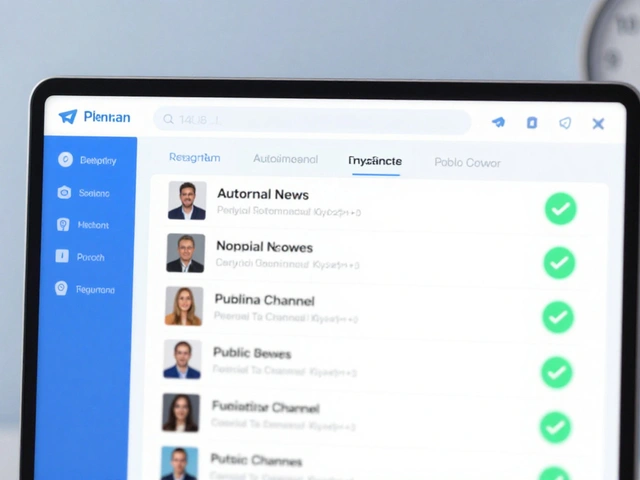
On Facebook or TikTok, an algorithm decides what you see based on what keeps you clicking. On Telegram, launched in 2013 by Pavel Durov, discovery works differently. There is no central "News Feed" that pushes random stories to you. Instead, news comes through channels (one-to-many broadcasts) and groups (multi-user chats). You must intentionally subscribe to a channel to see its content.
This subscription model creates a chronological, unfiltered stream. If a news outlet posts five times an hour, you see all five posts in order. There is no engagement-based ranking hiding breaking stories behind viral cat videos. For users who want raw, uncensored updates without algorithmic curation, this is a feature, not a bug.
Additionally, Telegram supports massive file sizes-up to 2 GB for standard users and 4 GB for Premium subscribers. This allows journalists and activists to share full-length HD investigative reports, audio podcasts, and document dumps directly within the chat, something that is often compressed or limited on other platforms.
Who Actually Uses Telegram for News?
Since only 2% of U.S. adults use Telegram for news, who are these people? Pew Research doesn't break down specific demographics for Telegram alone, but their broader analysis of "alternative" social media users (which includes Telegram, Truth Social, Gab, etc.) reveals a distinct profile.
Users of these alternative platforms tend to be:
- Younger and male: Skewing younger than the general population, with a higher proportion of men.
- Politically conservative: More likely to identify as Republican or lean Republican compared to users of Instagram or TikTok.
- Skeptical of mainstream media: These users report lower trust in national news organizations and are more likely to encounter fringe viewpoints.
Beyond politics, three specific communities drive Telegram news usage in the U.S.:
- Crypto and Finance Traders: Telegram is the de facto wire service for cryptocurrency news. Bots push real-time market alerts, token listings, and trading signals instantly. For retail traders, speed is everything, and Telegram’s bot API enables automation that traditional news sites can’t match.
- Diaspora Communities: During conflicts like the war in Ukraine or tensions in the Middle East, U.S. residents with family ties to those regions often turn to Telegram channels for real-time, ground-level updates that bypass state-controlled media or slow-moving Western outlets.
- Activists and Local Organizers: Groups concerned with privacy or facing censorship on mainstream platforms use Telegram for secure coordination. Channels broadcast protest updates, police movements, and mutual aid requests with a level of anonymity that Facebook Events cannot provide.
The Discovery Problem: Why It Won't Go Mainstream
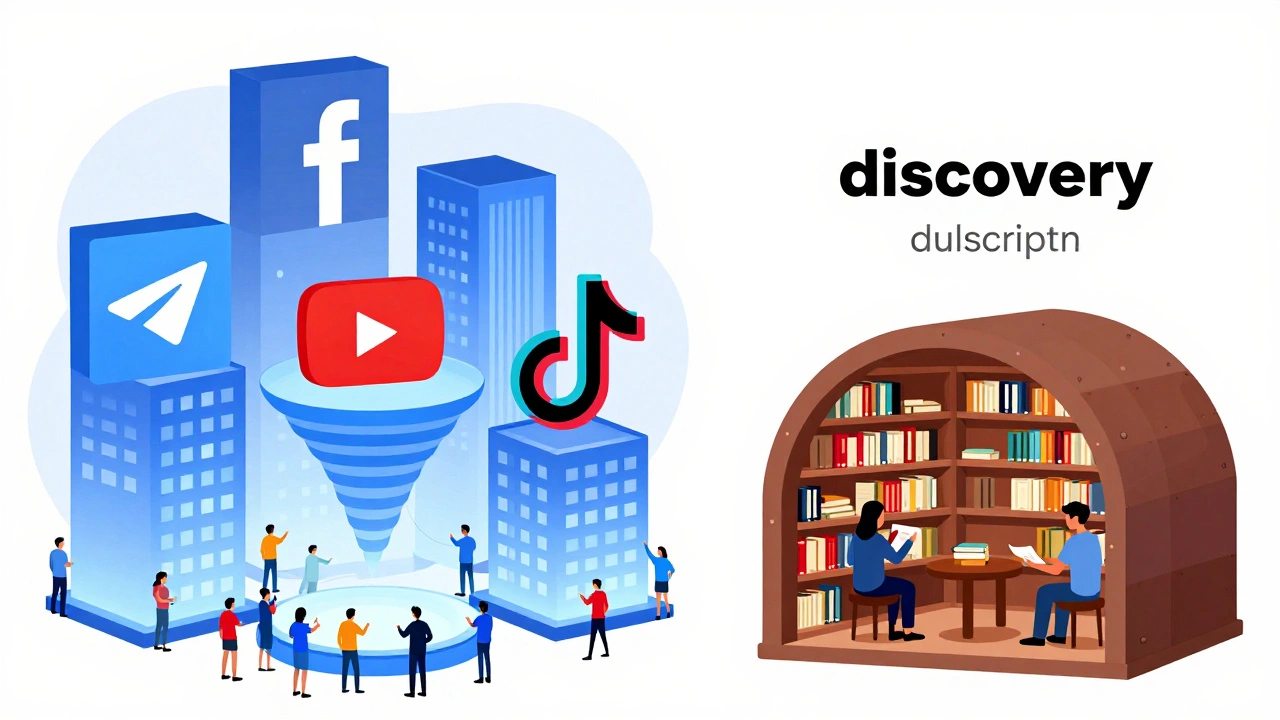
You might wonder, if Telegram is so good for direct, fast updates, why hasn't everyone switched? The biggest barrier is discovery.
On YouTube, the recommendation engine suggests a political debate video after you watch a cooking tutorial. On TikTok, the "For You" page serves news clips to users who never searched for them. This accidental exposure is how billions of people become regular news consumers on those platforms.
Telegram has no such mechanism. If you don't know a channel exists, you won't find it easily. Global search helps, but it lacks the personalized behavioral targeting of Big Tech. Most U.S. users discover Telegram channels via links shared on X, Reddit, or websites. This means Telegram news consumption is highly intentional. You have to go looking for it.
Furthermore, the association with misinformation and extremism poses a reputational hurdle. After moderation crackdowns on Facebook and Twitter following events like the January 6 Capitol attack, many fringe groups migrated to Telegram. While many channels are benign, the platform's permissive moderation policies have made it a haven for unverified claims. For the average risk-averse American user, this environment feels less safe than the heavily moderated feeds of Instagram or Facebook.

Global Growth vs. U.S. Stagnation
It is important to note that Telegram’s status as a niche U.S. news source does not reflect its global impact. According to GWI, a global data intelligence company, Telegram’s user base grew by 31% between 2020 and 2023. By early 2023, it reached approximately 700 million monthly active users worldwide, making it the fourth most popular messenger app globally.
However, this growth is concentrated in markets like Russia, India, Latin America, and parts of Eastern Europe, where Telegram often replaces WhatsApp or serves as a primary tool for circumventing internet restrictions. In the United States, entrenched competitors like iMessage, WhatsApp, and Facebook Messenger satisfy basic communication needs, leaving little room for Telegram to gain traction as a default app.
The Reuters Institute Digital News Report 2025 confirms this divergence. While it notes rising news usage on X and TikTok in the U.S., it does not highlight Telegram as a significant driver of news consumption in America. Attention is consolidating around a few large, algorithm-driven platforms rather than fragmenting into smaller, private networks.
What This Means for Your News Diet
If you are a U.S. adult trying to stay informed, ignoring Telegram likely won't leave you uninformed. The vast majority of public discourse, fact-checking, and broad societal news happens on Facebook, YouTube, X, and increasingly, TikTok.
However, if you fall into one of the niche categories-perhaps you trade crypto, follow international conflicts closely, or value chronological, unaltered feeds over algorithmic curation-Telegram offers unique utility. It acts less like a newspaper and more like a direct line to specific sources.
Just remember the trade-off: you get control and privacy, but you lose the convenience of discovery. You have to do the work of finding reliable channels yourself, because no algorithm will hand them to you.
Is Telegram safe for getting news in the US?
Safety depends on your definition. Technically, Telegram uses strong encryption for Secret Chats and client-server encryption for cloud chats. However, because moderation is looser than on Facebook or YouTube, you may encounter more unverified rumors, extremist content, or misinformation. You need to vet your sources carefully.
Why is Telegram usage for news so low in the US compared to Europe?
In countries like Russia, Ukraine, and Iran, Telegram is often a primary tool for bypassing censorship or accessing real-time conflict updates. In the US, mainstream media is accessible, and platforms like Facebook and YouTube have deeply integrated news ecosystems with algorithms that push content to users, reducing the need for a separate, manual subscription model like Telegram's.
Does Telegram have an algorithm that hides news?
No. Telegram channels display posts in strict reverse-chronological order. If you subscribe to a channel, you will see every post it makes, unless you manually mute it. This is different from Facebook or TikTok, where an algorithm ranks content by predicted engagement.
Can I get financial news on Telegram?
Yes, Telegram is widely used for cryptocurrency and stock market news. Many traders use bots to receive instant alerts about price changes, new token launches, or economic data releases. It is considered one of the fastest ways to get raw market data, though accuracy varies by channel.
Is Telegram free to use for news?
Yes, using Telegram to read news channels is completely free. There is no paywall for content. The optional Telegram Premium subscription ($4.99/month) offers perks like faster downloads and larger file uploads, but it is not required to access news.