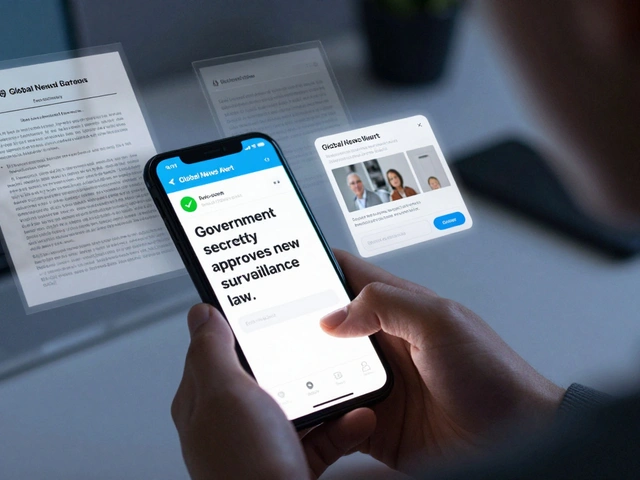
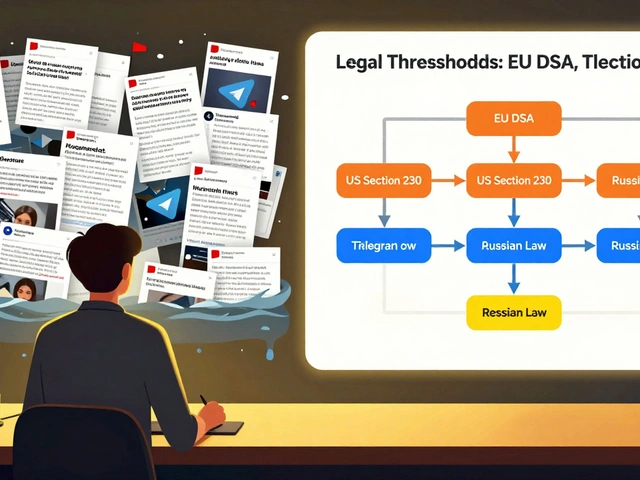
The morning routine for millions of people has changed. You no longer open a browser to check headlines or scroll through an endless social media feed hoping the algorithm shows you something important. Instead, you open Telegram, a messaging platform founded by Pavel Durov and Nikolai Durov in 2013, that has quietly become the new front page of the internet. As of May 2026, this shift is not just a trend among tech enthusiasts; it is a mainstream movement driven by frustration with opaque algorithms and a desire for direct, chronological access to information.
Why Telegram Is the New Newsroom
To understand why Telegram news channels are surging, you have to look at what they replace. For years, we relied on email newsletters, RSS feeds, and social media platforms like Twitter/X (acquired by Elon Musk in 2022) and Facebook (rebranded to Meta in 2021). These platforms suffer from a common flaw: algorithmic filtering. You do not see every post from your favorite source; you only see what the platform’s code decides will keep you engaged. This often means breaking news gets buried under viral memes or opinion pieces designed to provoke outrage.
Telegram operates differently. It uses a broadcast model. When a publisher posts to their channel, that message appears immediately in your chat list, in strict chronological order. There is no ranking, no shadow-banning, and no engagement-based suppression. If you subscribe to a news channel, you get every update they send. This simplicity is powerful. It returns control to the reader. You decide what to read, not an algorithm.
The growth numbers back this up. Telegram reported 900 million monthly active users in Q2 2024, with acceleration continuing into 2026. Search volume for "Telegram news channels" jumped 340% year-over-year between May 2025 and May 2026. This isn't just about convenience; it's about reliability. During crises, such as the 2022 invasion of Ukraine, President Volodymyr Zelensky used his official Telegram channel to communicate directly with citizens, bypassing traditional media filters entirely. That event proved the platform's utility for real-time, unfiltered information distribution.
How Automation Powers the Feed
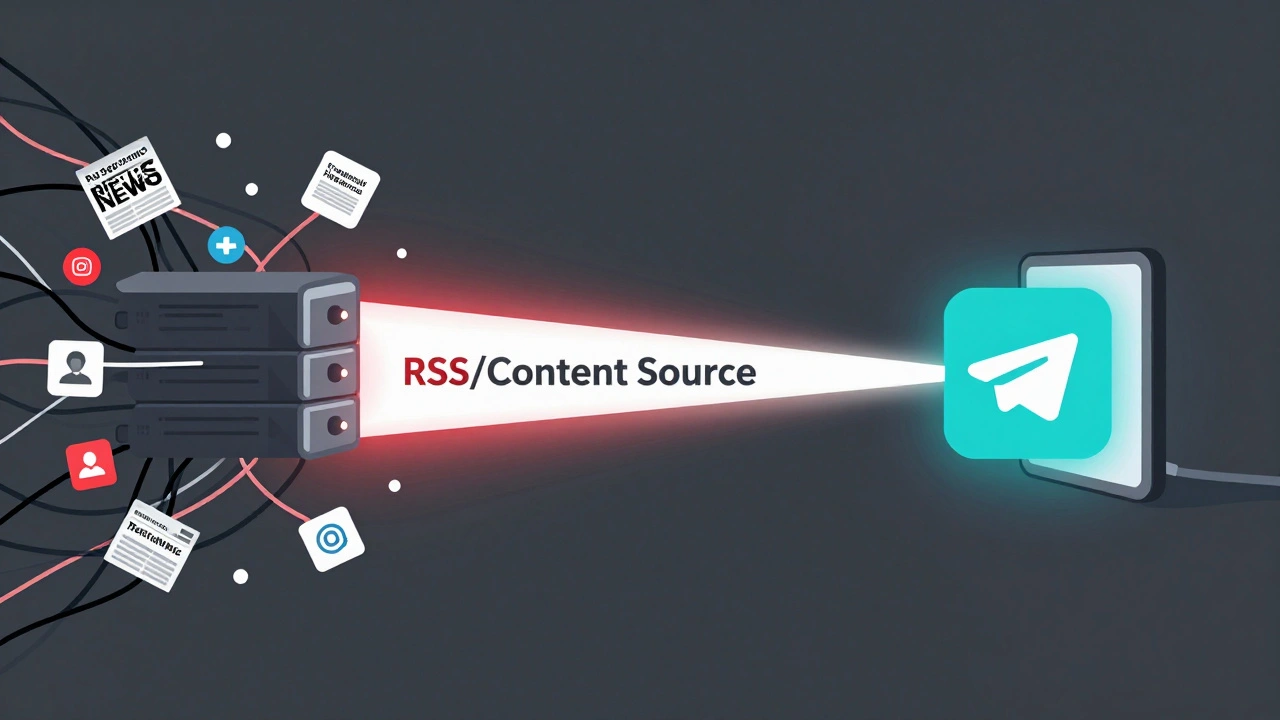
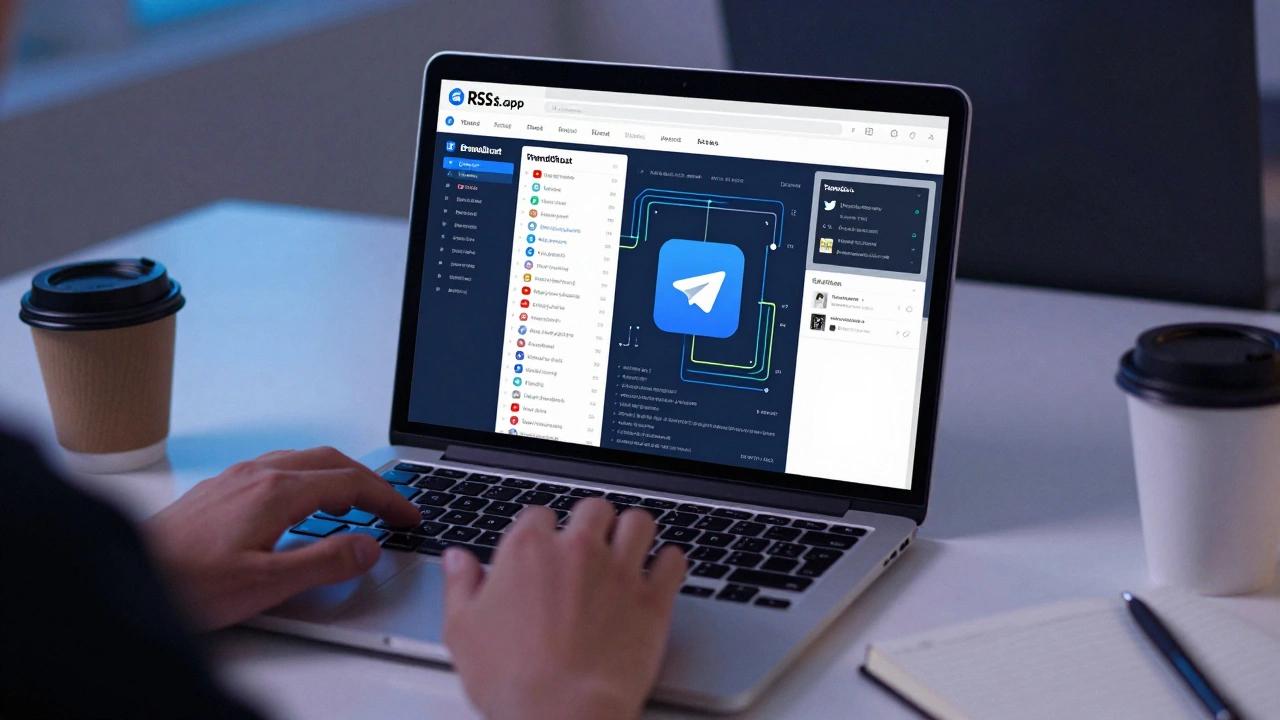
You might wonder how publishers manage to post constantly without hiring an army of editors. The answer lies in automation. Third-party services like RSS.app and BrandGhost act as middleware between content sources and Telegram channels. These tools monitor RSS feeds, Twitter/X accounts, YouTube channels, and even specific website URLs. When new content is detected-often within seconds-the service automatically formats and posts it to the Telegram channel.
This technology democratizes news aggregation. In the past, running an RSS aggregator required technical knowledge to set up servers and parse XML feeds. Today, a journalist or enthusiast can connect multiple sources to a single Telegram channel in under 30 seconds using these bots. The result is a curated feed that updates faster than most human editors could manage. For readers, this means access to wire service stories, blog updates, and niche reports delivered instantly to their desktop or mobile app.
| Platform | Delivery Model | Algorithmic Filtering | User Control |
|---|---|---|---|
| Telegram | Chronological Broadcast | None | High (Subscribe/Unsubscribe) |
| Twitter/X | Algorithmic Feed | Heavy (Engagement-based) | Low (Visibility depends on metrics) |
| Email Newsletters | Inbox Delivery | Spam Filters/Promotions Tabs | Medium (Open rates avg. 17-25%) |
| RSS Readers | Chronological Pull | None | High (Requires setup) |
The Decline of RSS and the Rise of Direct Access
RSS (Really Simple Syndication) was the original promise of the open web. Launched in 1999, it allowed users to pull content from websites directly into a reader application. However, RSS never achieved mass adoption because it required technical setup. Users had to find feeds, install software like Feedly or Inoreader, and manage subscriptions manually. After Google Reader shut down in 2012, RSS usage plummeted. Pew Research Center data showed RSS access falling from 11% of American internet users in 2010 to approximately 4% by 2023.
Telegram fills this gap but removes the friction. It looks and feels like a messaging app, which everyone already understands. You don't need to know what an "XML feed" is. You just search for "Breaking News" or "Tech Updates," find a channel with a verified checkmark, and tap "Join." The interface is familiar, yet the functionality mirrors the best parts of RSS: guaranteed delivery and chronological ordering. This ease of use explains why Telegram has surpassed RSS as the preferred tool for power users who want efficiency over entertainment.
Verification and Trust in a Decentralized System
A critical concern for any news platform is misinformation. Telegram’s approach to verification differs from traditional media outlets. Channels can apply for a blue checkmark by submitting identity documentation to Telegram’s team. However, this verification confirms the identity of the administrator, not the journalistic integrity of the content. A verified channel does not guarantee factual accuracy or editorial standards.
This creates a responsibility for the user. Unlike Facebook, where internal documents leaked by Frances Haugen revealed that the platform prioritized engagement over truth, Telegram remains neutral. It provides the pipe; it does not curate the water. To navigate this safely, experts recommend subscribing only to official channels of established news organizations like BBC, Reuters, The Guardian, or CNN. These organizations maintain their own editorial oversight regardless of the platform they use. Additionally, looking for consistent branding, official logos, and cross-referencing stories with other trusted sources helps mitigate risk. The lack of central moderation also means less censorship, which is valuable in regions with restrictive internet policies, but it requires users to be more vigilant about source credibility.
Monetization Challenges for Creators
While Telegram is excellent for distribution, it is still evolving as a business model for journalists. Unlike YouTube, which shares ad revenue with creators, or Substack, which takes a cut of subscription fees, Telegram does not offer built-in monetization for channel owners. Publishers cannot run ads directly within channel posts through a native platform system.
Creators currently rely on three main methods to generate income:
- Sponsorships: Brands pay for promoted posts within the channel.
- Telegram Premium: Introduced recently, this allows subscribers to pay for exclusive content or perks, though adoption is still growing.
- External Links: Driving traffic to paid articles, merchandise, or donation pages outside the app.
Practical Steps to Build Your News Feed
If you want to switch to Telegram for your daily news, here is how to set it up effectively:
- Install the App: Download Telegram on iOS, Android, Windows, macOS, Linux, or use the web version at web.telegram.org.
- Create an Account: Verify your phone number. This is the only requirement.
- Search for Sources: Use the in-app search bar. Try keywords like "Global News," "Tech Insider," or specific publication names.
- Verify Credentials: Look for the blue checkmark next to the channel name and official logo. Avoid generic usernames like "News_Alert_123" unless they have a strong reputation.
- Curate Aggressively: Join multiple channels covering different topics. Since there is no algorithm, you won't get overwhelmed by duplicates if you choose distinct sources.
- Mute Non-Essentials: If a channel posts too frequently, mute notifications while keeping it in your list for manual checking.
The Future of Platform Growth
As we move through 2026, Telegram continues to refine its features. Recent updates include new profile designs on Android and improved search functionality. The platform is also exploring better content discovery mechanisms to help users find quality channels without knowing exact names. Currently, discovery relies heavily on word-of-mouth or external directories, which limits serendipitous finds.
The broader trend points toward decentralized communication. Users are tired of being treated as products sold to advertisers via opaque algorithms. They want tools that work for them, not against them. Telegram’s architecture supports this desire. By offering guaranteed delivery, minimal friction, and user-controlled curation, it has carved out a unique space in the digital media landscape. It may not replace traditional news websites entirely, but it has certainly become the primary engine for how those stories reach our eyes first.
Is Telegram safe for reading news?
Yes, but with caution. Telegram uses encryption for private chats, though public channels are not end-to-end encrypted. The safety risk comes from misinformation, not hacking. Always verify sources by looking for official checkmarks and sticking to reputable news organizations. Do not click suspicious links in unverified channels.
Do I need to pay to use Telegram news channels?
No. Creating an account and joining channels is free. Some channels may offer premium content via Telegram Premium subscriptions, but basic news access remains cost-free for all users.
How does Telegram compare to RSS feeds?
Telegram offers a similar chronological, algorithm-free experience but with much lower technical barriers. RSS requires specialized software and feed management, while Telegram works on any smartphone or computer with a familiar messaging interface. Telegram also supports multimedia like video and images more seamlessly than text-only RSS readers.
Can I automate my own Telegram news channel?
Yes. Services like RSS.app and BrandGhost allow you to connect RSS feeds, social media accounts, or website URLs to a Telegram bot. This automates posting new content to your channel without manual effort, making it easy to aggregate news from multiple sources.
Why are news organizations moving to Telegram?
Organizations like BBC and Reuters use Telegram to bypass social media algorithms that limit their reach. It allows them to deliver breaking news directly to subscribers in real-time, ensuring timely updates without relying on platform-dependent visibility. It builds a direct relationship with the audience.