Telegram isn’t just a messaging app-it’s a newsroom. Millions of people subscribe to Telegram channels for breaking updates, deep dives, and exclusive reports. But here’s the problem: churn is brutal. One day you’re gaining 500 new subscribers. The next, 300 vanish. No warning. No explanation. Just silence. And if you’re not tracking where they’re leaving, you’re flying blind.
Most news publishers on Telegram think their job ends at posting content. But that’s like opening a store and assuming customers will stay because the lights are on. The real work starts after someone subscribes. That’s where funnel analytics comes in-not as a buzzword, but as a practical tool to see exactly where your audience slips away.
What Funnel Analytics Really Means for Telegram News Channels
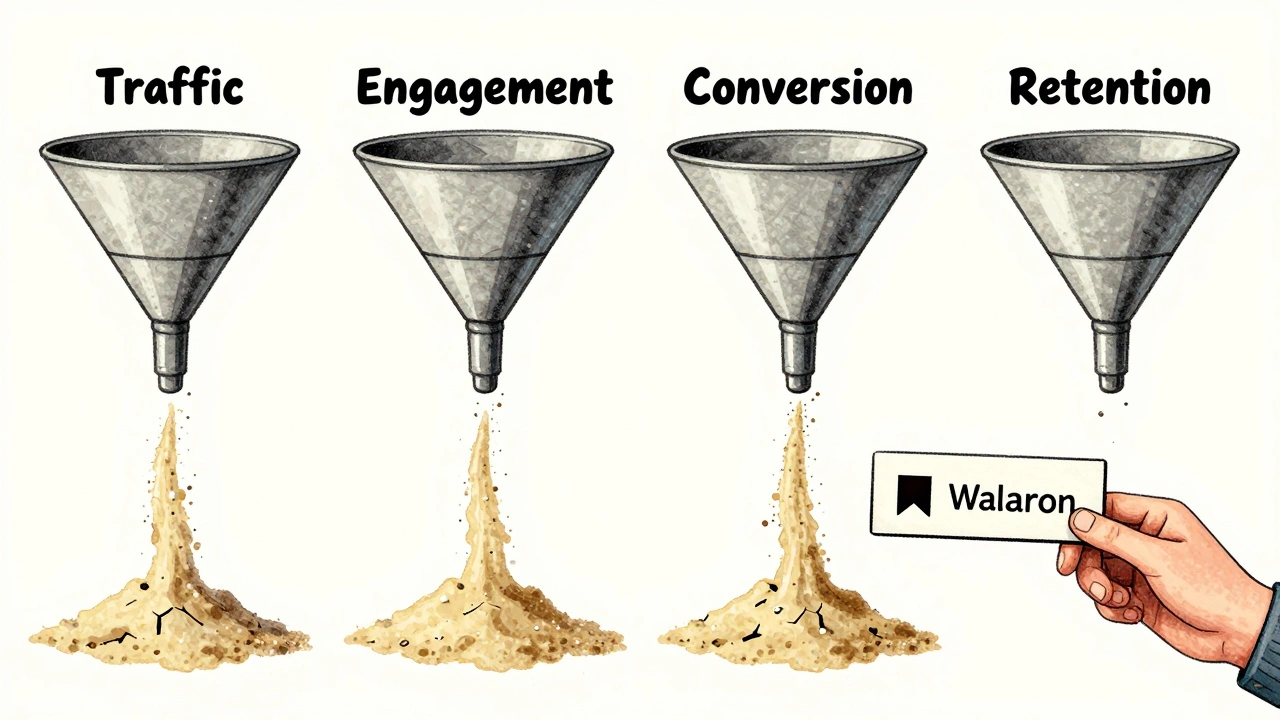
Funnel analytics isn’t about fancy dashboards or complex software. It’s about mapping out the journey your subscriber takes, step by step, and finding the leaks. For Telegram news channels, that journey has four clear stages:
- Traffic generation - How do people find you? Social media? Word of mouth? Search?
- Engagement - Do they open your messages? Reply? Click links? Participate in polls?
- Conversion - Do they stick around beyond the first week? Do they start interacting regularly?
- Retention - Are they still active after 30, 60, 90 days? Or do they quietly disappear?
Each stage has a drop-off point. And each drop-off point has a cause. If you don’t measure it, you can’t fix it.
Why Telegram Makes Churn Worse (and How to Fight It)
Telegram is designed for simplicity. Unsubscribing takes one tap. No confirmation. No email. No “are you sure?” That’s great for users. Terrible for publishers.
Unlike email, where you can track opens, clicks, and unsubscribes through detailed logs, Telegram’s native analytics are barebones. The built-in dashboard only keeps data for 90 days. No export. No historical trends. No way to see if your January cohort is still active in March.
So what do you do? You start tracking what matters:
- Retention rate - What percentage of subscribers are still active after 30 days?
- Daily Active Users (DAU) - Are you seeing spikes or steady declines?
- Average member stay time - How long do people stick around before leaving? If most go after 7 days, something’s wrong with onboarding.
- Churn rate - If 100 people join and 40 leave in a week, your churn is 40%. That’s not sustainable.
These aren’t vanity metrics. They’re your early warning system.
The Top 3 Places Subscribers Leave (and How to Stop It)
Based on real data from news channels that cut churn by over 50%, here are the three biggest leaks:
1. The First Week Drop-Off
Most people unsubscribe within the first 7 days. Why? Because the content feels like noise. They signed up for “breaking news,” but you’re sending the same headlines they saw on Twitter.
Solution: Deliver something they can’t get anywhere else. A journalist in Ukraine started sending a 3-minute audio summary every morning of verified war updates-no fluff, no ads, just facts. Subscribership grew 22% in 30 days. Retention jumped from 31% to 68%. Why? Because it was unique, consistent, and valuable.
2. The Engagement Cliff
After the first week, people stop opening messages. Why? Because you’re not asking them to do anything. No polls. No questions. No calls to action. You’re broadcasting, not building.
Solution: Create an engagement loop. Start a weekly poll: “What should we investigate next?” Use a bot to send a follow-up message to people who reply: “Thanks for voting! Here’s what we found.” Make them feel heard. One investigative news team saw a 40% increase in long-term retention after adding a simple “reply with your tip” prompt to every third message.
3. The Silent Unsubscribe
People don’t leave because they hate you. They leave because they forgot you existed. That’s not your fault-it’s just how humans work.
Solution: Use triggers, not schedules. Instead of posting every day at 8 a.m., use behavior to guide your messaging. If someone hasn’t opened a message in 14 days, send a personal note: “We noticed you haven’t seen this yet-here’s what you missed.” A news outlet in Brazil did this and brought back 27% of lapsed subscribers. The key? It wasn’t a discount. It was relevance.
How to Build Your Own Funnel Tracker (Without Coding)
You don’t need a $10,000 analytics platform. Here’s how to start today:
- Use UTM parameters - Add tracking tags to every link you pin in your channel. Example:
?utm_source=telegram&utm_medium=channel&utm_campaign=weekly_summary. Use Bitly or Rebrandly to shorten them. - Track link clicks - Check your website analytics (Google Analytics, Plausible, etc.) to see which messages drive the most traffic. That tells you what content keeps people hooked.
- Ask for feedback - Every month, send one message: “What’s one thing we should stop sending? What’s one thing you want more of?” Use the replies to adjust your content mix.
- Segment your audience - Label subscribers by behavior: “Active (opens 3+/week),” “Lurkers (opens 1-2/week),” “Inactive (no opens in 30 days).” Then tailor content to each group.
One independent news site in Indonesia did this manually for 3 months. They stopped posting daily. Started sending targeted messages based on behavior. Churn dropped from 38% to 17% in 60 days.
What Works: Real Examples from News Channels That Cut Churn
Here’s what actually changed outcomes:
- “Daily Focus Framework” - A productivity coach built a 5-part series of templates sent every Monday. 120,000 subscribers in 8 weeks. Retention: 68%. Why? Consistency + utility.
- AMA + Polls - A climate news channel held monthly Q&As with scientists. Subscribers who participated were 5x more likely to stay 6+ months.
- Re-engagement sequences - A financial news team sent a personalized message to inactive subscribers: “You haven’t seen this report. It’s about your region.” 29% came back.
- Response time - A Web3 news channel cut reply time from 2 hours to 15 minutes using bots. Retention jumped 300% because people felt heard.
The pattern? It’s not about more content. It’s about smarter content. Personalized. Interactive. Timely.

The Big Mistake Most News Publishers Make
They chase growth instead of retention.
You can buy subscribers. You can run ads. You can copy headlines from other channels. But if 80% of them leave in 14 days, you’re just spinning your wheels. The real ROI isn’t in new subscribers-it’s in keeping the ones you have.
Think about it: It costs 5x more to attract a new subscriber than to keep an existing one. And on Telegram, where leaving is effortless, retention isn’t optional. It’s survival.
Start small. Pick one leak. Fix it. Track the change. Then move to the next. Don’t wait for a perfect system. Start with what you have.
What’s Next? Don’t Just Measure-Act
Funnel analytics isn’t a one-time project. It’s a habit. Every week, ask:
- Which message had the highest click-through rate?
- Who stopped engaging after we changed our posting time?
- What did our most loyal subscribers say in their replies?
Answer those questions, and you’ll stop guessing. You’ll start growing.
Telegram isn’t going away. But the channels that survive will be the ones that treat subscribers like people-not numbers. Use funnel analytics to see them. Understand them. And keep them.
What’s the biggest mistake news channels make on Telegram?
The biggest mistake is treating Telegram like a broadcast tool instead of a community. Sending the same content every day without interaction, feedback, or personalization leads to high churn. Subscribers leave because they feel ignored, not because the news isn’t important.
Can I use Telegram’s built-in analytics to track churn?
Telegram’s native analytics show basic stats like subscriber count and message views, but they reset after 90 days and don’t allow exports. That’s not enough to track long-term retention. You need to combine them with external tools like UTM tracking, website analytics, and manual segmentation to get real insights.
How often should I post to reduce churn?
Posting frequency matters less than consistency and value. A channel posting 3 times a week with highly relevant, exclusive content will retain more subscribers than one posting daily with generic news. Focus on quality, timing, and interaction-not volume.
Do polls and surveys really help reduce churn?
Yes. Subscribers who participate in polls, Q&As, or feedback requests are 3-5 times more likely to stay long-term. It creates ownership. When people feel their input shapes content, they become loyal-not just subscribers.
Should I use bots to automate retention?
Yes-but only for simple, helpful tasks. Bots can send personalized follow-ups to inactive users, remind people about polls, or deliver scheduled content. Avoid spammy automation. The goal is to feel human, not robotic.
What’s the best way to measure retention on Telegram?
Track the percentage of subscribers who are still active after 30 days. Use UTM links to see who clicks your content. Combine that with reply rates and poll participation. The highest-retained subscribers are the ones who interact, not just open messages.
Latest Posts