You publish a breaking news story on your Telegram is a cloud-based messaging app launched in 2013 that emphasizes speed and encryption, now serving over 700 million monthly active users channel. You wait. Ten minutes pass. Then thirty. The view count is crawling along at half the speed of your usual posts. By the time you realize it’s flopping, the news cycle has moved on. This scenario happens constantly to editors and marketers who rely on manual checks.
Automated alerts for underperforming Telegram news posts solve this exact problem. Instead of guessing or refreshing your stats dashboard every five minutes, you set up a system that watches your content in real-time. When a post fails to meet specific engagement thresholds-like views, clicks, or reactions within the first hour-the system pings you instantly. This allows you to pivot quickly: reshare the link, tweak the headline, or push it to a different group before the moment dies.
Why Manual Monitoring Fails for News Channels
News is ephemeral. A story about a market shift or a local event loses relevance fast. If your post isn’t gaining traction in the first 30 to 60 minutes, it likely never will. Relying on end-of-day reports from tools like TGStat is a third-party analytics platform that tracks Telegram channel growth and post performance metrics or Telemetr is an analytics service providing historical data and audience demographics for Telegram channels is too late. Those tools are great for long-term strategy, but they don’t help you save a dying post right now.
The core issue is latency. Email notifications can get stuck in spam filters or ignored until lunch break. Slack alerts often go into a muted #general channel where no one sees them immediately. Telegram, however, delivers push notifications in under a second. It hits your lock screen while you’re still holding your phone. For solo founders and small editorial teams, this immediacy is unmatched. You need an alert system that leverages this speed.
Defining "Underperforming" with Real Metrics
Before building the alert, you have to define what failure looks like. Telegram doesn’t give you a universal "bad post" label, so you create your own rules based on concrete data points.
- Views-to-Subscriber Ratio (V/S): Check how many people saw the message compared to your total followers. A healthy benchmark for many news channels is 20-60% within the first few hours. If you have 10,000 subscribers and a post only gets 500 views in two hours, something is wrong.
- Click-Through Rate (CTR): If your post contains a link to your website, use UTM-tagged URLs tracked by Google Analytics or Bitly. If the CTR drops below 2% in the first hour, the headline or preview image might be weak.
- Engagement Actions: Look at forwards and reactions. A post with high views but zero forwards suggests the content wasn’t shareable. Compare current reaction rates against your 30-day median. If today’s post is in the bottom 10th percentile, trigger an alert.
- Time-to-Threshold: Set absolute goals. For example, "Alert me if I don’t hit 1,000 views within 45 minutes." This works well for breaking news where velocity matters most.
Use rolling medians rather than fixed numbers. Traffic varies by day of the week and time of day. A post published at 3 AM shouldn’t be judged by the same standards as one posted at 9 AM. Your logic should compare the new post to similar posts from the last seven days.

Core Components of the Alert System
Building this system requires connecting four distinct parts. You aren’t just writing a script; you are creating a workflow.
- Data Source: This is usually your RSS feed or content management system (CMS). Tools like RSS.app is a service that converts websites and topics into RSS feeds and automates posting to Telegram channels can auto-post your articles to Telegram via bots. Ensure your posts have consistent formatting so the bot can read them reliably.
- Metric Collection Layer: You need to grab the numbers. For large channels, native Channel Statistics work. For smaller ones or programmatic access, you’ll use libraries like Telethon is a Python library for interacting with Telegram's MTProto API, allowing developers to fetch message metadata and view counts (Python) or GramJS (Node.js). These allow a "userbot" to log in and pull view counts directly from the API. Alternatively, paid APIs from Combot or TGStat provide structured data without scraping risks.
- Evaluation Logic: This is the brain. A simple cron job or serverless function runs every 5-15 minutes. It pulls the latest post’s metrics, compares them to your baseline (e.g., "Is View Count < 70% of the 7-day median?"), and decides if an alert is needed.
- Notification Channel: The alert goes back to Telegram. Create a private admin-only channel or a dedicated group chat. Use a bot token to send messages here. Keep it separate from your main news feed to avoid clutter.
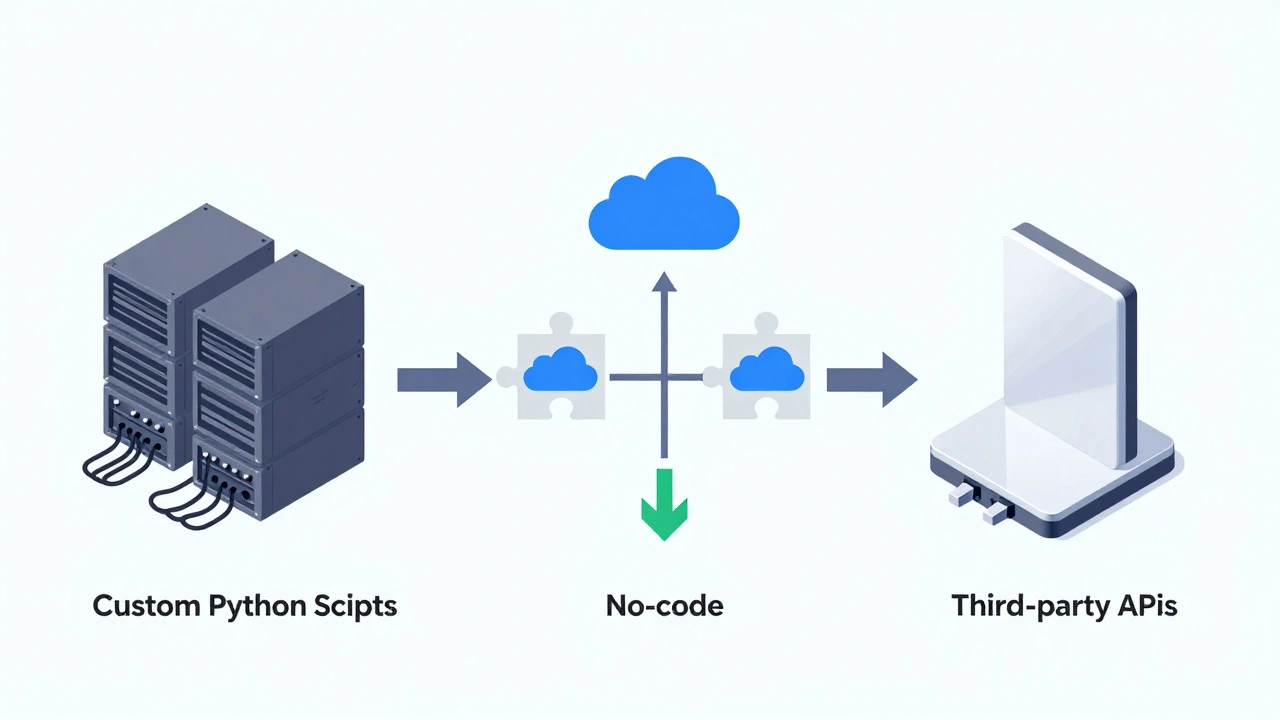
Implementation Options: Code vs. No-Code
You don’t need to be a senior engineer to build this, but your approach depends on your technical comfort level.
| Method | Complexity | Cost | Best For |
|---|---|---|---|
| Custom Script (Python) | High | Low (VPS hosting) | Developers needing full control over logic and thresholds |
| No-Code Automation (Zapier/Make) | Medium | Medium ($20-$50/month) | Teams integrating external analytics like Google Analytics |
| Third-Party Analytics API | Low | High (Vendor subscription) | Publishers wanting plug-and-play solutions without coding |
If you choose the custom script route, start with a basic Python setup using python-telegram-bot. Fetch the message ID, query the view count via MTProto, and apply your threshold logic. Deploy this on a cheap VPS. It’s robust and free aside from server costs.
If you prefer no-code, connect your RSS feed to Telegram via RSS.app, then use Make.com to monitor your external link clicks. When the click count stays flat for an hour, trigger a webhook that sends a message to your Telegram admin bot. This bridges the gap between web analytics and Telegram visibility.
Avoiding Alert Fatigue
The biggest risk in any automated system is noise. If your bot spams you with 20 alerts a day because traffic was low on a Tuesday night, you will mute it. Once muted, the system is useless. Design your alerts to be actionable and sparse.
Implement batching. Instead of sending an alert for every single underperforming post, summarize them. "Three posts underperformed in the last hour: [Link 1], [Link 2], [Link 3]." Send this digest every 30 minutes.
Add escalation policies. Only alert the entire team if a high-priority post (like sponsored content or breaking news) fails. For routine updates, alert just the duty editor. Also, include context in the message. Don’t just say "Post failed." Say "Post X has 40% fewer views than average for this time slot. Consider resharing."
Security and Reliability Checks
When using MTProto libraries like Telethon, you are storing session keys for your userbot account. Treat these keys like passwords. Store them in environment variables, not in your code repository. If someone steals your session key, they can impersonate your account.
Monitor the health of the alert system itself. Set up a secondary check: if the bot hasn’t sent a "heartbeat" message in 24 hours, notify you via email. Sometimes scripts crash silently. You want to know if the monitoring tool is broken before you lose trust in it.
Can I set up automated alerts without knowing how to code?
Yes, but with limitations. You can use platforms like Make.com or Zapier to connect external analytics (like Google Analytics for link clicks) to Telegram bots. However, pulling direct view counts from Telegram natively usually requires some scripting or paid third-party APIs because Telegram does not expose deep post-level statistics through its standard Bot API for security reasons.
What is the best metric to track for news posts?
For news, velocity is key. Focus on "Views in the first 30 minutes" or "Clicks in the first hour." These early indicators predict whether the algorithm will boost your post further. Long-term total views matter less for breaking news than immediate engagement.
Is scraping view counts allowed by Telegram?
Telegram’s Terms of Service are strict about unauthorized scraping. Using official MTProto libraries like Telethon is generally acceptable for accessing your own data, but aggressive polling or scraping public data at scale can lead to IP bans or account restrictions. Always rate-limit your requests and consider using official partner APIs if available.
How do I handle false positives during low-traffic times?
Use dynamic baselines. Instead of setting a fixed number of views required, calculate the average performance for that specific hour of the day over the past week. If a post performs worse than 70% of that historical average, then trigger the alert. This accounts for natural dips in nighttime traffic.
What should I do when an alert triggers?
Have a predefined playbook. Common actions include: 1) Reposting the same content with a different headline or image. 2) Sharing the post manually in related groups or chats. 3) Engaging with the first few comments to boost visibility. Speed is critical; act within the first hour.