Telegram Privacy: What You Need to Know About Data, Security, and Trust
When you use Telegram privacy, the set of features and policies that control how your messages, data, and identity are protected on Telegram. Also known as Telegram security, it’s what keeps journalists, activists, and everyday users safe—or exposes them when things go wrong. For years, Telegram marketed itself as the private alternative to WhatsApp and Signal. But since 2024, that story has changed. Telegram now shares user data with law enforcement under valid legal requests. That’s not a bug—it’s a policy shift. And it’s reshaping how newsrooms, citizen journalists, and regular users think about trust on the platform.
This change didn’t happen in a vacuum. It’s tied directly to Telegram data sharing, Telegram’s ability to hand over IP addresses, phone numbers, and message metadata to government agencies. Before, Telegram claimed it couldn’t access user data because of end-to-end encryption. But here’s the catch: that encryption only applies to Secret Chats. Regular chats, groups, and channels? Those are stored on Telegram’s servers. And now, those servers can be accessed. This affects everyone—from a reporter in Ukraine using a channel to share frontline updates, to a teen in Brazil following a news bot. If your channel has more than 1,000 subscribers, your admin ID and IP are logged. That’s not hidden. That’s recorded.
Then there’s Telegram law enforcement, the formal process by which governments request user information from Telegram, often with court orders. News channels in Turkey, Russia, and India have lost subscribers overnight after receiving legal notices. Some channels quietly shut down. Others moved to Matrix or Signal. But many stayed—because Telegram is still the fastest way to reach millions without an algorithm blocking you. The trade-off? You give up anonymity. You’re no longer invisible. And if you’re covering protests, corruption, or war, that’s not just a risk—it’s a danger.
What about encryption? Telegram’s default chats use client-server encryption, not end-to-end. That means Telegram can technically read your messages. Secret Chats are encrypted peer-to-peer, but they’re not the norm. Most users don’t enable them. And bots? They’re not encrypted at all. If you’re using a bot to pay for a news story or get weather alerts, your data flows through Telegram’s servers—and now, it can be handed over.
This isn’t just about politics. It’s about daily habits. When you forward a news article from a channel, your phone number is visible to the next person. When you join a group, your username and join date are logged. When you use QR codes to grow your channel, your IP is tied to that scan. These aren’t secrets. They’re features—features that now serve law enforcement as much as they serve users.
So what do you do? If you’re a journalist, stop using regular chats for sources. Use Secret Chats. Enable two-step verification. Never link your phone number to your news channel. If you’re a regular user, audit your privacy settings. Turn off ‘Who can see my phone number.’ Disable ‘Allow others to find me by phone.’ And if you’re running a channel, know this: your subscribers are not anonymous. Their data is stored. And if a government asks for it, Telegram will comply.
The truth is, Telegram privacy isn’t about being unbreakable. It’s about being aware. It’s about knowing who has access, when, and why. The platform still offers unmatched speed, reach, and control for news. But the days of believing it’s a private sanctuary are over. The data is out there. And now, you know how to protect yourself.
Below, you’ll find real stories from journalists who lost channels, tools that help track impersonation, and step-by-step guides to lock down your account. This isn’t theory. It’s what’s happening right now—and how to stay safe in it.
- 31/Jan/2026
- by Greg Bush
-
 Telegram safety
open access messaging
Telegram moderation
encrypted messaging
Telegram privacy
Telegram safety
open access messaging
Telegram moderation
encrypted messaging
Telegram privacy
Balancing Open Access and Community Safety on Telegram
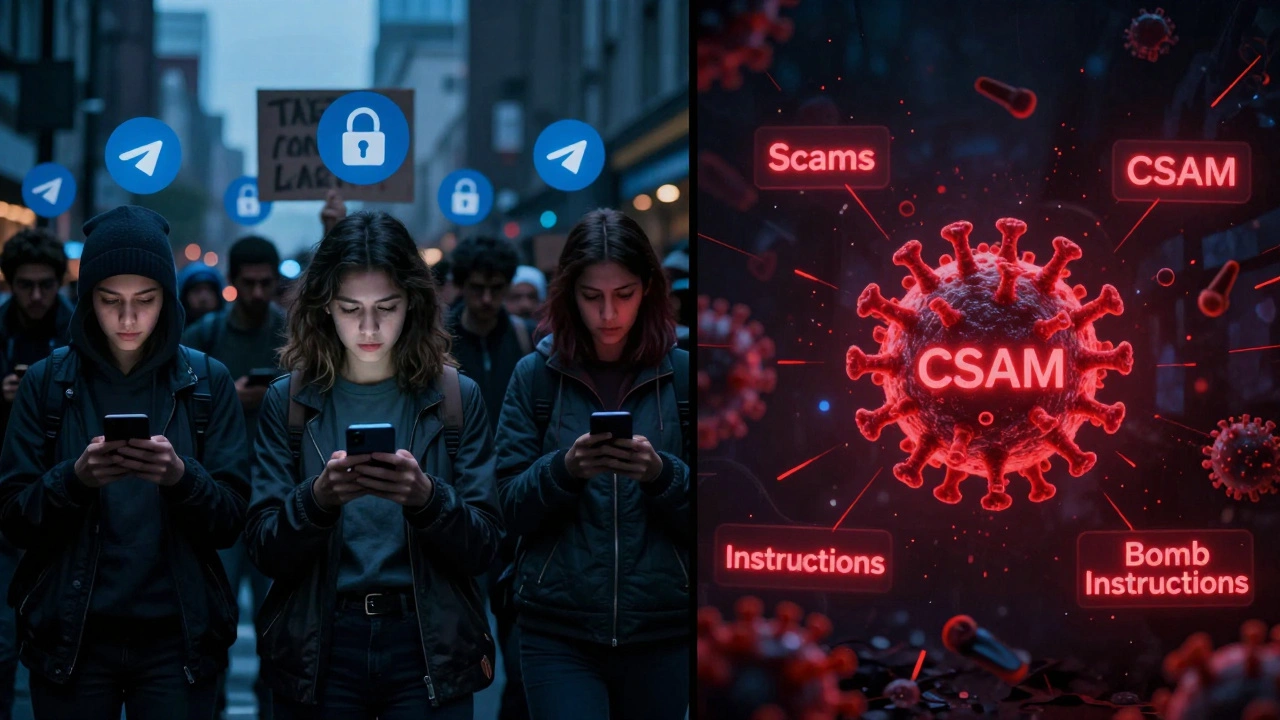
Telegram offers powerful privacy features but struggles to control illegal content on its platform. With 800 million users and minimal moderation, it's a haven for activists-and criminals. Here's how the platform balances freedom and safety.
Read
- 23/Jan/2026
- by Greg Bush
-
Telegram privacy
secure messaging
high-risk regions
Telegram security
Signal vs Telegram
Privacy Guidance for Telegram News Subscribers in High-Risk Regions
Telegram may seem safe for news in high-risk areas, but its default settings expose users to surveillance, arrest, and tracking. Learn why Signal is the only secure alternative and how to minimize risk if you still use Telegram.
Read
- 16/Dec/2025
- by Greg Bush
-
Telegram news channels
skeptical audiences
Telegram vs mainstream media
Telegram privacy
alternative news platforms
Why Skeptical Audiences Prefer Telegram News Channels
Skeptical audiences turn to Telegram for uncensored, algorithm-free news with direct access to sources. Its privacy features, file-sharing power, and lack of moderation make it the go-to platform for those who distrust mainstream media - even as misinformation risks grow.
Read
- 5/Dec/2025
- by Greg Bush
-
Telegram privacy
political news on Telegram
Telegram channels
end-to-end encryption
disinformation on Telegram
How Telegram’s Privacy Model Shapes Political News Communities
Telegram's unique blend of broadcasting power and flawed privacy lets political movements thrive-but also enables disinformation. It's a tool for dissidents and extremists alike, shaped by its refusal to moderate or fully encrypt.
Read
- 5/Dec/2025
- by Greg Bush
-
Telegram privacy
sensitive content filter
Telegram settings
content visibility
Telegram safety
Telegram Content Visibility and Privacy: What Audiences Need to Know
Telegram's content visibility system gives users control over what they see-but most don't know how it works. Learn how the Sensitive Content Filter works, how to change it, and why it matters for privacy and safety.
ReadLatest Posts